
Quick Read
- Nvidia invested $5 billion in Intel, acquiring nearly 4% of the company via private placement.
- Intel’s stock surged 80% in 2025 after stabilizing manufacturing yields and restructuring.
- Intel launched its advanced 18A process node and pivoted toward AI PCs and foundry services.
- The partnership enables joint chip designs, like Serpent Lake, combining Intel CPUs with Nvidia graphics.
- Intel received over $10 billion in U.S. government support to expand domestic chip manufacturing.
In the waning days of 2025, the story of Intel Corporation (Nasdaq: INTC) stands as a testament to resilience in the world of technology. Having spent much of the last decade battling declining market share and a crisis of confidence, Intel is now emerging from its darkest chapter, propelled by new leadership, focused execution, and a headline-grabbing $5 billion investment from Nvidia Corporation (Nasdaq: NVDA).
What changed the narrative? It’s not just about numbers, though the numbers do tell a story. After a bruising 2024 that saw Intel’s market cap plummet and its future questioned by Wall Street, the company rebounded in 2025, with its stock climbing nearly 80% from its lowest point. Trading now in the $36–$37 range, Intel’s comeback is attributed to improved manufacturing yields, the launch of its cutting-edge 18A (1.8nm) process node, and a ruthless focus on “execution discipline”—a culture shift ushered in by new CEO Lip-Bu Tan.
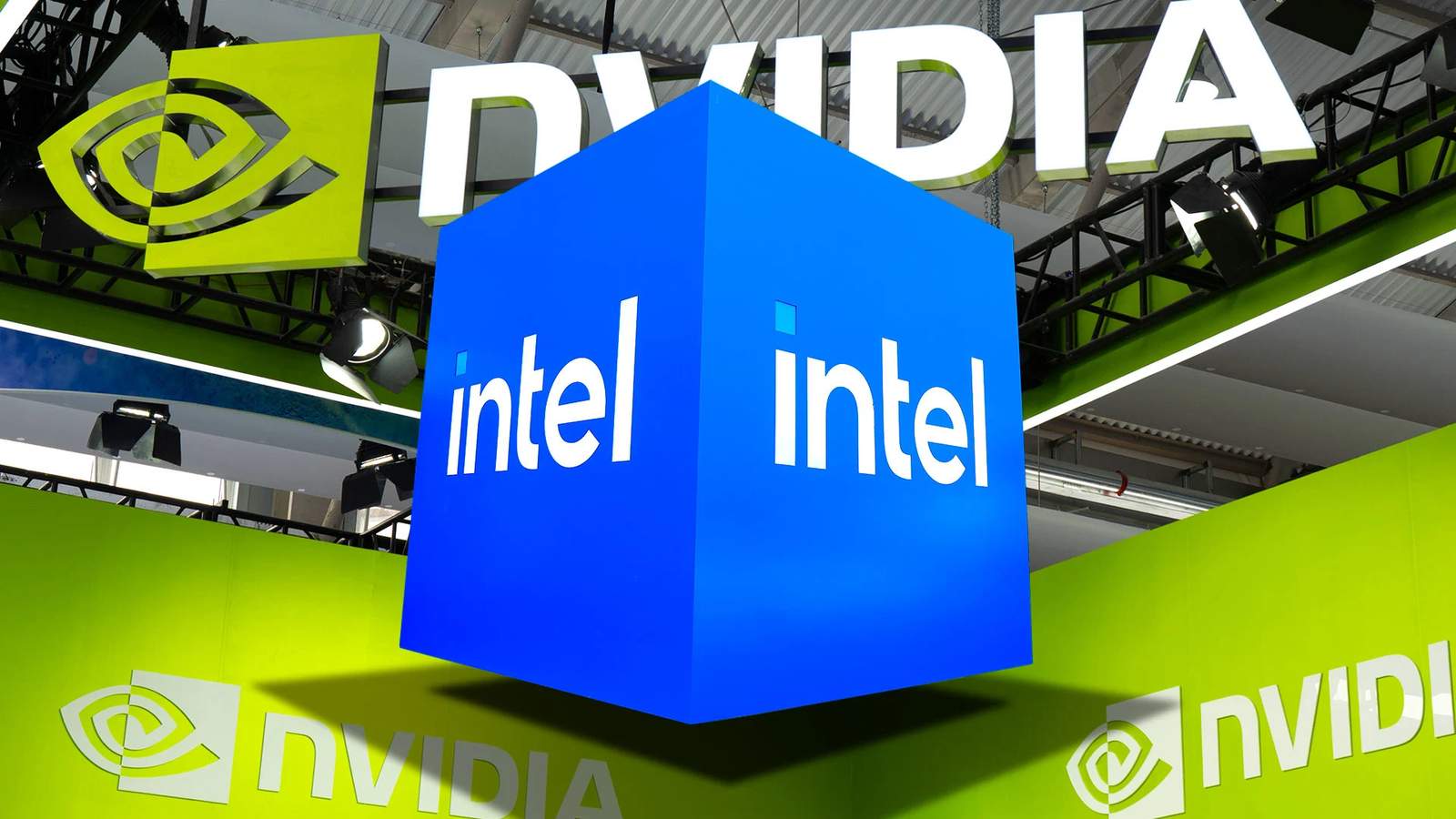
But the real game-changer arrived with Nvidia’s strategic stake. In a move confirmed by TipRanks, Nvidia completed a $5 billion private placement, acquiring nearly 4% of Intel. This was no ordinary stock purchase: the funds went directly to Intel, strengthening its balance sheet at a critical moment. More than financial support, the deal signals a deeper partnership between two chip giants who, until recently, were fierce rivals. Now, their futures are interwoven in ways that could reshape the semiconductor landscape.
The partnership is already bearing fruit. Leaks reported by RedGamingTec point to the development of “Serpent Lake” laptop chips that combine Intel CPUs with Nvidia graphics—a hint at future systems designed for the AI PC era. Intel’s focus on chips that power artificial intelligence, both in consumer devices and data centers, aligns perfectly with Nvidia’s strengths in graphics and AI accelerators. Looking ahead, Intel plans to engineer CPUs that seamlessly integrate with Nvidia GPUs, offering enhanced performance across data centers and PCs.
Intel’s business model has evolved in response to these changes. The company now operates through two semi-independent pillars: Intel Products, which designs chips for PCs, data centers, and edge devices; and Intel Foundry, a commercial manufacturing arm producing chips for both internal teams and external customers—including, potentially, Nvidia itself. This split has improved transparency and allowed Intel to shed low-margin businesses, focusing on high-value innovation.
The turnaround hasn’t come without pain. Early in 2025, Intel initiated a massive restructuring, taking a $2.9 billion charge and reducing its workforce by 15–20%. These tough decisions, coupled with billions in government subsidies from the CHIPS Act and military contracts, stabilized Intel’s finances. Revenue now hovers around $13.5 billion per quarter, with gross margins recovering to nearly 40% by Q3 2025.
Competitively, Intel is sandwiched between three titans: TSMC, AMD, and Nvidia. TSMC remains the manufacturing benchmark, with a well-oiled ecosystem that attracts the world’s largest chip buyers. AMD, riding high on its server chip success, commands a historic 41% data center market share. Nvidia, now a top Intel shareholder, dominates the AI accelerator market, but its strategic investment in Intel hints at new synergies—especially as the industry pivots from training massive models to deploying AI at the edge.
Industry trends in 2025 favor Intel’s new direction. “Sovereign Silicon” is the watchword, with nations demanding domestic chip manufacturing to de-risk supply chains. Intel has become America’s “National Champion,” receiving over $10 billion in government support to expand fabs in Arizona and Ohio. Its advanced packaging technologies, like Foveros and EMIB, are increasingly used by companies seeking to comply with U.S. supply requirements—even if they source wafers from competitors like TSMC.
Risks remain. Intel’s manufacturing yields, while improved, haven’t reached the golden 70–80% mark needed for optimal profitability. Trust among fabless customers is fragile; signing a “Mega-Whale” customer for the new 18A node is seen as crucial for the foundry business. The debt burden from new fabs looms large, and any slowdown in AI PC adoption or enterprise refresh cycles could threaten margins.
Yet, opportunities abound. Rumors of a major cloud provider—possibly Google or Meta—signing a foundry deal for 2026/2027 are swirling, which could serve as a massive catalyst for Intel stock. The upcoming “Clearwater Forest” server chip, built on the 18A process, is expected to challenge AMD’s dominance in the data center segment. And as Windows 12 and other AI-integrated operating systems roll out, the Client Computing Group may see unexpected growth.
Regulatory and geopolitical factors also shape Intel’s fate. In 2025, the company finalized $7.86 billion in direct funding under the CHIPS Act, with an additional $3 billion for military chip development. Intel put its German and Polish fab projects on hold to conserve capital, straining EU relations but pleasing investors. Export controls on AI chips to China continue to affect data center revenue, though Intel has managed to offset some losses with tailored Xeon chip variants.
Investor sentiment is shifting. According to PredictStreet and TipRanks, Wall Street analysts have upgraded Intel from “Max Pessimism” to “Cautious Optimism.” Bulls point to Intel’s unique position as the only company capable of providing a leading-edge, end-to-end U.S. supply chain. At its current valuation, Intel is viewed as a “value play” on the AI revolution. Skeptics warn that Intel’s turnaround is a race against time, as rivals like TSMC accelerate their own advancements.
As 2025 closes, Intel’s transformation is incomplete but unmistakable. The “Foundry First” mentality, the strategic alliance with Nvidia, and the successful launch of the 18A node all suggest that Intel’s engineers have recaptured their innovative spirit. Yet, the challenge is far from over. Intel’s bet on the “American Silicon Renaissance” is a bold one—backed now not just by government funding, but by the confidence of industry leaders like Nvidia. The next chapter will be written by how well Intel can execute, adapt, and attract critical partners in a fiercely competitive global arena.
Intel’s turnaround in 2025 is a rare convergence of strategic discipline, government support, and industry partnership. Nvidia’s $5 billion stake is not just a financial lifeline—it’s a signal to the market that Intel’s struggle for relevance in the AI era is worth watching. The coming year will test whether Intel’s new-found momentum can overcome structural risks and fierce competition, setting the stage for a true American comeback in advanced chipmaking.