
Quick Read
- ESA’s XMM-Newton observed interstellar comet 3I/ATLAS in X-ray light for 20 hours on December 3, 2025.
- 3I/ATLAS is only the third confirmed interstellar object in the solar system, after 1I/’Oumuamua and 2I/Borisov.
- X-ray observations are uniquely sensitive to hydrogen and nitrogen gases, revealing details invisible to optical telescopes.
- The comet’s closest approach to Earth is expected on December 19, 2025, at 1.79 AU.
- Scientists hope XMM-Newton’s data will clarify the comet’s composition and its origin.
ESA’s XMM-Newton Captures Interstellar Comet 3I/ATLAS in Unprecedented X-ray Detail
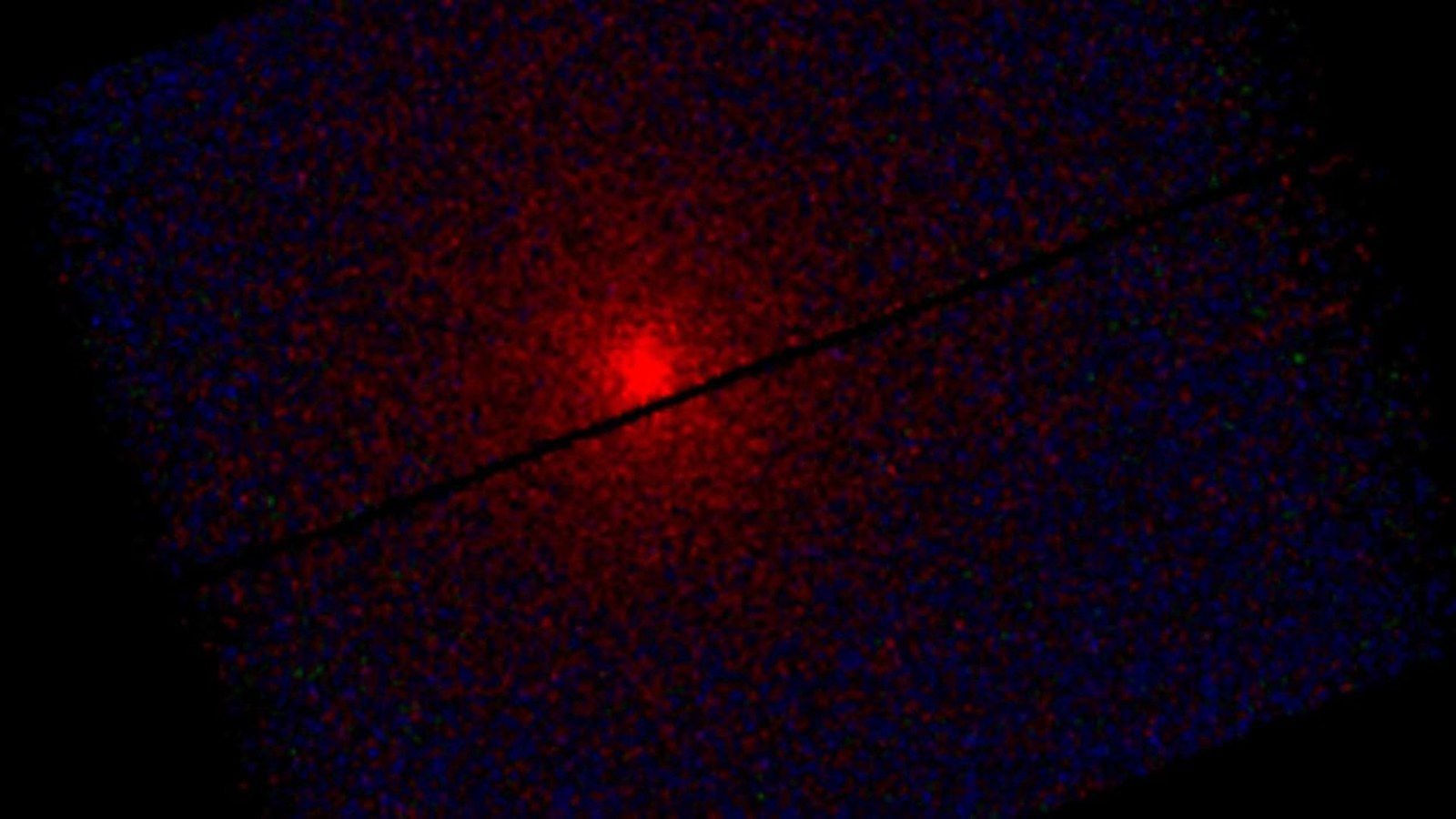
In the closing weeks of 2025, the European Space Agency’s XMM-Newton space observatory pointed its most sensitive X-ray camera toward a truly rare cosmic visitor: interstellar comet 3I/ATLAS. For about 20 hours on December 3, the spacecraft tracked this icy traveler from a distance of nearly 285 million kilometers, capturing a vibrant image that is rewriting what we know about objects from beyond our solar system. The XMM-Newton, which has been orbiting the Earth since its launch in 1999, is no stranger to chasing elusive targets, but 3I/ATLAS is only the third interstellar object ever confirmed within our solar system—a fact that has astronomers on edge with anticipation.
Why 3I/ATLAS Is Making Headlines
3I/ATLAS, first detected by the ATLAS observatory on July 1, 2025, joins the ranks of 1I/’Oumuamua (2017) and 2I/Borisov (2019) as an interstellar interloper—an object born outside our solar system that has wandered into our cosmic neighborhood. Its closest approach to Earth is expected on December 19, 2025, at a distance of 1.79 astronomical units (AU), or about 268 million kilometers. Unlike its predecessors, 3I/ATLAS is being scrutinized with a full array of modern instruments, and the X-ray portrait snapped by XMM-Newton is offering a unique window into its composition.
How Do X-rays Reveal a Comet’s Secrets?
Most comet images are taken in visible or ultraviolet light, but XMM-Newton’s European Photon Imaging Camera (EPIC)-pn is tuned to the low-energy X-rays that are produced when solar wind—streams of charged particles from the Sun—collides with gases streaming from the comet’s nucleus. In the X-ray image released by ESA, 3I/ATLAS stands out as a bright red spot against a deep blue background, its glow marking the site of intense interaction between cometary gases and solar wind. The red colors indicate the presence of low-energy X-rays, while blue marks the emptiness of space. A yellow arrow on the image points toward the Sun, helping scientists interpret the orientation and context of the comet’s journey.
Why does this matter? Because X-ray observations are uniquely sensitive to gases like hydrogen (H₂) and nitrogen (N₂)—materials that are almost invisible to optical or ultraviolet telescopes. Instruments like Hubble or ESA’s JUICE can spot water vapor, carbon dioxide, or carbon monoxide, but they struggle to detect these elusive elements. By capturing the X-ray signature of 3I/ATLAS, XMM-Newton provides a crucial missing piece to the puzzle: the ability to study the very building blocks that may define what makes interstellar comets so different from those native to our solar system.
Chasing the Composition: What Is 3I/ATLAS Made Of?
The composition of interstellar comets is a subject of heated debate. When 1I/’Oumuamua zipped through the solar system in 2017, its odd acceleration and lack of a visible tail led some scientists to speculate it was made of exotic ices—maybe pure hydrogen or nitrogen—unlike anything we’ve seen before. 2I/Borisov, observed in 2019, looked more like a classic comet, but its interstellar origins raised fresh questions about diversity among these cosmic visitors.
With 3I/ATLAS, astronomers are determined to use every available tool. XMM-Newton’s X-ray data, combined with observations from the James Webb Space Telescope and NASA’s SPHEREx mission, will allow scientists to cross-check the presence of familiar molecules—water, carbon dioxide, carbon monoxide—against the more exotic, hard-to-detect elements. If 3I/ATLAS is rich in hydrogen or nitrogen, it could point to an origin in a colder, more distant region of its home galaxy, or even suggest that some interstellar comets are fundamentally different from those formed around our Sun.
The Bigger Picture: Why Interstellar Visitors Matter
Every interstellar object that enters our solar system is an opportunity to test our understanding of planetary formation, chemistry, and the sheer variety of materials that exist beyond our own backyard. Comets like 3I/ATLAS are thought to be ancient leftovers from the birth of other stars, preserved in deep space and launched toward us by gravitational interactions we may never fully map. Their makeup, trajectory, and even the way they interact with our solar wind can reveal clues about conditions in other star systems—clues we simply can’t get from Earth-based samples alone.
The X-ray image of 3I/ATLAS is more than just a striking visual; it’s a scientific milestone. By catching the comet as it glows in X-rays, ESA’s XMM-Newton has opened a new chapter in the study of interstellar matter. Researchers are already poring over the data, searching for subtle patterns that could hint at the comet’s origin, age, and the processes that shaped it before its journey through interstellar space.
What Happens Next?
With the comet’s closest approach set for December 19, observatories worldwide are lining up for their chance to study 3I/ATLAS in every wavelength possible. As more data rolls in—from infrared, optical, and radio telescopes—the X-ray insights from XMM-Newton will provide a foundation for interpreting the comet’s more elusive signals. It’s a rare moment when astronomers can coordinate such a global campaign, and the excitement is palpable. There’s even speculation in the scientific community about whether 3I/ATLAS could hold surprises—perhaps revealing new forms of ice, or challenging our ideas about how comets form and evolve.
For the general public, the arrival of an interstellar comet is a reminder of the vastness of space and the constant exchange of material between stars. Each new visitor is a messenger from worlds we may never see, carrying secrets that push the boundaries of human knowledge. As ESA’s latest images circulate, people everywhere are invited to wonder: what else might be out there, waiting to be discovered?
For further updates and frequently asked questions on comet 3I/ATLAS, ESA has provided a dedicated resource at esa.int/3IATLAS, ensuring that the story continues as new observations unfold.
Based on current data from ESA and Mashable, the study of 3I/ATLAS by XMM-Newton marks a significant leap in our ability to analyze interstellar objects. X-ray observations are proving indispensable for uncovering the hidden chemistry of these cosmic messengers, and while many questions remain, each new discovery brings us closer to understanding the diversity and origins of material that traverses the universe. The search for answers continues, driven by curiosity and the promise of the unknown.