
Quick Read
- 3I/ATLAS is the third confirmed interstellar object detected in our solar system.
- Harvard scientist Avi Loeb suggests it could be an alien probe, but most astronomers believe it’s a natural comet.
- The object will pass close to Mars on October 30, 2025, offering a chance for detailed observations.
- Recent telescope images reveal a growing tail and dense coma, typical of comets.
- Public engagement initiatives are allowing students to participate in studying this rare celestial visitor.
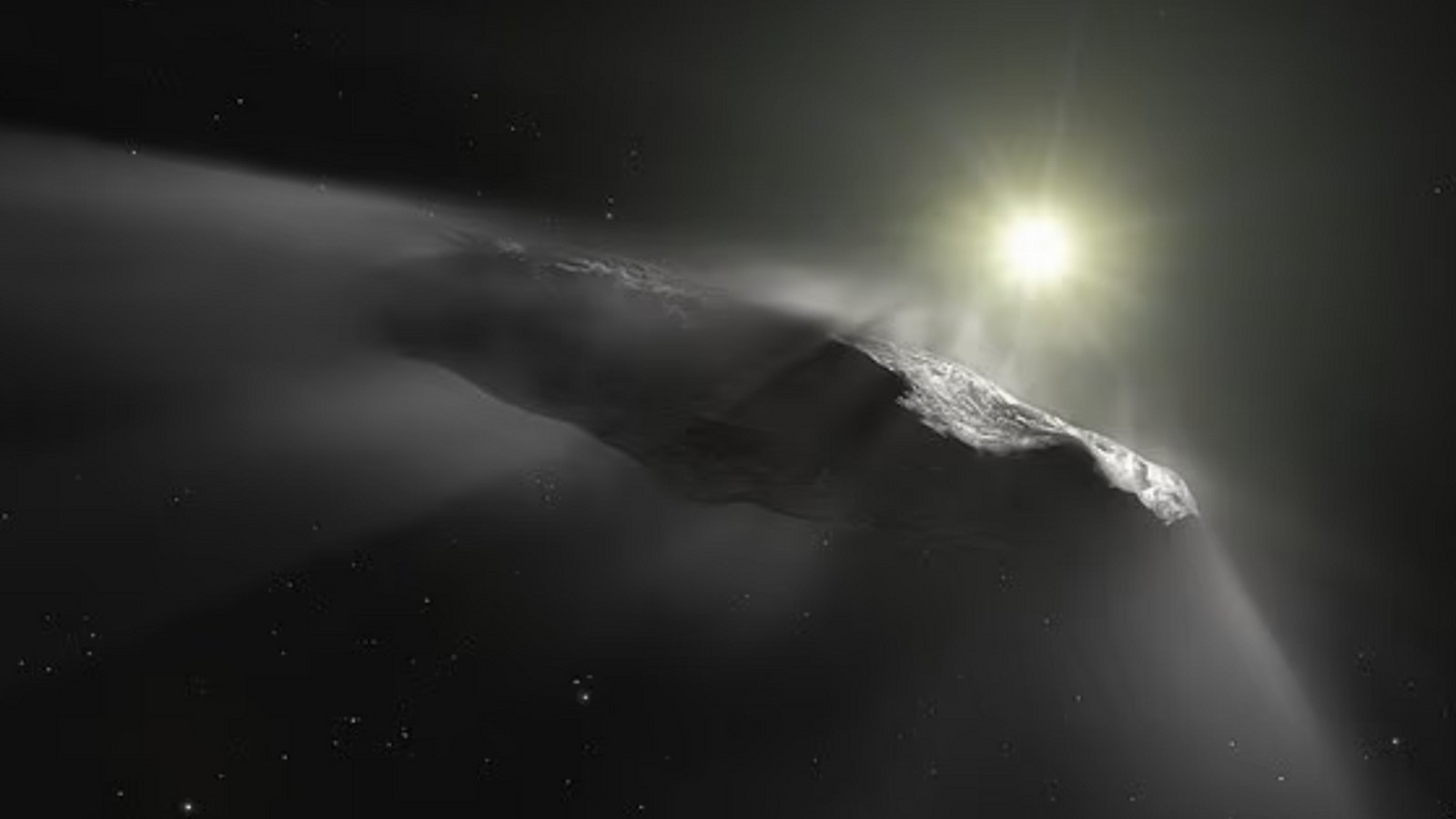
The interstellar object 3I/ATLAS has ignited both excitement and heated debates within the scientific community since its discovery on July 1, 2025. As only the third confirmed interstellar visitor to our solar system, following ʻOumuamua in 2017 and Borisov in 2019, 3I/ATLAS has become the focal point of speculation ranging from it being a natural ice comet to a potential alien probe. With its unique trajectory and peculiar characteristics, scientists are eager to study this celestial wanderer before it exits the solar system forever.
**A Comet or an Alien Probe?**
One of the most intriguing theories comes from Harvard astrophysicist Professor Avi Loeb, who suggests that 3I/ATLAS might not be a mere ice comet but an extraterrestrial spacecraft. Loeb’s hypothesis is partly based on the object’s peculiar flight path and the possibility of a smaller “precursor mini-probe” traveling ahead of it. In a blog post, he argued that the mini-probe could have been deployed by intelligent life to gather data from the Red Planet or even Earth. However, most astronomers, including those analyzing data from the Gemini South telescope in Chile, lean toward identifying 3I/ATLAS as a natural ice comet. Recent images captured by the Gemini Multi-Object Spectrograph (GMOS) reveal a growing tail and a dense coma, features typical of comets as they approach the Sun.
According to Phys.org, a team of astronomers and students confirmed that the comet’s composition, a mix of dust and ice, closely resembles that of native comets in our solar system. These findings, however, do not entirely rule out the alien probe theory, as Loeb continues to advocate for more extensive observations.
**Close Encounter with Mars in October**
One of the most anticipated events in the study of 3I/ATLAS is its upcoming close approach to Mars on October 30, 2025. The object is projected to come within 18 million miles of the Red Planet, providing an opportunity for detailed imaging and analysis. The Mars Reconnaissance Orbiter’s HiRISE camera is expected to capture high-resolution images that could help determine whether 3I/ATLAS is indeed a comet or something more extraordinary.
Adding to the intrigue, Loeb has suggested that the mini-probe, if it exists, could alter its trajectory to collide with Mars. However, skeptics argue that such a scenario is highly unlikely, given the absence of definitive evidence for the probe’s existence. As reported by WIONews, the interstellar object will also pass near Venus and Jupiter before reaching its closest point to Earth on December 17, 2025, at a distance of 223 million miles.
**Public Engagement and Scientific Significance**
The study of 3I/ATLAS is not just limited to professional astronomers. Public engagement initiatives, such as those led by NSF NOIRLab in collaboration with Shadow the Scientists, have allowed students and amateur astronomers to participate in real-time observations. During a recent session on August 27, 2025, participants from around the world witnessed the comet’s growing tail and learned about its chemical composition. According to astronomer Karen Meech, the data collected during these sessions are invaluable for understanding the formation of planetary systems around other stars.
The interstellar visitor’s hyperbolic trajectory ensures that it will eventually leave our solar system, making this a once-in-a-lifetime opportunity to study material from a distant star system. Bryce Bolin, a research scientist at Eureka Scientific, emphasized the importance of analyzing the light and color of interstellar comets to gain insights into the diversity of worlds beyond our own.
**A Cosmic Messenger from Afar**
As 3I/ATLAS continues its journey through the inner solar system, it serves as a reminder of the vastness and mystery of the universe. Whether it is a natural comet or an alien artifact, its presence has already enriched our understanding of interstellar phenomena. The coming months promise more revelations as scientists prepare for its closest encounters with Mars and Earth.
While the debate over 3I/ATLAS’s origin continues, its journey through the solar system underscores the importance of curiosity and exploration in uncovering the secrets of the cosmos.