
Quick Read
- Iran temporarily closed its airspace, causing global flight disruptions and rerouting.
- Multiple countries—including the UK, Italy, Spain, and Germany—advised citizens to leave Iran amid unrest.
- The UK issued travel warnings for Israel, citing heightened regional tensions.
- Over 2,400 protesters reportedly killed in Iran’s crackdown, with conflicting official figures.
- US President Trump refused to rule out military action; G7 nations threatened new sanctions.
Iran’s Airspace Shuts Down as Tensions with Israel Mount
In early 2026, the Middle East found itself at a dangerous crossroads. Iran, rocked by weeks of anti-government protests and a heavy-handed crackdown, abruptly closed its airspace late Wednesday—except to select international flights. The decision, announced via a Notice to Airmen (NOTAM), rippled across the region, rerouting commercial planes and sparking a wave of international advisories. Fox News and CNN reported that the closure lasted just over two hours, but its symbolism was unmistakable: Iran was signaling heightened alert amid fears of foreign intervention, particularly from the United States and Israel.
Flight tracking data revealed multiple aircraft denied entry or rerouted around Iran, illustrating how quickly instability can disrupt global routines. Major airlines like Lufthansa and Air India announced adjustments or cancellations, prioritizing passenger safety as uncertainty gripped Tehran’s skies. Even after the airspace reopened, the message was clear—nothing was business as usual.
Global Travel Warnings Reflect Widespread Anxiety
The ripple effect of unrest in Iran extended far beyond its borders. Governments from Europe, Asia, and the Middle East scrambled to protect their citizens and assets. Italy, Spain, Germany, and the UK urged nationals to leave Iran immediately, citing escalating violence and the risk of arbitrary detention. Airlines were told to avoid Iranian airspace, and embassies shuttered their doors; Britain withdrew its staff from Tehran and warned against all travel to Iran.
But the anxiety didn’t stop at Iran’s borders. The UK Foreign Office also cautioned against all but essential travel to Israel and the occupied West Bank, citing “heightened regional tensions.” The implication was clear: the unrest in Iran was fueling volatility across the region, with the specter of conflict between Iran and Israel looming large. US embassies in Jerusalem, Qatar, and Kuwait issued security alerts, restricting movements of personnel at military bases—a precaution that spoke volumes about the fragility of the situation.
Protests, Crackdowns, and the Shadow of Military Escalation
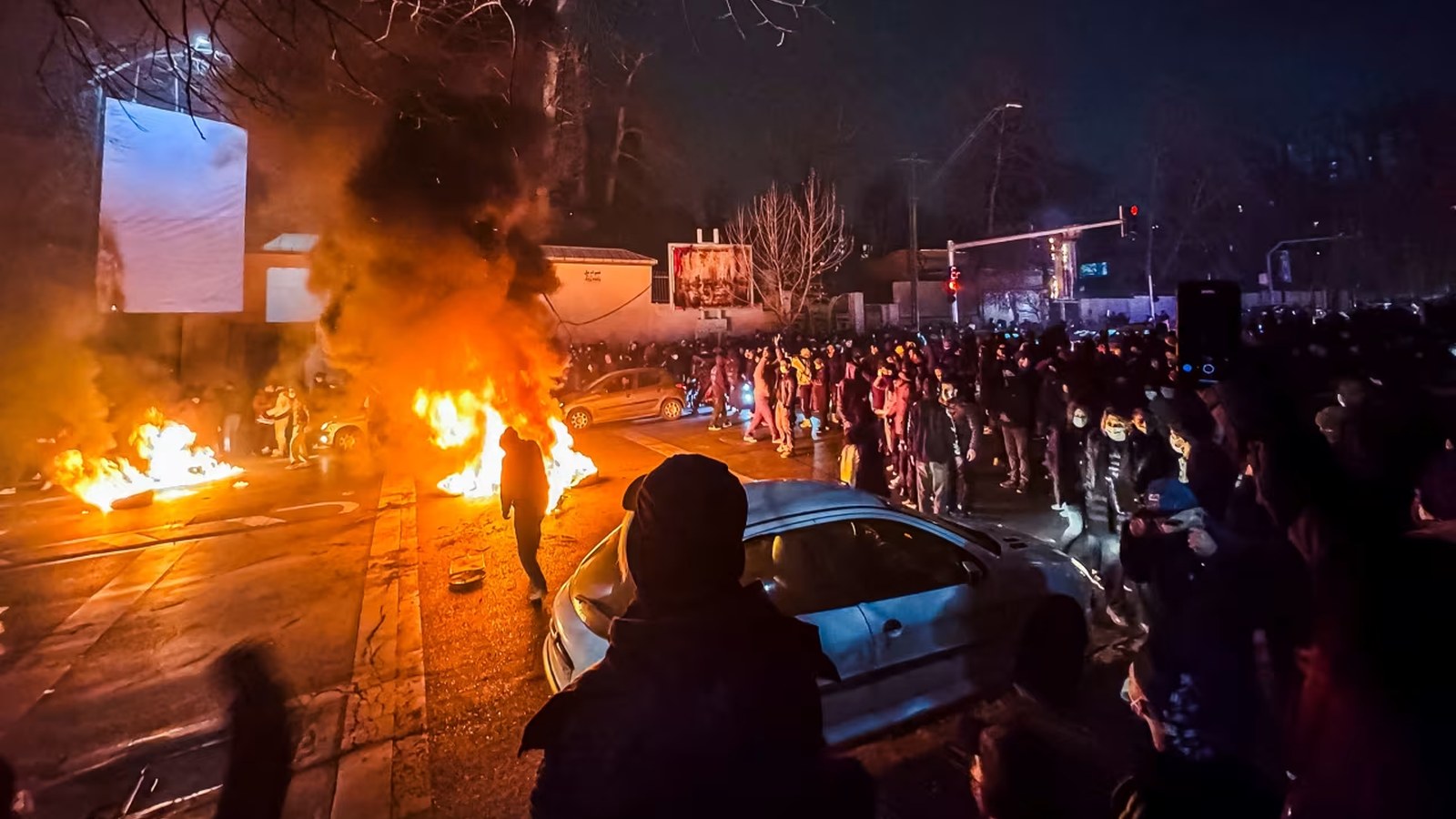
At the heart of the crisis lay the Iranian people, whose mass protests were met with what rights groups described as “unprecedented” violence. According to the US-based Human Rights Activists News Agency (HRANA), at least 2,400 protesters had been killed since the crackdown began, though Iranian officials insisted the true number was in the hundreds—a claim dismissed by many international observers.
The brutality of the response drew sharp condemnation from the G7 nations, who warned of “additional restrictive measures” if Iran did not halt its repression. Amnesty International described “mass unlawful killings” and an atmosphere of fear in Tehran, where residents risked arrest for even innocuous international phone calls. Internet blackouts deepened the isolation, making it nearly impossible for families and advocates abroad to verify the fate of loved ones.
Against this backdrop, the threat of foreign military intervention hung heavy. US President Donald Trump repeatedly refused to take military action “off the table,” saying his administration would “wait and see.” Republican Senator Lindsey Graham, echoing calls for force, argued that “an attack on the regime is the only help that really matters.” Meanwhile, Iranian officials accused the US and Israel of fueling unrest and orchestrating a “misinformation campaign”—claims unaccompanied by evidence but reflective of the regime’s siege mentality.
Israel’s Role and Regional Implications
Israel, long at odds with Iran over issues ranging from nuclear ambitions to support for militant groups, found itself drawn into the fray. Iranian officials repeatedly alleged Israeli involvement in stoking protests, labeling the unrest a “plot” designed to destabilize the regime. Israel’s Ambassador to the UN, Danny Danon, dismissed these accusations as “crocodile tears from a murderous regime,” highlighting the deep mistrust that defines Iran-Israel relations.
The UK and other Western governments’ travel warnings to Israel underscored the interconnectedness of regional security. Any escalation in Iran—whether through internal collapse, military intervention, or further crackdowns—threatened to spill across borders, impacting not only diplomatic and commercial interests but also the daily lives of millions.
Human Stories Amid Geopolitical Drama
Lost in the headlines are the ordinary Iranians caught in the crossfire. Sharona Nazarian, the Iranian-American mayor of Beverly Hills, described her ongoing efforts to help compatriots facing economic hardship and human rights abuses. “A day does not go by that I do not get requests of people asking me to assist them with their family members, or helping them to come here, asking for monetary assistance,” she told CNN. Her city’s resolution in support of Iranian protesters echoed a broader diaspora’s yearning for change, safety, and dignity.
For many, the stakes are existential. The regime’s crackdown has destroyed infrastructure—Tehran’s mayor reported $20 million in damage, with buses and firefighting vehicles torched. Families wait anxiously for news about detainees, their hopes pinned to international pressure and the uncertain promises of foreign leaders. The postponement of protester Erfan Soltani’s execution, for example, was greeted with relief but little certainty about the future.
International Community Faces a Dilemma
As the crisis deepens, world leaders must balance condemnation with caution. The G7’s joint statement called for restraint and threatened new sanctions, but few are eager to risk open conflict in a region already scarred by war. The US administration’s “wait and see” posture reflects both strategic ambiguity and the limits of external influence.
Meanwhile, Iran’s foreign minister insists that the unrest is exaggerated and manipulated by foreign actors—a narrative that, while unsubstantiated, points to the regime’s fear of losing control. The truth on the ground is harder to discern, obscured by internet shutdowns and propaganda, but the suffering of protesters and ordinary citizens is unmistakable.
Looking Ahead: A Region on Edge
The events of January 2026 have left Iran, Israel, and their neighbors on edge. Airspace closures, embassy evacuations, and military alerts are symptoms of deeper instability—an unresolved struggle over governance, human rights, and regional power. As international actors weigh their options, the fate of Iran’s protesters and the future of the region hang in the balance.
Will the current wave of unrest force meaningful change, or will it trigger a new cycle of violence and repression? The answer remains uncertain. But one thing is clear: the tensions between Iran and Israel are not simply a matter of geopolitics—they are a human story, unfolding in real time, with consequences that will reverberate far beyond the region’s borders.
Assessment: The facts paint a picture of escalating risk, not just for governments but for ordinary people whose lives are disrupted by decisions made in far-off capitals. The closure of Iran’s airspace and the surge of global warnings underscore how quickly local unrest can become an international crisis. Ultimately, the fate of the region depends as much on diplomatic restraint and respect for human rights as on military posturing—a lesson the world must heed as it watches Iran and Israel navigate these dangerous waters.