
Quick Read
- IRGC spokesperson Brigadier General Ali Mohammad Naeini was killed in a US-Israeli strike.
- Naeini had a nearly five-decade career focused on media, propaganda, and ‘soft war’ strategies.
- His death follows his public rebuttal of Israeli claims about Iran’s missile production capabilities.
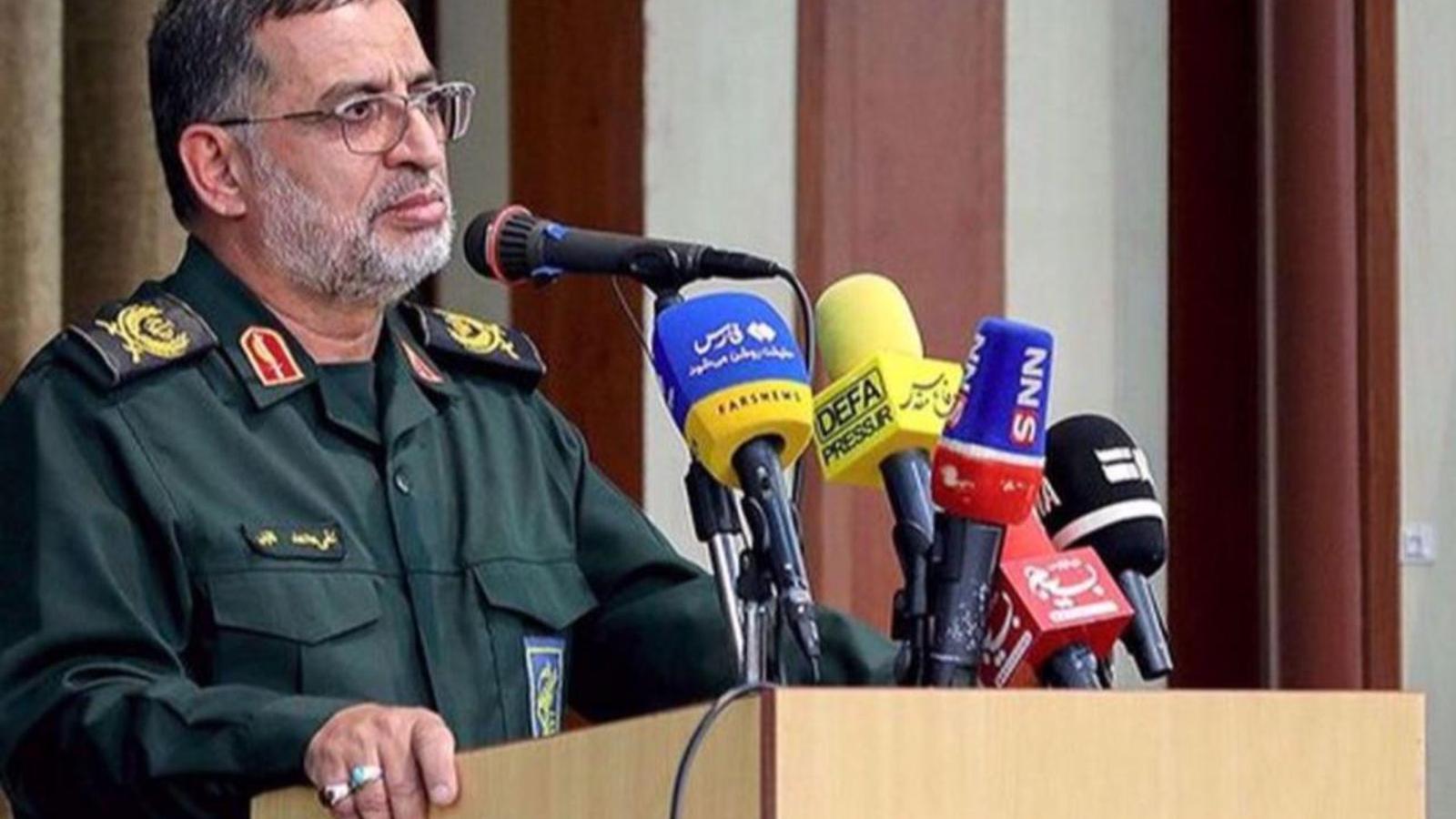
TEHRAN (Azat TV) – Brigadier General Ali Mohammad Naeini, the deputy for public relations and official spokesperson for Iran’s Islamic Revolutionary Guard Corps (IRGC), was killed in what the IRGC described as a US-Israeli attack in the final hours of Ramadan, the organization confirmed on Friday. Naeini, a figure with nearly five decades of service, was a prominent public voice for the IRGC, particularly in recent years amidst heightened regional tensions.
Naeini’s Extensive Career in Media and Military Operations
Born in Kashan in 1957, Ali Mohammad Naeini joined the IRGC in 1978 and served until his death in 2026. His career spanned the Iran-Iraq War, where he was involved in documentation and narrative efforts, shaping his later roles in communications and doctrine. He was appointed spokesperson and deputy head of public relations in July 2024, becoming a key figure in articulating the IRGC’s positions during critical periods, including the “True Promise” operations. The IRGC lauded him as a “wise and diligent” commander whose contributions left a significant mark on the institution’s history.
Role in ‘Soft War’ and Cognitive Warfare
Beyond traditional military functions, Naeini was deeply involved in what the IRGC terms “soft war” and “cognitive war” domains. He also held a position as a professor of social sciences at Imam Hossein University, contributing to ideological training, particularly in communication and influence strategies. The IRGC stated that his “revolutionary ideas and effective model… in the field of ‘soft war’ will guide the Guard and its officers in the cognitive war against the tyrannical powers.” His death was mourned as a “proud martyrdom in the fields of culture and media.”
Denial of Israeli Claims and International Sanctions
Hours before his reported death, Naeini had publicly disputed claims made by Israeli Prime Minister Benjamin Netanyahu regarding Iran’s diminished missile production capabilities. Netanyahu had asserted that Iran possessed “no ability” to produce ballistic missiles, a statement Naeini countered by insisting that missile stockpiles remained sufficient and production continued. Naeini’s public pronouncements were seen as a direct challenge to Israeli assertions about Iran’s military strength. He was also subject to international sanctions, including those imposed by the United Kingdom following Iranian missile strikes on Israel in October 2024.
IRGC Vows Continued Operations
In response to Naeini’s killing, the IRGC reaffirmed its commitment to continuing its operations and messaging efforts, characterizing the strike as part of ongoing US-Israeli aggression. The organization stated, “We mourn our spokesman, but will not allow our moral and psychological strength to be weakened by this assassination.” The confirmation of Naeini’s death was announced by Iranian state television and the IRGC’s Sepah News website, extending condolences to Iran’s leadership, Naeini’s family, and fellow officers.
The assassination of a senior IRGC spokesperson, particularly one actively engaged in public discourse and countering foreign claims about Iran’s military capabilities, signals a deliberate escalation in the ongoing shadow conflict between Iran and its adversaries. Naeini’s role in shaping narratives around ‘soft war’ and ‘cognitive warfare’ suggests his death is intended not only to remove a military figure but also to disrupt Iran’s information operations.