
Quick Read
- Hauliers and farmers have officially rejected a €505m government relief package, citing it as insufficient to cover soaring fuel costs.
- The protests are now in their second week and are characterized by a leaderless, decentralized structure that complicates government negotiations.
- The ongoing disruption is significantly impacting traffic, particularly around schools, and is placing the survival of the current Irish government coalition at risk.
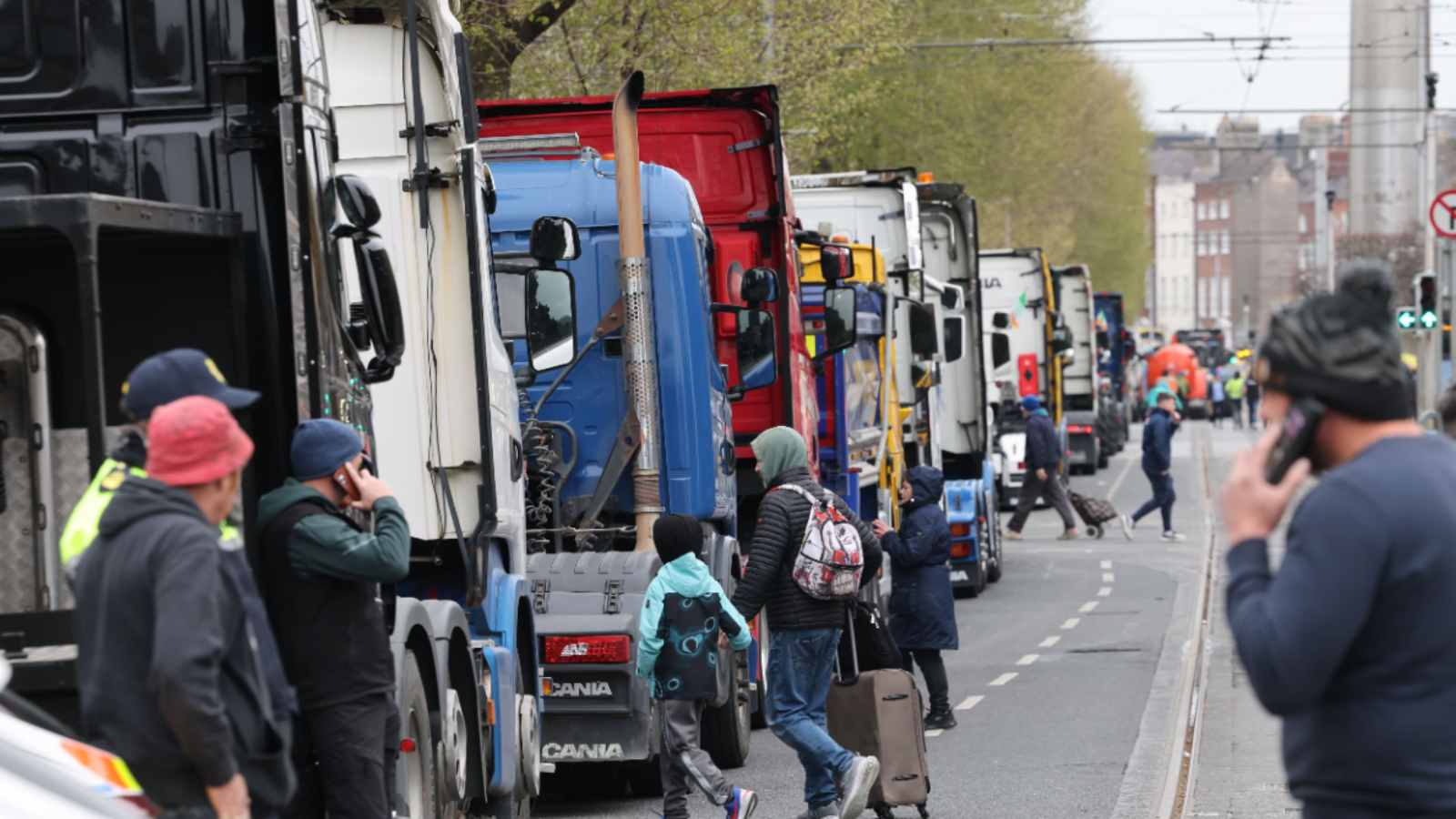
DUBLIN (Azat TV) – Protests across Ireland by hauliers and farmers have entered their second week as demonstrators officially rejected a €505 million government relief package, labeling the state’s intervention as insufficient to offset the crippling rise in operational costs. The standoff has deepened as of April 13, 2026, creating significant friction between the administration and key sectors of the national economy.
Mounting Economic Pressure and the Government Package
The government’s proposed financial aid was designed to stabilize the supply chain, yet it failed to address the core grievances of those who rely heavily on fuel for their livelihoods. With energy prices reaching record highs due to global supply chain volatility, the cost of diesel and other essential inputs has more than doubled for many businesses. Independent hauliers and agricultural workers argue that the current relief package would not prevent widespread insolvency for small-scale operators.
The Emergence of Decentralized Convoys
A notable shift in the protest movement is its increasingly leaderless structure. Unlike traditional industrial disputes, these convoys are organized via decentralized social media networks, making it difficult for the government to engage in conventional negotiations. This lack of a formal representative body has contributed to a sense of unpredictability on the ground. The convoys have begun to impact major arterial routes, causing severe disruptions to traffic, particularly as schools prepare for reopening, raising concerns about the potential for further gridlock.
National Stability at Stake
The ongoing unrest poses a substantial threat to the current Irish government coalition. Ministers are facing mounting pressure to provide a more comprehensive solution, but fiscal constraints and the risk of further inflation complicate the path forward. As the protests continue to gain momentum, the stability of the administration hangs in the balance, with opposition figures calling for a more aggressive approach to price regulation and supply security. The situation remains fluid as authorities attempt to balance public order with the right to protest.
The rejection of the €505m package marks a critical inflection point in the Irish fuel crisis, indicating that the government’s current fiscal strategy is misaligned with the immediate economic realities faced by the transport and agricultural sectors, potentially signaling a prolonged period of political instability.