
Quick Read
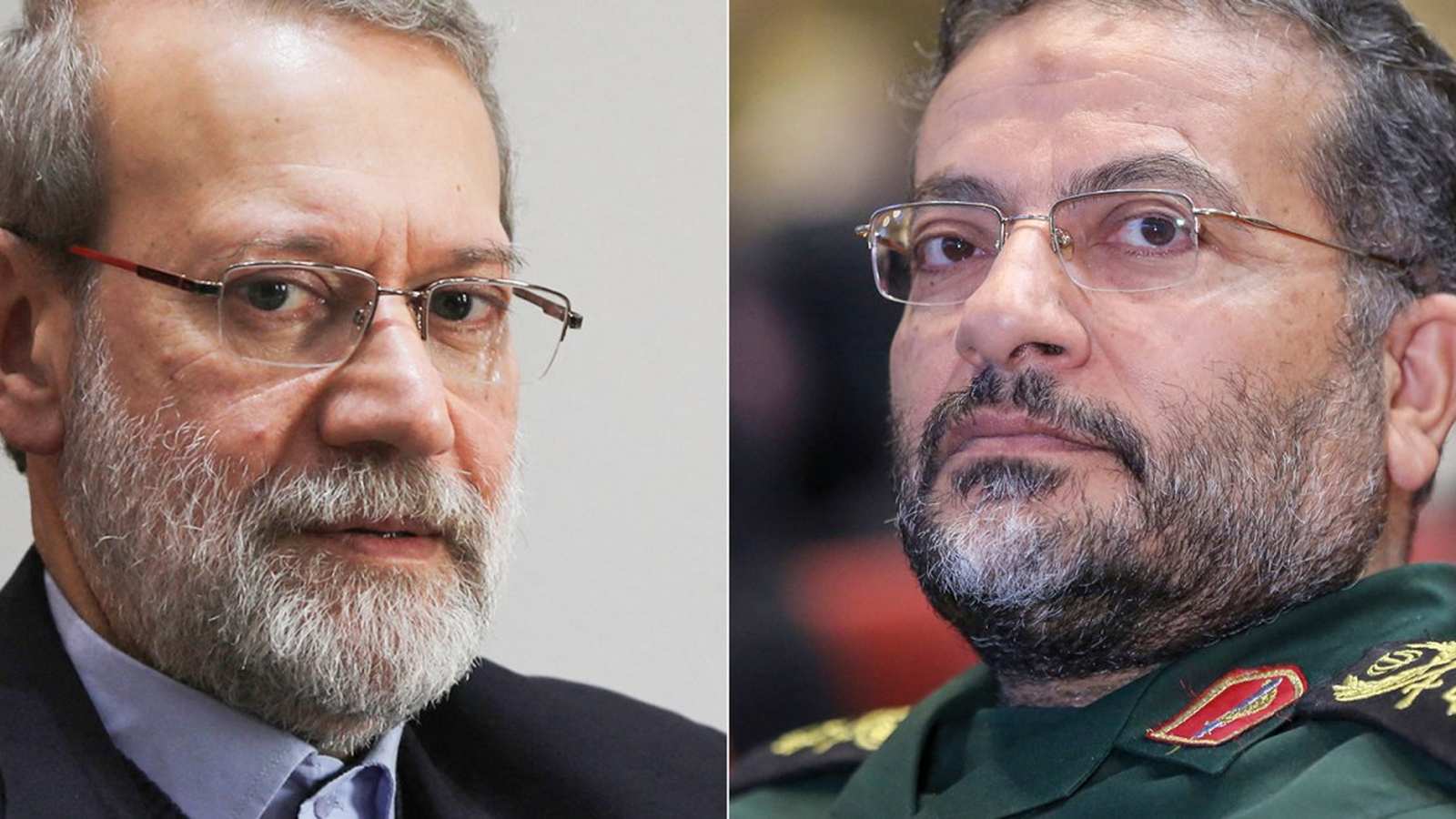
- Israel claims it has assassinated Ali Larijani, Iran’s top security chief, and Gholamreza Soleimani, commander of the Basij militia.
- Tehran has not yet confirmed the reports, leaving the status of the two officials uncertain.
- If confirmed, these would be among the highest-profile killings in the ongoing conflict.
TEL AVIV (Azat TV) – Israel has claimed responsibility for the assassinations of two high-profile Iranian officials: Ali Larijani, secretary of Iran’s Supreme National Security Council, and Gholamreza Soleimani, commander of the internal Basij militia. The Israeli Defense Minister Katz announced the purported killings, stating that “the leaders of the regime are being killed and their capabilities terminated.” However, Iranian state media has not yet commented on or confirmed these claims, creating a significant information vacuum regarding the fate of the two figures.
Israel Reports Strikes on Larijani and Soleimani
According to statements from Israel’s Defence Minister Katz and posts on X by the Israeli military, targeted strikes were conducted in Tehran. The military stated that guided by precise intelligence, the Air Force eliminated Gholam Reza Soleimani, who had commanded the Basij unit for the past six years. Soleimani is described as the commander of the paramilitary militia affiliated with the Islamic Revolutionary Guard Corps (IRGC).
Ali Larijani, identified as Iran’s top security official and advisor to the former Supreme Leader Ayatollah Ali Khamenei, was also reportedly targeted. Larijani has held significant positions within the Iranian hierarchy for years, including leading nuclear negotiations with the West and serving as the Iranian Speaker of Parliament. His last public appearance was on Friday, attending the al-Quds day rally in Tehran alongside President Masoud Pezeshkian.
Uncertainty Surrounds Confirmations
Despite Israel’s claims, Iran has remained silent on the reported assassinations. This lack of confirmation has led to speculation, with Iranian state media publishing a handwritten note attributed to Larijani. While the note commemorates sailors killed in a recent attack, its intent as proof of life or a response to the assassination claims remains unclear.
Analysts suggest that if confirmed, these would represent the highest-level assassinations in the ongoing conflict since the reported killing of former Supreme Leader Ali Khamenei and members of his family on February 28. The Basij militia is known for its role in suppressing anti-regime protests within Iran.
Strategic Implications of Alleged Killings
Al Jazeera’s Nida Ibrahim noted from the occupied West Bank that the claimed assassinations would be viewed as a major strategic success in Israel. However, she cautioned that even if Larijani has been killed, it does not signify the downfall of the entire regime. Meanwhile, reports from Tehran indicate that US-Israeli attacks are not confined to the capital but have extended to cities across the country, including Ahvaz, Isfahan, and Shiraz.
Mohamad Elmasry, a professor at the Doha Institute for Graduate Studies, characterized the actions by the United States and Israel as a “game of whack-a-mole” within Iran. The Israeli military leadership, including IDF Chief of Staff Lieutenant General Eyal Zamir, has indicated that significant elimination achievements were recorded overnight, potentially impacting the course of the campaign.
The unconfirmed nature of these high-profile assassinations highlights the intense information warfare accompanying the ongoing conflict, with competing narratives emerging from Israeli authorities and a conspicuously silent Iranian leadership.