
Quick Read
- Israel conducted airstrikes on Iran early Friday, targeting nuclear facilities and military leaders.
- Two top Iranian commanders were killed, and explosions were reported across Tehran.
- Global markets reacted with oil prices surging, while regional airspaces were closed.
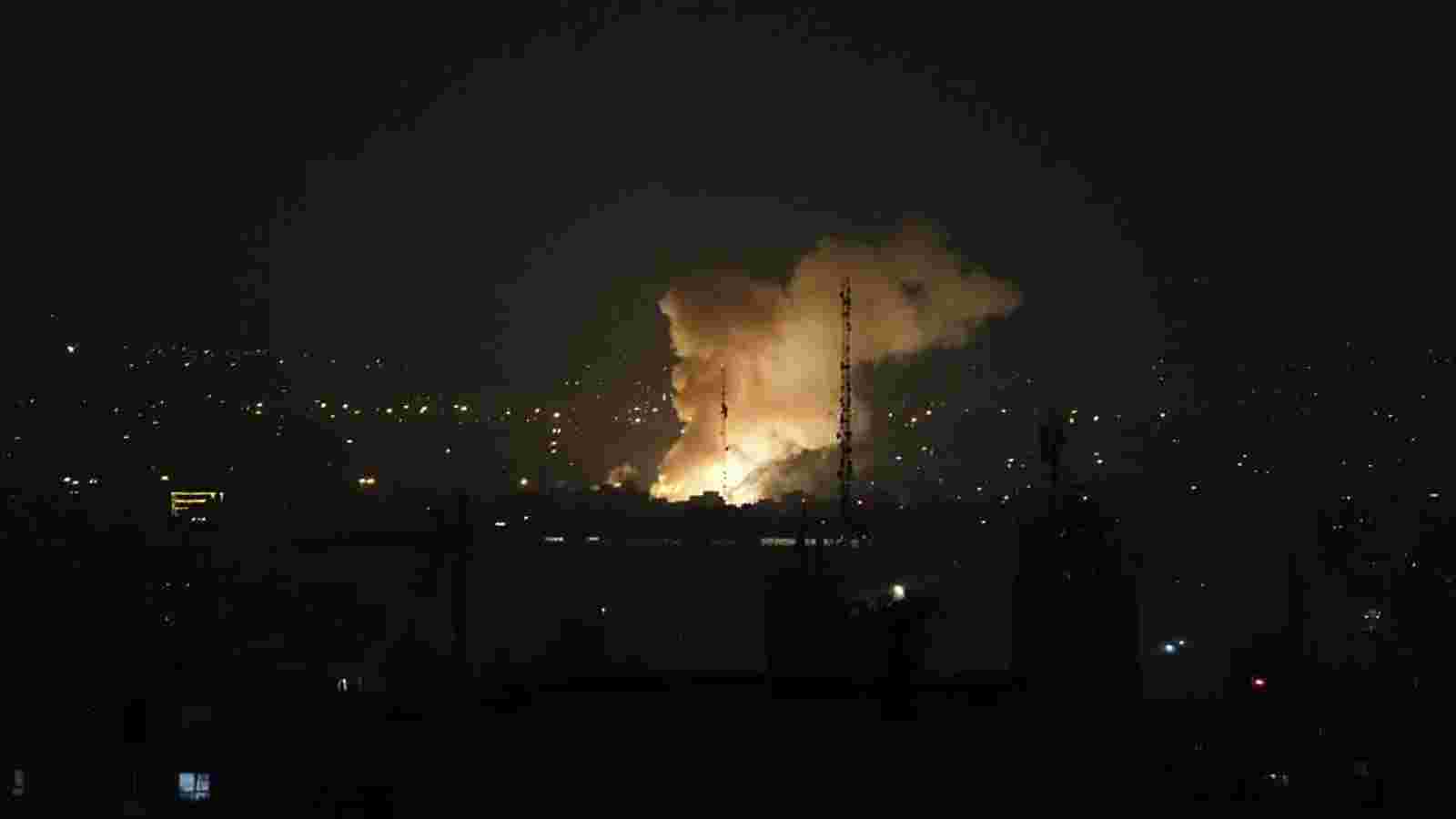
In the early hours of Friday, June 13, 2025, the Middle East was jolted by a dramatic escalation as Israel launched a series of airstrikes targeting key Iranian nuclear facilities and military leadership. Explosions echoed across Tehran, with smoke rising ominously over the city. The strikes, described as part of Operation “Rising Lion,” aimed to dismantle Iran’s alleged nuclear weapons program, a move Israel deemed essential for its national security.
What Happened During the Strikes?
According to reports, the airstrikes began around 3 a.m. local time, with loud detonations heard in northeastern Tehran. Israeli forces targeted Iran’s main nuclear enrichment site in Natanz, as well as missile factories and military compounds. In the aftermath, Iranian state media confirmed the deaths of two high-ranking military officials: Brig. Gen. Mohamed Bagheri, commander in chief of Iran’s military, and Revolutionary Guards Commander Hossein Salami. Both were pivotal figures in Iran’s defense strategy.
The strikes also disrupted civilian life in Tehran. Flights at Imam Khomeini International Airport were suspended, and witnesses described widespread panic. “I woke up to deafening explosions. People rushed out of their homes in fear,” said Marziyeh, a resident of Natanz. “I’m worried for my children’s safety if this situation escalates further.”
Israel’s Prime Minister Benjamin Netanyahu defended the operation in a video statement, declaring that it struck “at the heart of Iran’s nuclear enrichment program” and would continue “for as many days as it takes.” Meanwhile, Iran vowed retaliation, with Brig. Gen. Abolfazl Shekarchi warning that Israel and the United States would pay a “heavy price.”
Why Did This Happen?
Israel has long accused Iran of pursuing nuclear weapons under the guise of a civilian program, a claim Iran denies. Over the past decade, tensions have simmered, with sporadic incidents hinting at deeper hostilities. The International Atomic Energy Agency (IAEA) recently declared Iran in violation of non-proliferation agreements, adding urgency to Israel’s actions.
Prime Minister Netanyahu emphasized that diplomatic efforts had failed to curb Iran’s nuclear ambitions. “It’s clear Iran is just buying time. It refuses to agree to the basic requirements of peaceful nations,” he said. The strikes also came just days before planned negotiations in Oman between U.S. and Iranian officials, casting doubt on the prospects for diplomacy.
For Iran, the attack represents a direct challenge to its sovereignty and military capabilities. Iranian leaders have signaled that retaliation is inevitable, further escalating fears of a broader regional conflict. In response to the strikes, air raid sirens were activated in Israel, and its Defense Minister declared a “special state of emergency.”
How Did People and Markets React?
The strikes sent shockwaves through both the region and global markets. Oil prices surged by nearly 12%, reflecting concerns over potential disruptions in the Gulf, a critical hub for energy exports. Meanwhile, U.S. stock futures dipped as investors grappled with the potential economic fallout.
In Iran, public reactions ranged from anger to fear. Some citizens expressed outrage, demanding retaliation. “We can’t afford not to respond,” said a Tehran resident. Others, however, voiced concerns about the toll on civilians. “The price we are paying is too high,” lamented Mohammadreza, a teacher in Chalus. Economic hardships, compounded by years of sanctions, have left many Iranians weary of further conflict.
Amid the chaos, some Iranians considered fleeing to neighboring countries like Turkey. “I waited for the exchange offices to open so I could buy Turkish lira and take my family there by land,” said Masoud Mousavi, a retired bank employee from Shiraz. “I am against any war. I will stay in Turkey until this situation is over.”
Regional airspaces were also affected, with Jordan, Iraq, and Iran halting civilian flights. Jordan’s air force intercepted missiles and drones, adding to the sense of unease. “Announcements from mosques advised Jordanians to seek shelter,” reported local witnesses.
Historical Context and Implications
The confrontation between Israel and Iran is rooted in decades of animosity. Since the 1979 Islamic Revolution, Iran’s clerical leadership has positioned itself as a regional adversary to Israel, often through proxy forces like Hezbollah. Israel, in turn, has viewed Iran’s nuclear program as an existential threat.
Past incidents, such as the assassination of Iranian nuclear scientists and cyberattacks on enrichment facilities, have hinted at covert operations. However, the scale and visibility of Friday’s airstrikes mark a significant escalation. Analysts warn that the incident could trigger a domino effect, drawing in other regional players and destabilizing the Middle East further.
In Iran, the strikes have exacerbated internal tensions. Public dissatisfaction with the government has been growing, fueled by economic mismanagement, social restrictions, and a collapsing currency. While some see the attack as an opportunity to challenge the regime, others fear it will only tighten its grip on power. “I will fight and die for our right to a nuclear program,” said Ali, a member of the Basij militia. “Israel and America cannot take it away from us.”
Globally, the incident has strained diplomatic efforts. U.S. Secretary of State Marco Rubio reiterated that American forces were not involved in the attack but warned Iran against targeting U.S. interests. “Israel advised us that they believe this action was necessary for its self-defense,” Rubio said, adding that the U.S. remains in close contact with regional partners.
The international community is now watching closely to see how Iran responds. The IAEA has reportedly reached out to Iranian officials to monitor radiation levels at the targeted sites, while neighboring countries brace for potential spillover effects.
As the region teeters on the brink of further conflict, the stakes could not be higher. The coming days will reveal whether this operation marks the start of a prolonged confrontation or a turning point toward renewed negotiations.