
Quick Read
- Jadan Baugh, Florida Gators RB, will return for the 2026 season after signing a new NIL deal.
- Baugh’s deal is reportedly worth at least $1 million, reflecting the escalating market for top college running backs.
- He rushed for 1,170 yards in 2025, becoming the first Gator since 2015 to exceed 1,000 yards in a season.
- Florida fended off strong competition, notably from Texas, despite his former RB coach Jabbar Juluke joining Texas.
- New Head Coach Jon Sumrall made retaining Baugh a top priority for the program.
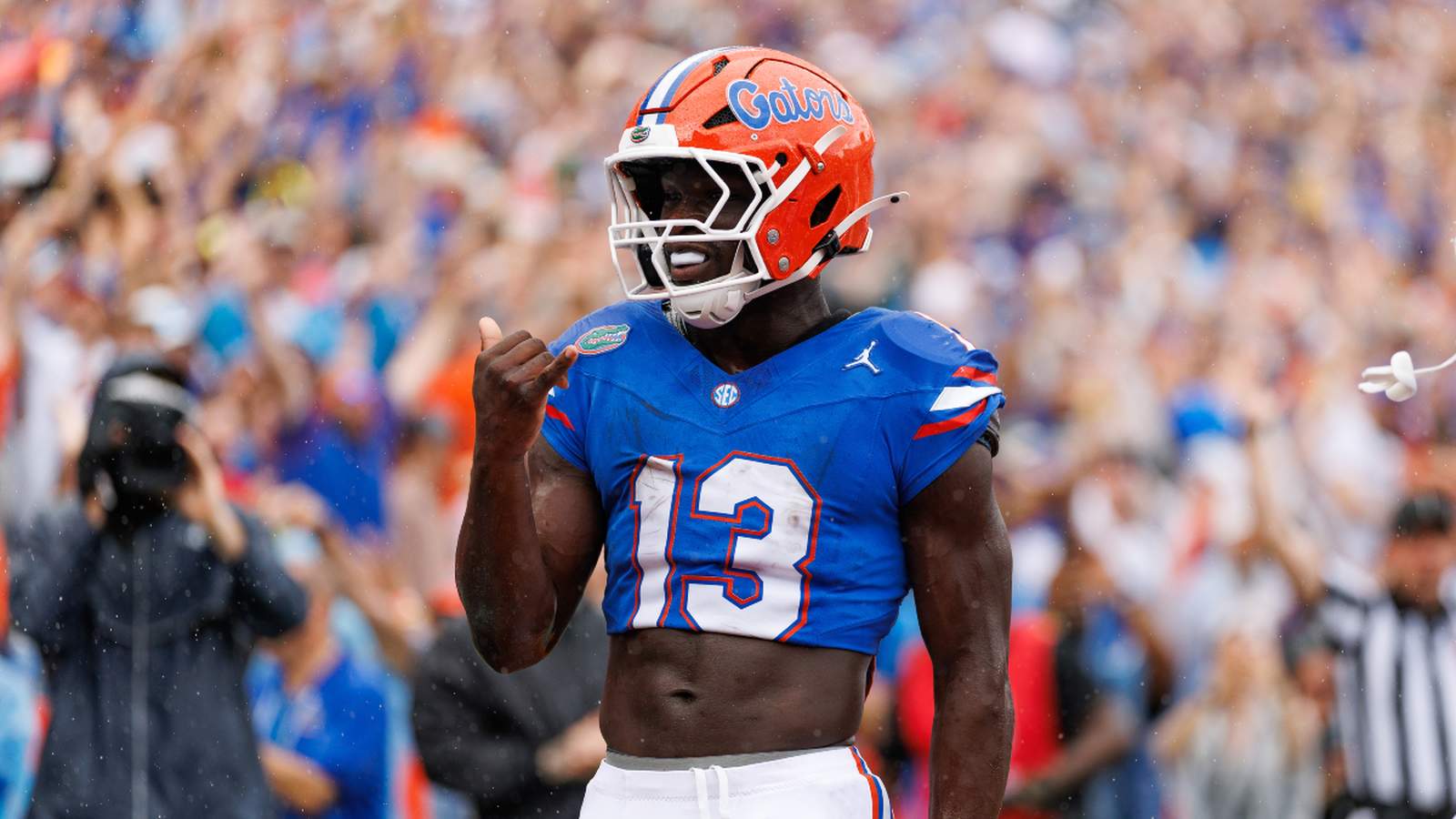
GAINESVILLE, Fla. – In a move that sends ripples across the collegiate athletic landscape, star running back Jadan Baugh has officially committed to remaining with the Florida Gators for the 2026 season. This decision, announced on Tuesday, January 6, 2026, culminates weeks of intense speculation and underscores a new, high-stakes era in college football where player retention, particularly of elite talent, comes with a hefty price tag. For Baugh, that price tag is reportedly upwards of $1 million, making him a potent symbol of the sport’s rapidly evolving economic realities.
Baugh’s return is a monumental victory for the Florida program and its new leadership under Head Coach Jon Sumrall. It signals the Gators’ determination to compete at the highest level, even if it means navigating the ‘stupid’ economics of the Name, Image, and Likeness (NIL) era. His commitment comes after a standout 2025 season where he cemented his status as one of the nation’s premier running backs, rushing for an impressive 1,170 yards and eight touchdowns.
A Dominant Force on the Field: Baugh’s Rise to Stardom
Jadan Baugh’s journey with the Florida Gators has been nothing short of spectacular. As a freshman in 2024, he quickly made his presence felt, leading the team with 673 rushing yards and seven touchdowns. A memorable moment from that inaugural season saw him tie a program record with five rushing touchdowns in his first career start against Kentucky, a performance that hinted at the greatness to come. By 2025, Baugh had fully embraced the role of the team’s headlining back, a consequence of his freshman year heroics and other injuries within the running back room.
His sophomore campaign in 2025 was historic for the Gators. With 1,170 rushing yards, Baugh became the first Florida player to eclipse the 1,000-yard mark in a season since Kelvin Taylor achieved the feat in 2015. This accomplishment places him among the program’s elite, as he is now the tenth running back in Florida history to reach this significant milestone, joining legends like Emmitt Smith and Errict Rhett. His 1,170 yards also rank seventh all-time in school history for a single season, the most by a Gator since Ciatrick Fason’s 1,267 yards in 2004, according to On3.
Baugh saved his best for last in the 2025 season, delivering an electrifying performance in the season finale against rival Florida State. He torched the Seminoles for a staggering 266 yards and two touchdowns, setting a rivalry game record and becoming only the eighth player in program history to rush for over 200 yards in a single game. This record-breaking display, the most by a Gator against FSU and the second-highest total in UF history behind Emmitt Smith’s 316 yards in 1989, left an indelible mark on Florida fans and undoubtedly amplified his market value.
The High Stakes of Retention: Fighting Off the Transfer Portal
Baugh’s decision to stay was far from a foregone conclusion. The college football landscape, reshaped by the transfer portal and NIL opportunities, had made him one of the most coveted talents. Multiple programs, most notably the Texas Longhorns, aggressively pursued him. The situation became particularly tense when Jabbar Juluke, Baugh’s highly respected running backs coach at Florida, departed to join the Texas staff. Many believed Juluke’s influence could sway Baugh’s decision, given Baugh’s own words: ‘Coach Juluke is one of the best running back coaches in America. I feel that heavy. Him talking to me every day, pushing me the right way, I feel like that made me the player I am today,’ he told SI.com.
The Gators, however, were not to be outmaneuvered. New Head Coach Jon Sumrall and General Manager Dave Caldwell wasted no time in making Baugh’s retention their absolute top priority. Sumrall, known for his strong yet caring demeanor, made it clear that Baugh was indispensable. ‘He’s extremely high priority,’ Sumrall stated during a Zoom call. ‘He’s a proven player, frontline player in the SEC. I have a lot of respect for what he’s done. We’d love to have the opportunity to retain him. It’s one of the top priorities right now… would love for him to stay.’
The Florida staff, including new offensive coordinator Buster Faulkner (who had previously recruited Baugh to Georgia Tech) and new running backs coach Chris Foster, met with Baugh shortly before Christmas. These meetings, described by Florida Gators on SI as productive and positive, were crucial in convincing Baugh that Gainesville remained the best place for his future. This aggressive, coordinated effort by Florida’s new regime ultimately paid off, fending off Texas’s strong push and securing Baugh’s commitment.
The $1 Million Running Back: College Football’s New Economy
Beyond the wins and losses, Baugh’s decision has significant financial implications, emblematic of the seismic shifts within college football’s economic model. Multiple sources indicate that Baugh’s new NIL deal with Florida Victorious will net him at least $1 million for his services in Gainesville. This figure is staggering, especially considering the prevailing wisdom in professional football that running backs are often not worth overpaying.
Just two years prior, in 2024, CBS Sports analyzed the market for running backs, placing the average range between $200,000-$300,000, with top-tier players like Ohio State’s Quinshon Judkins commanding around $650,000. Baugh’s reported $1 million+ deal represents an exponential leap, pushing the high end of the position into seven figures. One Big Ten general manager, speaking to CBS Sports, candidly described the running back numbers as ‘absolutely stupid. They don’t make any sense.’ Another industry source questioned, ‘Who are the agents telling kids that a reasonable ask? Surely it can’t be anyone with a frontal lobe?’
Yet, in the fluid and often desperate landscape of college football’s NIL era, value is ultimately determined by what someone is willing to pay. For Florida, and for programs like Texas that were vying for Baugh’s talent, the investment is seen as a necessary cost of doing business. The stakes are incredibly high, particularly for a team like Texas, which is believed to be in its final season with Arch Manning and harbors serious national championship aspirations. Losing a talent like Baugh to a rival, especially after the departure of Trevor Etienne to Georgia in 2023, was simply not an option for the Gators.
Baugh himself maintains a grounded perspective amidst the financial whirlwind. ‘I’m never focused on future things. I’m always focused on the moment. Life is short,’ he said after the FSU game. ‘Focusing on the moment, just enjoying everything that’s in front of me, I feel like that’s the way to go.’ This philosophy, coupled with his deep connection to the Gators – ‘Being a Gator means everything to me. I still remember the first time I walked into The Swamp in uniform for my first spring game. It just felt different—almost like a heartwarming feeling—and I knew right then that this was the place for me’ – ultimately guided his decision, even as the market forces swirled around him.
With Baugh’s return, Florida now boasts a formidable running back room, including transfer Evan Pryor and expected retentions Duke Clark and Byron Louis. While the Gators lost Treyaun Webb, KD Daniels, and Chad Gasper to the transfer portal, Sumrall has indicated a willingness to use the portal to ‘enhance our team and to supplement where there may be holes or deficiencies,’ especially given that Florida did not sign a single running back in the 2026 recruiting class.
Jadan Baugh’s decision to stay with the Florida Gators is more than just a roster move; it’s a powerful narrative about the evolving economics of college football. His reported $1 million NIL deal not only underscores his immense value as an athlete but also highlights the unprecedented financial pressures and strategic maneuvering now required to retain elite talent. This landmark agreement sets a new benchmark for running backs and exemplifies how programs are adapting to the transfer portal and NIL, transforming player retention into a high-stakes battle for both athletic prowess and financial firepower.