
Quick Read
- Two explosions struck a mosque inside State Senior High School 72 in North Jakarta during Friday prayers, injuring 54 people.
- Police identified a 17-year-old student as the suspect and recovered items referencing white supremacist attackers and hate slogans.
- Investigators found homemade explosives, a toy gun with extremist markings, and writings at the suspect’s home.
- Authorities are probing bullying, online radicalization, and hate group links but ruled out formal terrorist networks.
- Most victims suffered burns and cuts; seven underwent surgery, and many require psychological support.
Explosions Shake Jakarta School Mosque During Friday Prayers
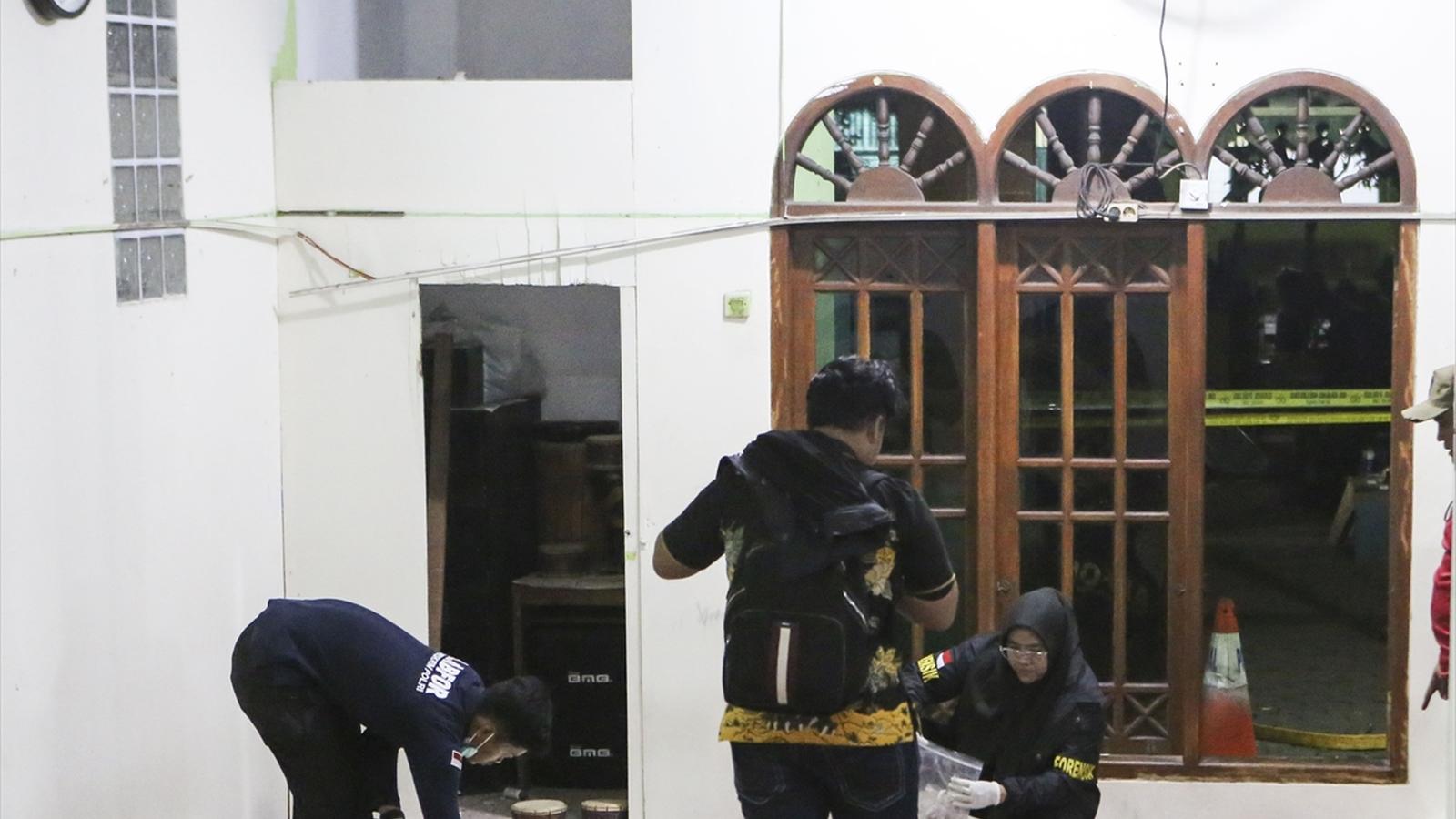
On Friday, November 7, 2025, a series of explosions shattered the midday calm inside the State Senior High School 72 (SMAN 72) mosque in North Jakarta’s Kelapa Gading district. The blasts occurred around 12:30 p.m. local time, just as hundreds of students and staff gathered for Friday prayers. In the panic that followed, worshippers fled through smoke and shattered glass, many suffering burns and lacerations from flying debris. Fifty-four people were injured, including students, teachers, and local residents.
The mosque sits within a densely populated navy housing compound—a neighborhood where children’s laughter and the hum of daily life were suddenly replaced by the sirens of emergency responders. “Our hearts were beating fast, we couldn’t breathe, and we ran outside,” recalled Luciana, a canteen worker. “At first, I thought it was an electrical problem or the sound system exploding, but white smoke was already billowing from the mosque.”
Nearby hospitals treated dozens, with seven undergoing surgery for burns and lacerations. Three students suffered serious burns, while 20 remain hospitalized. Margaret Aliyatul Maimunah, Chair of Indonesia’s Child Protection Commission, emphasized that many victims will need psychological support in addition to medical care.
Evidence Points to a Troubled Teen and Extremist Influences
As police and bomb disposal teams from the elite Gegana unit swept the scene, disturbing clues began to emerge. Investigators found homemade explosive components, remote controls, and a toy submachine gun—inscribed with references to infamous white supremacist attackers Brenton Tarrant (Christchurch, 2019) and Alexandre Bissonnette (Quebec City, 2017). Markings like “14 Words,” “For Agartha,” and “Welcome to Hell” pointed to possible ideological motives.
The suspect? A 17-year-old grade 12 student at the school, now hospitalized and undergoing surgery for injuries sustained in the blast. National Police Chief General Listyo Sigit Prabowo explained, “We discovered the weapon was a toy gun with specific markings, which we are investigating to understand the motive.”
At the teenager’s home, police seized explosive powder and writings. The Jakarta Metropolitan Police Chief Inspector General Asep Edi Suheri reported that the blasts originated near the mosque’s loudspeaker, but the precise type of explosives remains undetermined. Most victims standing close to the loudspeaker suffered hearing loss, while others were wounded by glass fragments.
Bullying, Revenge, and Online Radicalization: The Human Story
As the investigation deepened, a complex portrait of the suspect began to form. According to police, the boy was reportedly bullied at school and may have sought revenge—possibly intending the attack as a suicide mission. Ridlwan Habib, an intelligence and terrorism analyst at the University of Indonesia, observed, “This is the first time in Indonesia that an attack has occurred inside a school carried out by a 17-year-old student and the target was his own friends.”
Neighbors described the suspect as quiet and withdrawn, living with his father and older sister in a home that doubled as a food processing space. “He’s a quiet person who often stayed in his room and played with his cellphone and laptop,” shared neighbor Danny Rumondor. The boy’s parents had divorced more than seven years ago, leaving him isolated and, perhaps, vulnerable to online radicalization.
The recovered writings and internet search history suggest he was influenced by extremist ideologies from outside Indonesia. The slogans and references on the toy gun mirror the language used by notorious hate crime perpetrators abroad. Police have ruled out a terrorist network but continue to probe possible links to hate groups and the wider social context that shaped his actions.
Deputy House Speaker Sufmi Dasco Ahmad, who visited victims at the hospital, confirmed that the suspect remains under medical supervision. “The information I have is that the suspect is undergoing surgery,” Ahmad said, declining to discuss motive further.
Community Response and Ongoing Investigation
The explosions have sparked widespread concern across Jakarta, drawing attention to the safety of schools, the vulnerability of teenagers, and the reach of extremist ideologies in the digital age. Anti-Terror Detachment 88, Indonesia’s elite counterterrorism force, has been deployed to assist with the investigation. Authorities stress that all recovered evidence—from explosive materials to writings—remains under analysis.
Jakarta Police Chief Asep Edi Suheri told reporters, “The cause is not yet known,” while National Police Chief Listyo Sigit Prabowo added, “We will continue to investigate whether other individuals or groups were involved.” Forensic teams are working to determine exactly how the suspect constructed the devices and whether anyone helped him.
Meanwhile, the local community is grappling with shock and grief. Parents are searching for answers, students are seeking reassurance, and religious leaders are calling for unity and vigilance. Margaret Aliyatul Maimunah underscored the need for psychological support: “Some had to be operated on, while those whose conditions allowed it have been permitted to go home. Many will also require psychological support.”
As Indonesia comes to terms with this unprecedented school attack, the focus remains on understanding the underlying causes—bullying, isolation, and the lure of online hate—and preventing future tragedies.
In the aftermath of the Jakarta school mosque explosions, Indonesia stands at a crossroads: confronting the painful realities of youth alienation and the global spread of extremist ideology. The facts reveal not only the immediate trauma of 54 injured but also the deeper challenge of protecting young people from radicalization and violence. The investigation’s outcome may shape how Indonesia addresses school safety, mental health, and the dangerous intersection of online hate and adolescent vulnerability.