
Quick Read
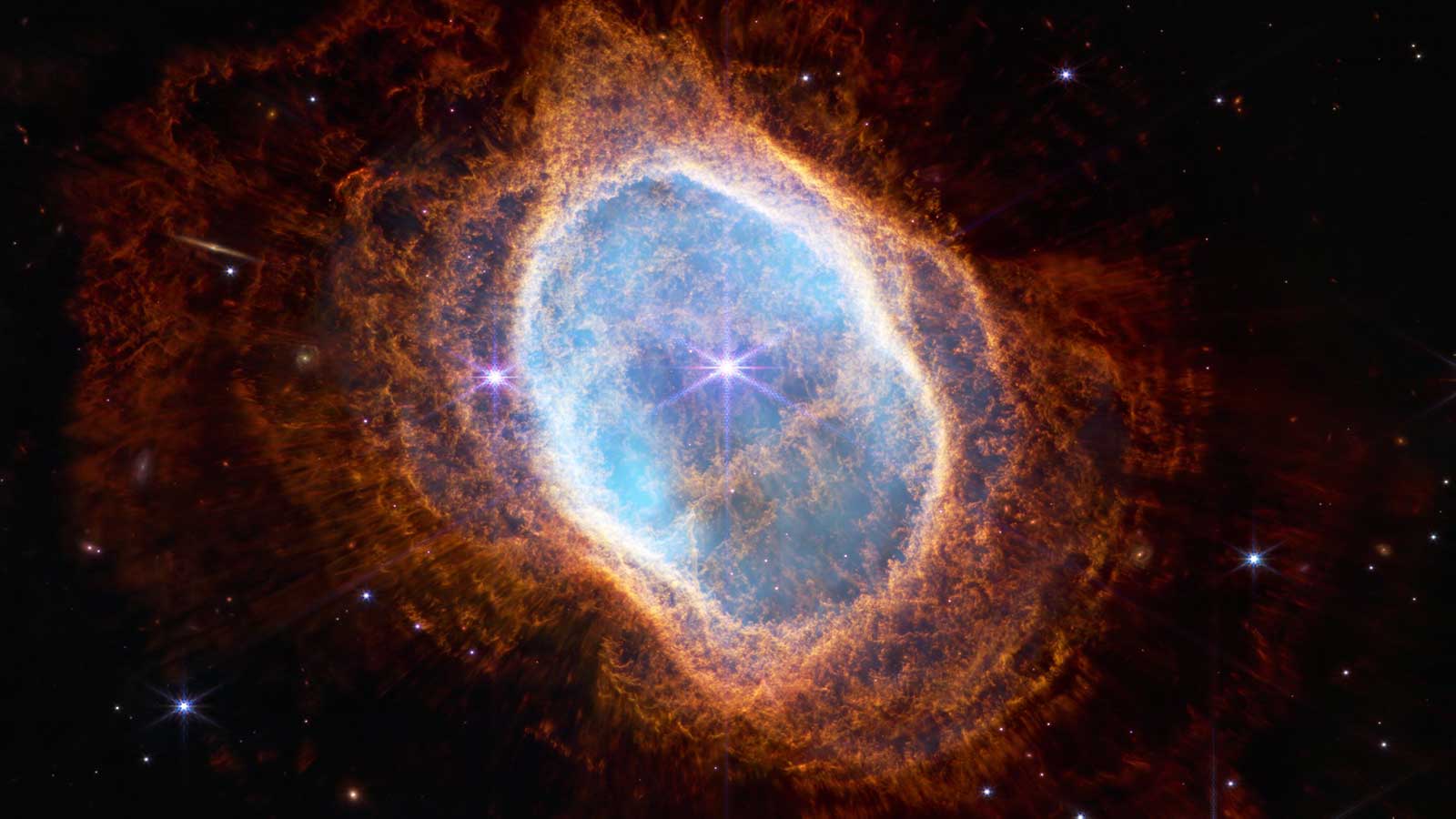
- The James Webb Space Telescope (JWST) captured detailed images of the planetary nebula NGC 1514.
- The nebula’s structure is shaped by two central stars in a tight orbit, ejecting gas and dust.
- The imagery highlights advancements in space telescope technology compared to earlier missions.
- The visuals have sparked public fascination and discussions about cosmic mechanics.
- Astronomers are using these images to study the life cycles of stars and nebula formation.
James Webb Space Telescope Unveils NGC 1514’s Celestial Beauty
The James Webb Space Telescope (JWST) has once again delivered breathtaking imagery, this time focusing on the planetary nebula NGC 1514. Located approximately 800 light-years away in the constellation Taurus, this nebula offers a vivid glimpse into the final stages of a star’s life. The detailed images captured by JWST have not only advanced scientific understanding but also captivated audiences worldwide.
What Makes NGC 1514 Unique?
NGC 1514, often referred to as the “Crystal Ball Nebula,” is a planetary nebula formed from the remnants of a dying star. Unlike traditional nebulae, its structure is shaped by the unique interaction of two central stars in a tight orbit. One of these stars is a white dwarf, the remnant of a star that has exhausted its nuclear fuel, while the other is a companion star. Together, their gravitational interplay ejects vast quantities of gas and dust, creating intricate patterns that resemble a celestial Venn diagram.
Breakthrough Imaging with JWST
The JWST’s mid-infrared imaging capabilities have provided an unprecedented level of detail, revealing the nebula’s complex structure. Compared to earlier observations, such as those made by NASA’s Wide-field Infrared Survey Explorer (WISE) in 2010, JWST’s images are significantly clearer and more detailed. This leap in technology allows astronomers to study the nebula’s composition, dynamics, and evolution with greater precision.
Public Fascination with Space Imagery
The stunning visuals of NGC 1514 have sparked widespread public interest. Social media platforms and forums are abuzz with discussions about the “celestial dance” of the two stars and the mysteries of the universe. For many, these images serve as a reminder of the vastness and beauty of space, igniting curiosity and a deeper appreciation for astronomy.
Scientific Implications
Beyond their aesthetic appeal, the JWST’s images of NGC 1514 hold significant scientific value. By studying the gas and dust ejected by the dying star, astronomers can gain insights into the life cycles of stars and the processes that shape planetary nebulae. This research contributes to a broader understanding of stellar evolution and the chemical enrichment of the universe.
Advancements in Space Telescope Technology
The JWST represents a monumental leap in space telescope technology. Its ability to capture high-resolution images in the mid-infrared spectrum has opened new avenues for exploring the cosmos. The comparison between JWST’s images and those from earlier missions highlights the progress made in observing and understanding celestial phenomena.
The Future of Space Exploration
As the JWST continues its mission, it is expected to uncover more cosmic wonders, from distant galaxies to the atmospheres of exoplanets. Each discovery not only advances scientific knowledge but also inspires future generations to explore the universe. The images of NGC 1514 are a testament to the power of human ingenuity and the enduring quest to understand our place in the cosmos.
The James Webb Space Telescope’s images of NGC 1514 have captivated both scientists and the public, offering a stunning glimpse into the universe’s intricate beauty. As we marvel at these celestial wonders, we are reminded of the endless possibilities that lie beyond our planet, waiting to be explored.