
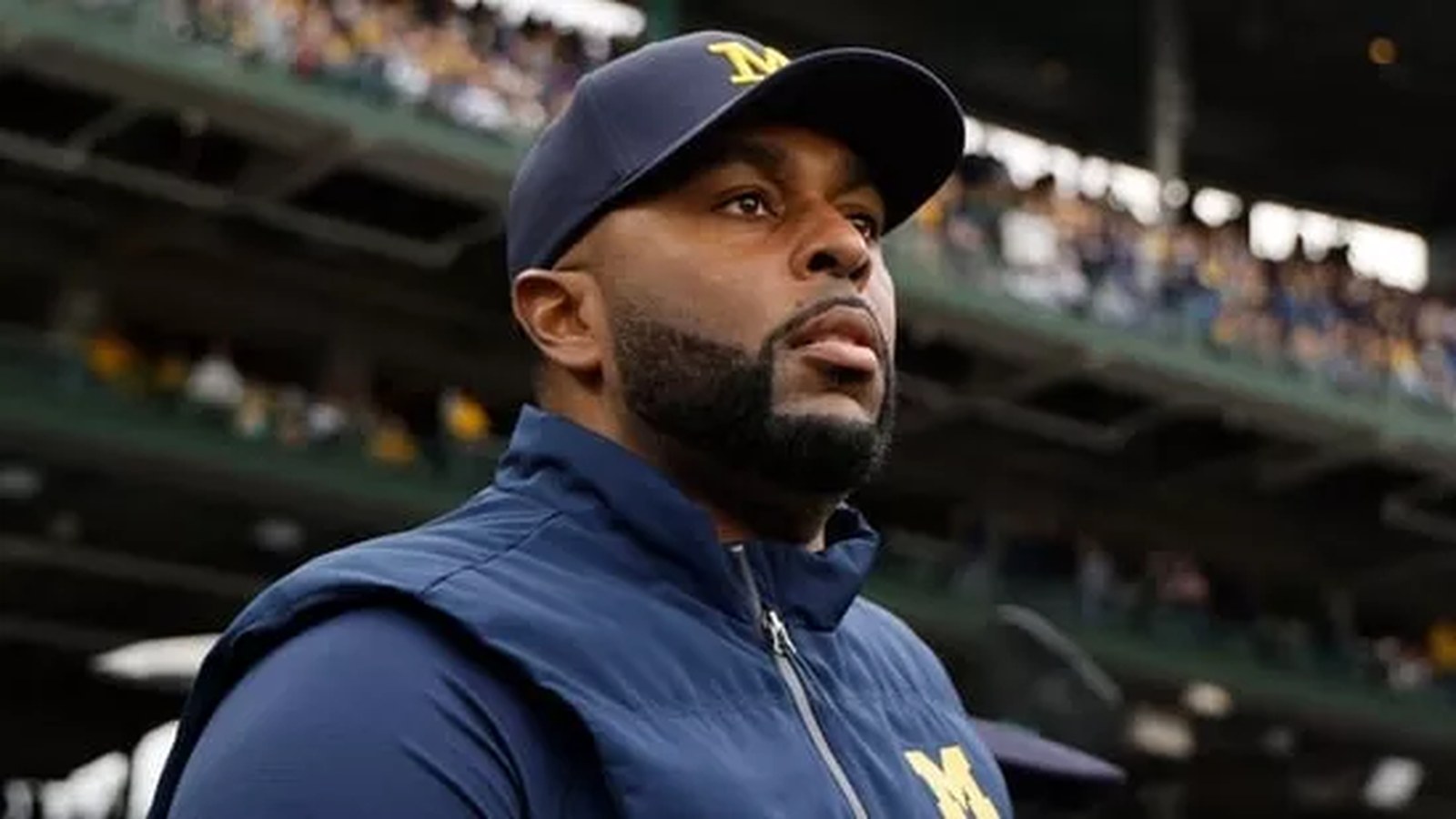
Quick Read
- Jemele Hill commented on Sherrone Moore’s firing, questioning racial double standards in sports.
- Hill argued that Black coaches rarely get a second chance after scandals, unlike some white coaches.
- Moore was dismissed and arrested over allegations of violent misconduct.
- Hill clarified she does not defend Moore, but is concerned about broader impacts on Black coaches.
Jemele Hill’s Social Media Statement Sets Off a Firestorm
When Sherrone Moore was fired from his position as head coach of the University of Michigan’s football program on December 10, 2025, the news ricocheted through sports circles and beyond. The initial reason—dismissal ‘for cause’—quickly gave way to more troubling details. Reports emerged alleging Moore’s involvement in an inappropriate relationship with a staffer and, more disturbingly, his arrest following a break-in at her home where he allegedly issued threats against her life and his own.
Amid the swirling rumors and media scrutiny, former ESPN analyst Jemele Hill stepped into the fray. Her social media posts didn’t just comment on Moore’s downfall—they challenged the underlying narratives shaping how Black coaches are perceived and treated in the aftermath of scandal.
Race, Redemption, and the Coaching Carousel
Hill’s initial post was blunt. While she called Moore a ‘cornball’ and made clear she did not defend his actions, she pointed out a pattern: “Before we start painting his firing, Mel Tucker’s, and Ime Udoka’s as some kind of indictment of Black male coaches, let me remind you of the following names. Hugh Freeze, Bobby Petrino, Rick Pitino, Mike Price, among others. The difference is in who gets a second chance to be a head coach. And you can guess who usually gets another chance.”
The implication was clear. Hill argued that white coaches, despite their own scandals—sometimes involving serious misconduct—frequently find opportunities to rehabilitate their careers. In contrast, Black coaches, she suggested, are often denied the same latitude, with their mistakes cast as representative of a larger problem.
Her comments, sourced from BollywoodShaadis, immediately ignited debate. Some social media users pushed back, claiming race was irrelevant to Moore’s case given the severity of his alleged actions. “No one, let me repeat NO ONE, has said anything about skin color here,” one user wrote. Others noted differences between Moore’s case and those of the white coaches Hill named, focusing on the violent nature of the reported incident.
Hill’s Clarification: The Weight of Representation
Not one to let the conversation slip away, Hill posted a longer note on X (formerly Twitter) clarifying her stance. She explained that her point was not to defend Moore but to highlight a recurring dynamic: “The incident with Moore is being used as some sort of example that there is a wider problem among Black coaches.”
Hill argued that the actions of one Black coach too often become a lens through which all Black coaches are judged, a phenomenon she believes does not equally apply to white coaches. “This doesn’t indict Black male coaches anymore than Lane Kiffin or Bobby Petrino’s actions indict white coaches. But the difference is that white coaches often get a chance to rehabilitate.”
She referenced Rick Pitino as a classic example of sports redemption, noting how his narrative is one of comeback, while Black coaches rarely receive such framing. “Rick Pitino is seen as a redemption story. Black coaches usually don’t get that,” Hill wrote. She further underscored her lack of sympathy for Moore, stating, “I don’t care about Sherrone Moore. He earned whatever is coming, but unfortunately, Black coaches will likely pay for what he’s done — and that isn’t right.”
The Broader Conversation: Who Gets a Second Chance?
Hill’s remarks invite a difficult but necessary conversation. In American sports, who truly gets a second chance? The list she cited—Hugh Freeze, Bobby Petrino, Rick Pitino, Mike Price—are all coaches who, after facing scandal, found their way back to high-profile jobs. Their redemption arcs are often celebrated, or at least accepted, in the public eye.
For Black coaches, Hill contends, the stakes are higher. A single transgression can define not just an individual’s career but cast a shadow over others who share their background. The message, she suggests, is that the road to redemption is not equally paved.
Critics of Hill’s viewpoint argue that the severity of Moore’s alleged actions—breaking into a home, issuing threats—places his case outside the bounds of mere professional misconduct. They suggest that the public’s response is about the nature of the crime, not the color of the perpetrator’s skin.
Supporters, however, see Hill’s comments as a necessary call to examine systemic bias. They point to the pattern of opportunity afforded to white coaches post-scandal and ask why similar grace is seldom extended to Black coaches. It’s a debate that touches on the heart of representation, justice, and equality in sports and beyond.
Public Reaction and the Limits of Social Commentary
The intensity of the backlash to Hill’s posts reflects the charged atmosphere surrounding discussions of race and accountability. Some felt her comments detracted from the seriousness of Moore’s alleged conduct. Others believed she was using a high-profile scandal to shine a light on persistent inequities.
The dialogue that unfolded online—sometimes heated, sometimes thoughtful—reveals just how complicated these issues remain. In a digital age, a single tweet or thread can set off waves of reaction, forcing institutions and individuals to confront uncomfortable truths about bias, opportunity, and justice.
Jemele Hill’s intervention in the Sherrone Moore case is not just about a coach’s firing—it’s about who gets to write the next chapter after a fall from grace, and whether redemption is truly an equal opportunity. Her remarks have sparked needed reflection on how race and reputation intersect in American sports, and remind us that the conversation is far from finished.