
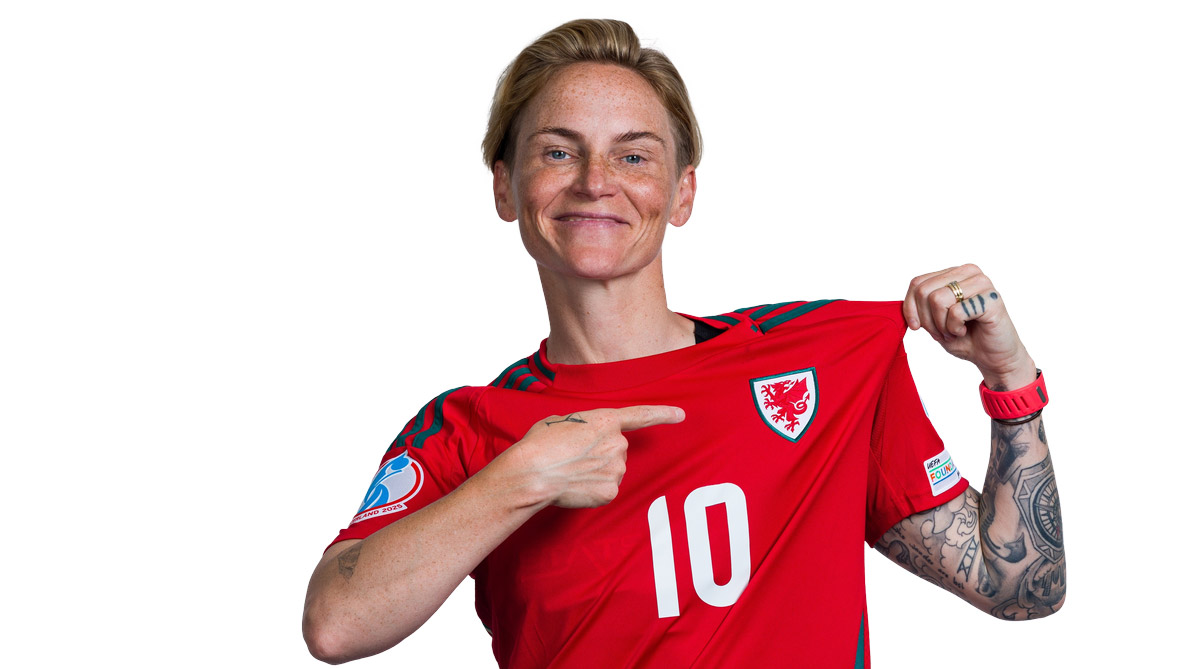
Quick Read
- Jess Fishlock played her final international match for Wales after a 19-year career.
- Fishlock is Wales’ most-capped player and all-time leading international goalscorer.
- Wales lost 2-1 to Australia in Cardiff, with Fishlock passing the armband to Angharad James before being substituted.
- Young talents like Mared Griffiths and Tianna Teisar debuted, signaling a new era for Welsh women’s football.
- Coach Rhian Wilkinson emphasized transition and opportunity rather than replacing Fishlock directly.
Jess Fishlock Bids Farewell: The End of an Era in Welsh Football
There are moments in sport that quietly mark the end of an era. On a crisp October evening in Cardiff, Jess Fishlock—Wales’ most capped footballer and leading international goalscorer—walked off the pitch for the final time wearing her country’s colors. It wasn’t just another substitution. It was the closing chapter of a remarkable 19-year journey, a story that has shaped the identity of Welsh women’s football.
Fishlock’s farewell came during a friendly against Australia, a team brimming with talent and fresh off their World Cup semi-final run. The match, held at Cardiff City Stadium, was more than just a contest; it was a tribute to a player whose name has become synonymous with Welsh football.
Australia’s Win Overshadowed by Fishlock’s Legacy
The scoreboard read 2-1 in favor of the Matildas when the final whistle blew (Impetus Football). Australia took the lead with a fortuitous free kick from Courtney Nevin, and Caitlin Foord sealed the victory late in the game. But the real headline was Fishlock’s swansong. Even at 39, she was Wales’ standout performer, coming close to an equalizer with a crisp half-volley that tested the Australian keeper.
Fishlock’s presence was felt throughout the match. She wore the captain’s armband, orchestrated attacks, and inspired teammates with her relentless energy. Yet, as the minutes ticked down, head coach Rhian Wilkinson made the call: Fishlock left the pitch in the 92nd minute, passing the armband to Angharad James and, symbolically, the baton to 20-year-old Tianna Teisar—one of three debutants on the night. The moment was poignant, a quiet handover from legend to the next generation.
Wales Faces the Challenge of Life After Fishlock
For almost two decades, Fishlock has been the cornerstone of the Wales team. She has played in more than two-thirds of the games in the history of Welsh women’s football (BBC Sport). Now, with her retirement and Kayleigh Barton also hanging up her boots, Wales must navigate a new era.
Head coach Wilkinson doesn’t pretend the transition will be easy. “You don’t fill the void left by Jess Fishlock—it’s impossible and it’s not fair to the player who comes in,” she said. Instead, she sees opportunity in uncertainty. With seven players from the Euro 2025 squad missing through injury, young talents like Gwen Zimmerman, Scarlett Hill, Mia Ross, and Tianna Teisar are being handed their chance.
“It’s a scary word, transition,” Wilkinson admits, “but it’s also exciting. Players who have been on the fringe or developing now have a chance to step forward.” Fishlock’s legacy isn’t just her goals and caps—it’s the standard she set, the passion she brought to every match. “She’s shown what it means to play for the badge. It’s never looked like just another job with Jess,” Wilkinson added.
A Symbolic Passing of the Torch
In a poetic twist, Fishlock’s final match saw a new star emerge. Mared Griffiths, just 18 years old and winning her second cap, scored her first international goal. The moment was loaded with symbolism: Griffiths, born nearly a year after Fishlock’s debut, latched onto a loose ball and chipped it over Australia’s keeper—after Fishlock herself was tackled. “What a well-taken goal,” Wilkinson reflected. “Pretty symbolic, right? Jess’ last game and a young star coming up and scoring a worldie like that.”
For Wales, Griffiths’ goal was more than just an equalizer; it was a glimpse of the future. The team may have lost, but the promise of youth was undeniable. As the final whistle sounded, the crowd acknowledged Fishlock’s contributions, but also the hope that the next generation might step up to fill her shoes.
Australia’s Tactical Edge and Wales’ Resilience
The match itself was an instructive case study in transition and adaptation. Australia, under Joe Montemurro, fielded a near full-strength lineup, using quick, direct passes to exploit wide attacking areas. The Matildas’ midfield reunited World Cup partners Katrina Gorry and Kyra Cooney-Cross, anchored by Clare Wheeler. Sam Kerr’s return provided the spark in attack, with Caitlin Foord and Hayley Raso flanking her.
Wales, meanwhile, leaned on Fishlock’s experience in midfield and the enthusiasm of rising talents. Defensive lapses cost them, notably when Nevin capitalized on a distracted keeper for the opening goal. Griffiths’ equalizer showcased Wales’ ability to recover, but Australia’s depth proved decisive. Substitutes like Carpenter and Kennedy shifted the momentum, allowing Foord to score the winner.
Despite the defeat, Wales showed resilience and hints of tactical evolution. The transition may be daunting, but the raw ingredients—a mix of seasoned leaders and hungry newcomers—are there.
Looking Forward: The Road Ahead for Wales
As Wales prepares for their next friendly against Poland, the sense of uncertainty is balanced by anticipation. The days of relying on Fishlock’s brilliance are over, but her example will guide the new generation. The squad now includes several young players eager to make their mark, supported by veterans like Angharad James.
Change is inevitable in football, but legacy endures. Fishlock’s influence will linger in every training session, every match, and every new cap awarded. The challenge for Wales is not to replicate her, but to forge a new identity—one built on the foundation she laid.
Fishlock herself summed up her career with characteristic humility: “I owe Wales everything.” As the torch passes, the hope is that future stars will feel that same connection and responsibility.
Jess Fishlock’s retirement is more than the end of a remarkable career—it’s the beginning of Wales’ next chapter. The transition will test the team, but the emergence of young talents like Griffiths hints at a future shaped by the very standards Fishlock set. Her legacy will be measured not just in numbers, but in the passion and possibility she leaves behind.