
Quick Read
- Jessica Alba appeared in Bad Bunny’s Super Bowl LX halftime show on February 8, 2026.
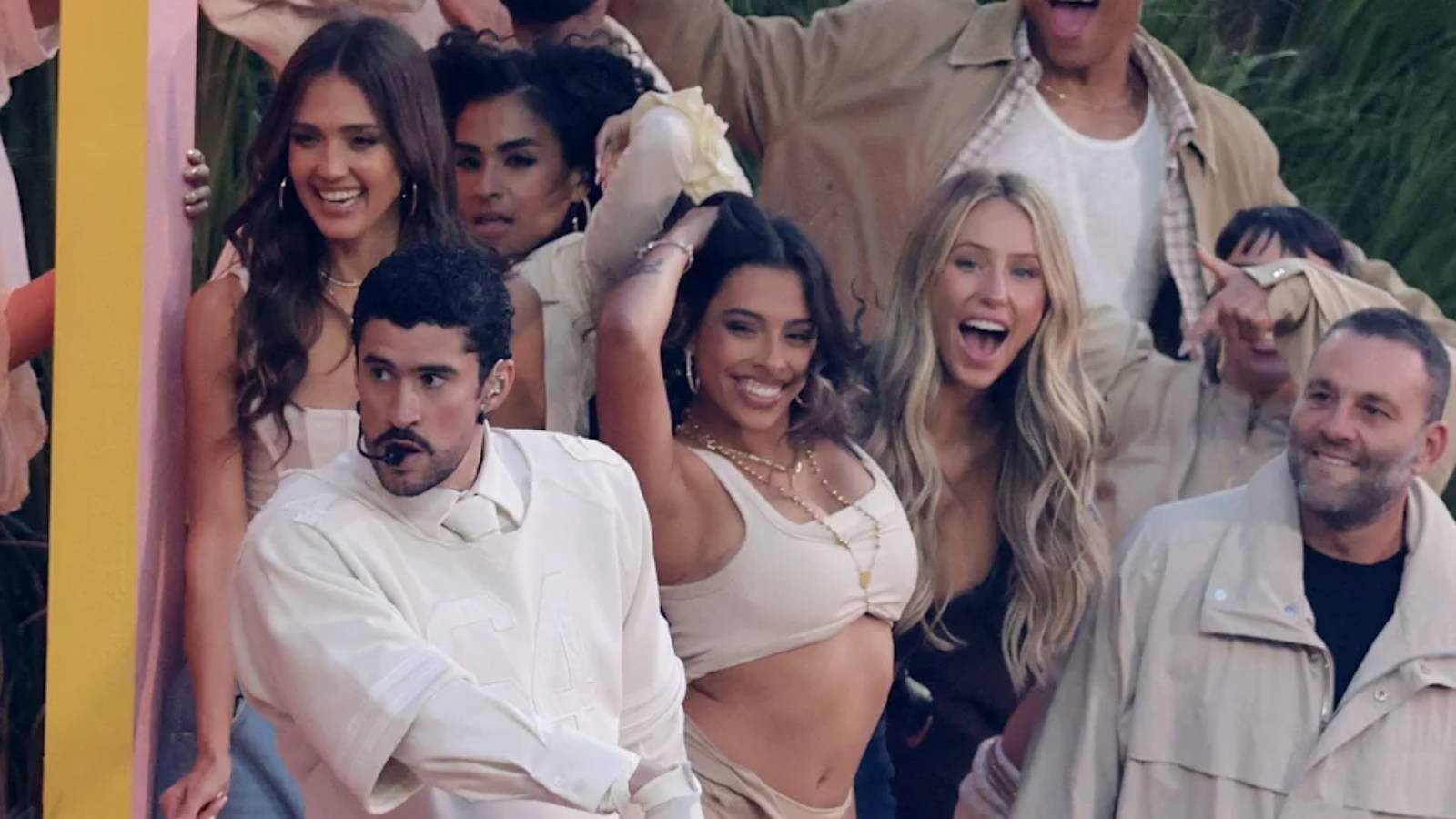
- She was part of the ‘La Casita’ segment, a recreated stage set featuring celebrities.
- Other notable guests in ‘La Casita’ included Pedro Pascal, Karol G, and Cardi B.
- Bad Bunny’s performance celebrated Puerto Rican pride and Latin American identity.
- The show also featured surprise musical cameos from Lady Gaga and Ricky Martin.
SANTA CLARA (Azat TV) – Actress and entrepreneur Jessica Alba was among the array of prominent figures who made an appearance during Puerto Rican superstar Bad Bunny’s electrifying Super Bowl LX halftime show on February 8, 2026, at Levi’s Stadium in Santa Clara, California. Alba joined a curated group of Hollywood A-listers and cultural icons in a segment that recreated Bad Bunny’s iconic ‘La Casita’ stage set, bringing a touch of celebrity glamour to the performance’s deeply personal and cultural narrative.
Bad Bunny, born Benito Antonio Martínez Ocasio, used the global stage of Super Bowl LX to deliver a performance steeped in Puerto Rican pride and Latin American identity. His 13-minute spectacle was a vibrant tapestry of music, dance, and powerful messaging, featuring homages to his homeland, political statements, and a series of high-profile guest artists. Jessica Alba’s presence, alongside stars like Pedro Pascal, Karol G, and Cardi B, underscored the broad appeal and cultural significance of the reggaeton titan’s show.
Jessica Alba’s Role in ‘La Casita’
The ‘La Casita’ segment, a staple of Bad Bunny’s residency and tour, served as a symbolic gathering space for artists, athletes, and cultural figures. For the Super Bowl halftime show, this concept was brought to life on the world’s biggest stage, welcoming celebrities like Jessica Alba into a set designed to evoke a sense of community and cultural celebration. While specific details of Alba’s interaction within the set were not extensively highlighted, her inclusion positioned her as a participant in a culturally resonant moment, aligning with Bad Bunny’s vision of an inclusive and representative performance.
Her appearance was noted by *USA TODAY*, which listed her among the ‘slew of Hollywood A-listers and other sports stars’ who joined Bad Bunny’s casita. This collective presence of diverse public figures amplified the show’s reach and reinforced its status as a major cultural event beyond just music or sports.
Bad Bunny’s Halftime Spectacle and Guest Stars
Bad Bunny’s performance was a meticulously crafted showcase of his musical journey and cultural roots. He kicked off the show with high energy, performing hits like ‘Tití Me Preguntó’ and ‘Yo Perreo Sola.’ The show also featured surprising collaborations, most notably with pop superstar Lady Gaga, who delivered a salsa-influenced snippet of ‘Die with a Smile,’ and fellow Puerto Rican icon Ricky Martin, who joined for ‘LO QUE LE PASÓ A HAWAii.’
These collaborations, including the collective presence of figures like Jessica Alba in the ‘La Casita’ setting, were integral to Bad Bunny’s overarching narrative. His performance highlighted themes of unity, love, and Puerto Rican identity, including a powerful moment where he named various North, South, and Latin American countries, concluding with ‘God Bless America.’ The football he spiked at the end of his set carried the message: ‘Together, We Are America.’
Cultural and Political Undertones of the Super Bowl Show
Beyond the star power, Bad Bunny’s Super Bowl performance was imbued with significant cultural and political meaning. He has been a vocal critic of the Trump administration’s immigration policies and its response to hurricanes in Puerto Rico. His decision to perform primarily in Spanish, a choice that drew criticism from some conservative pundits and President Donald Trump himself, was celebrated by many as an act of ‘resistance’ and a reclamation of the Spanish language on a global platform, as noted by Latin music scholar Jennifer Mota.
The show also featured subtle and overt cultural references, from sugar cane fields to piragua stands, evoking strong feelings of pride among Puerto Ricans. The presence of celebrities like Jessica Alba within this context further underscored the broad appeal of Bad Bunny’s message, demonstrating how entertainment can serve as a powerful vehicle for cultural expression and social commentary on the world’s biggest stages.
The strategic inclusion of diverse celebrity figures like Jessica Alba in highly visible cultural events such as the Super Bowl halftime show serves to broaden the appeal of the performance and amplify its underlying messages, transforming a musical act into a multifaceted cultural statement.