
Quick Read
- Jimmy Lai, founder of Apple Daily, was convicted in December 2025 on national security charges in Hong Kong.
- Lai, a British citizen, faces imminent sentencing, with a potential life imprisonment term.
- UK Prime Minister Sir Keir Starmer is currently in Beijing, facing pressure to raise Lai’s case with Chinese President Xi Jinping.
- Hong Kong’s press freedom ranking has dropped significantly, with journalists reporting increased self-censorship and covert coercion.
- Six other former executives of Apple Daily and its parent company also pleaded guilty to similar national security charges.
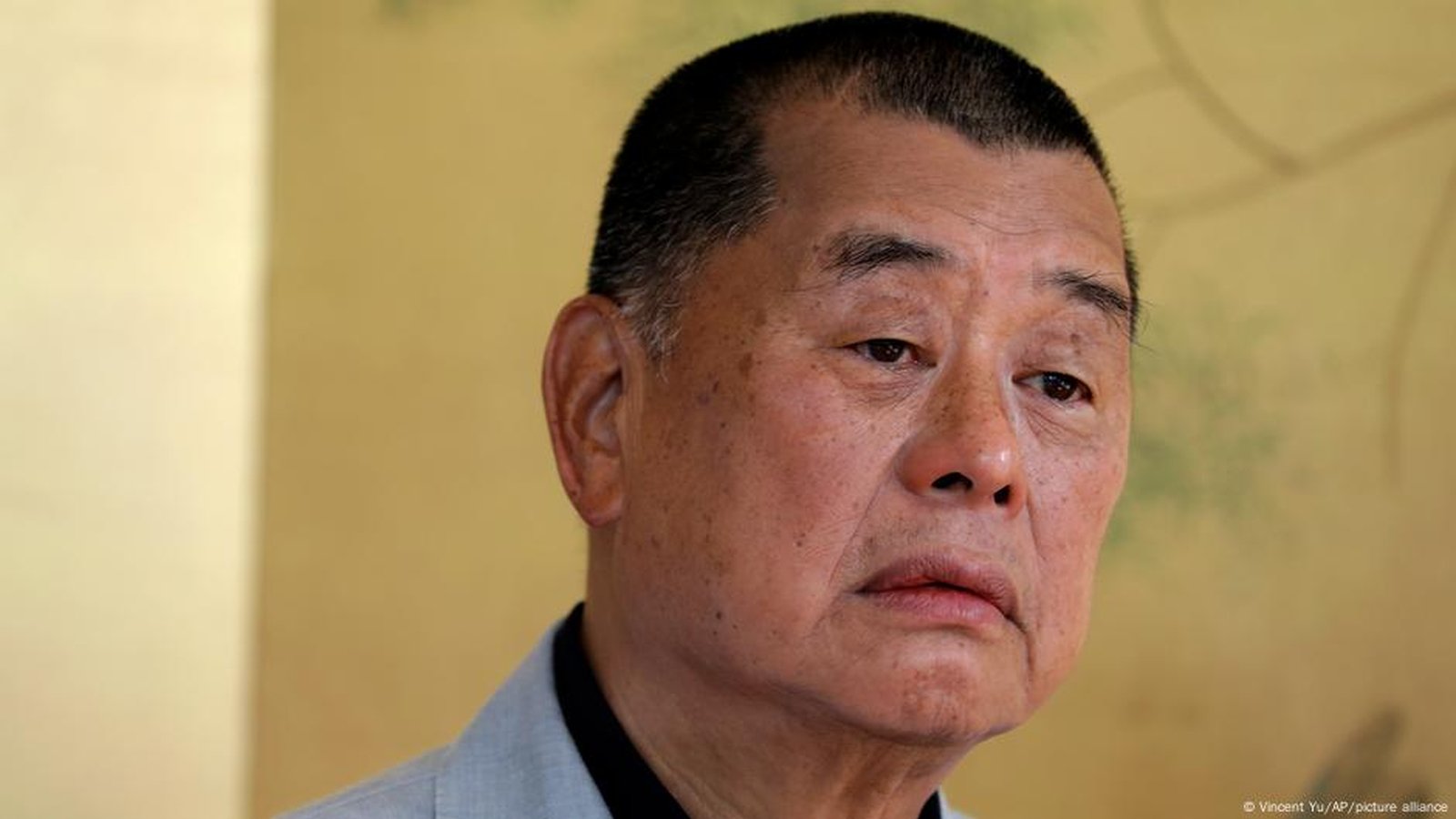
HONG KONG (Azat TV) – The conviction of prominent pro-democracy media mogul Jimmy Lai on national security charges in December 2025 has formalized a climate of fear within Hong Kong’s newsrooms, now facing intensified self-censorship and covert coercion. As Lai awaits an imminent sentencing that could lead to life imprisonment, international pressure has mounted on UK Prime Minister Sir Keir Starmer, who began a three-day visit to Beijing on Wednesday, to directly address Lai’s detention with Chinese President Xi Jinping.
Lai, the 78-year-old founder of the now-defunct Apple Daily newspaper and a British citizen, was found guilty after a 140-day trial of conspiracy to collude with foreign forces and sedition. His case has become a stark symbol of Beijing’s tightening grip on Hong Kong’s once-vibrant media landscape, particularly since the imposition of the national security law in 2020. Journalists in the city describe a profound transformation, where explicit crackdowns have given way to more insidious forms of control.
Jimmy Lai’s Conviction and Impending Sentence
The December 2025 verdict against Jimmy Lai, which saw him convicted of national security offenses, marks a critical juncture for Hong Kong’s autonomy. Lai has already spent five years in detention, partly for his role in the 2019 pro-democracy protests. His upcoming sentencing is anticipated to result in a lengthy prison term, with sources close to the situation suggesting a potential life sentence. Robert Sirico, a US-based Catholic priest and long-time friend of Lai, told The Independent that Lai’s ‘real offense is moral, not legal,’ stemming from his refusal to be silent and his decision to remain in Hong Kong despite having the means to leave.
Lai, who fled mainland China at age 12 and became a British citizen in 1994, founded Apple Daily with the explicit aim of safeguarding freedom of speech in Hong Kong. The newspaper was openly critical of the Chinese government and, at its peak, sold up to a million copies daily. However, its popularity is now being presented by authorities as evidence of a criminal conspiracy. Lai has consistently denied accusations of acting illegally, inciting violence, or calling for sanctions on China.
Mounting Pressure on UK Prime Minister Starmer
The impending sentencing of Jimmy Lai has significantly intensified calls for UK Prime Minister Sir Keir Starmer to prioritize the case during his current visit to China, the first by a UK leader in eight years. Starmer arrived in Beijing on Wednesday, January 28, 2026, just days after the controversial approval of China’s mega-embassy in London. Advocacy groups, including the Committee for Freedom in Hong Kong Foundation, have urged Starmer to make Lai’s release a condition of his engagement with President Xi Jinping. Mark Sabah, the foundation’s UK and Europe director, characterized Lai’s trial as a ‘grotesque exercise in legal subversion.’
Sebastien Lai, Jimmy Lai’s son, has publicly expressed fears over his father’s declining health, noting that much of his imprisonment has been in solitary confinement. ‘My father has been treated inhumanely,’ Sebastien Lai previously told The Independent, emphasizing his father’s defiance. The UK government faces substantial domestic pressure to secure the freedom of the British citizen, whose health continues to deteriorate after more than 1,850 days in detention.
Hong Kong’s Shifting Media Landscape
Lai’s conviction is widely seen by critics as a culmination of a systematic erosion of press freedom in Hong Kong, a city that once boasted one of Asia’s most open media environments. Hong Kong’s global press freedom ranking has plummeted from 18th in 2002 to 140th currently, closely mirroring mainland China’s 178th position. Journalists interviewed by The Independent, many requesting anonymity due to fear of reprisal, described a landscape where overt acts of censorship have been replaced by more subtle, yet equally effective, methods of control.
Selina Chang, chair of the Hong Kong Journalist Association, explained that overt newsroom raids and arrests have largely ceased. Instead, journalists now contend with ‘covert forms of coercion,’ including anonymous letters accusing them of ‘anti-China activities,’ threats of national security police involvement, targeted tax audits, and even gag orders preventing them from explaining why they’ve stopped publishing. Tom Grundy, founding editor of Hong Kong Free Press, observed that ‘many Hong Kongers… are reluctant to speak nowadays, and there are fewer opportunities to ask questions of the authorities.’
The impact extends beyond local outlets. A journalist working for a foreign outlet, speaking anonymously, stated that ‘international outlets are now part of the same calculation,’ citing instances where national security officials summoned foreign media representatives to warn against ‘anti-China activity.’ News organizations in Hong Kong now routinely consult lawyers before publication, a practice previously uncommon, highlighting the ‘legal ambiguity’ and ‘level of nervousness we’ve never seen before.’ The euphemism ‘drinking tea’ — a polite invitation from national security police that is effectively a warning or threat — has also reportedly migrated from mainland China to Hong Kong.
The Legacy of Jimmy Lai and Apple Daily
The crackdown on Apple Daily began in June 2021 with a raid by nearly 500 police officers, the arrest of Lai and senior staff, and the freezing of assets. The newspaper ceased publication days later, a move described by human rights organizations as a ‘chilling blow to freedom of expression.’ Since then, at least 14 other media outlets have shut down, and numerous journalists have been arrested, according to Human Rights Watch. Six other former executives of Apple Daily and its parent company, Next Digital, also pleaded guilty to conspiracy to collude with foreign forces under the national security law.
For many working journalists, Lai’s case is not just a news story but a ‘boundary marker’ — a measure of the shrinking space for independent reporting. While authorities officially deny any erosion of press freedom, state-aligned media outlets like the South China Morning Post, China Daily, Global Times, and CGTN have staunchly defended the verdict, insisting the trial was fair and unrelated to journalism, and accusing ‘the West’ of misrepresenting the situation.
The ultimate significance of Jimmy Lai’s conviction extends beyond his personal fate, serving as a stark illustration of Hong Kong’s rapid integration into China’s authoritarian framework and the global challenge of upholding democratic values and press freedom in the face of escalating geopolitical tensions.