
Quick Read
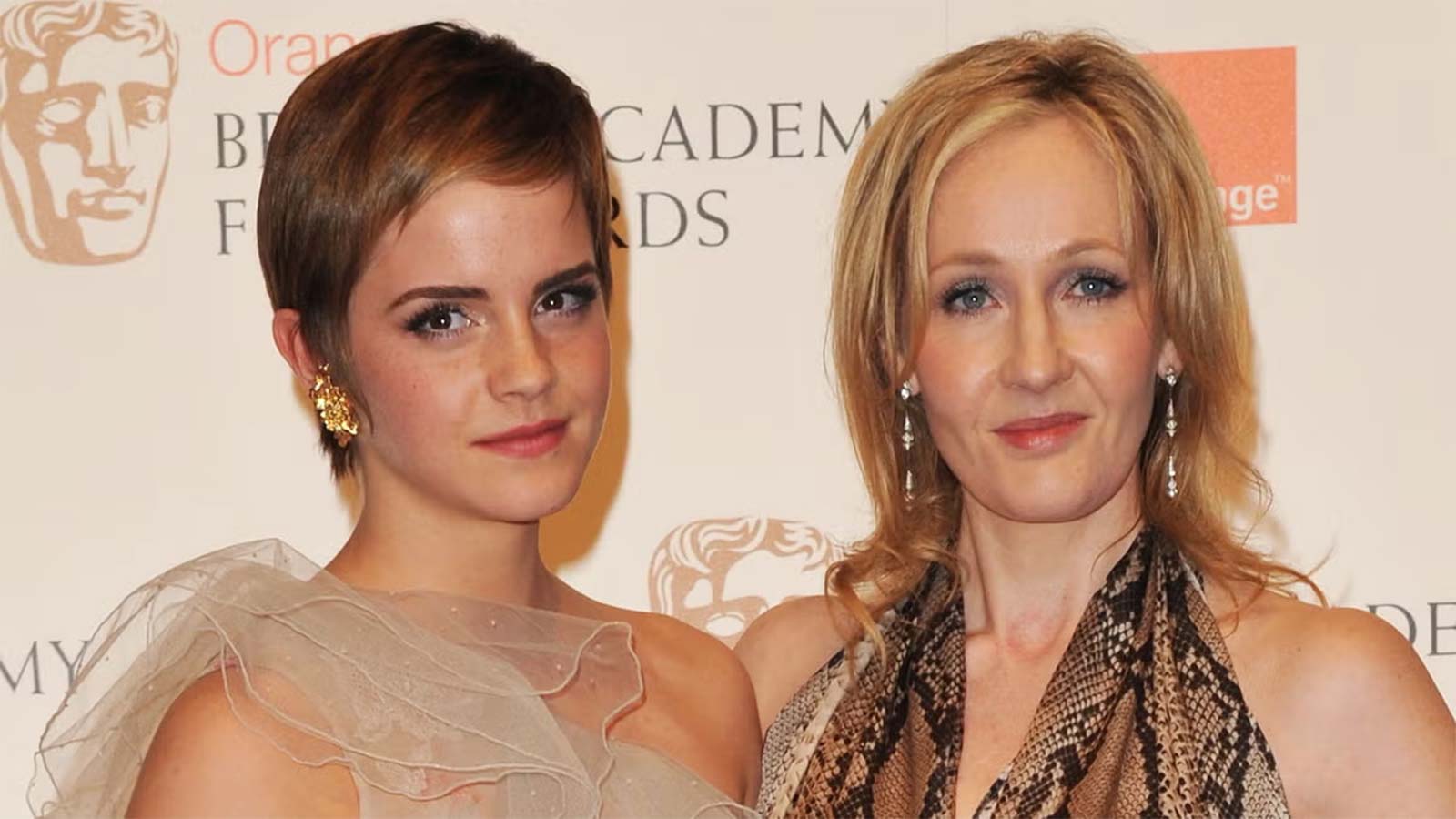
- JK Rowling publicly rebuked Emma Watson after Watson discussed their rift on a podcast.
- The dispute centers on transgender rights, with Watson supporting trans people and Rowling expressing gender-critical views.
- Rowling accused Watson of lacking real-world experience due to her fame and wealth.
- Both women have said they do not expect reconciliation any time soon.
JK Rowling’s Response to Emma Watson: Words That Broke the Silence
For millions, the magic of Harry Potter lies not just in spells and adventures, but in the sense of unity its cast and creator once radiated. Yet, behind the curtain of nostalgia, a rift has grown—one that now seems nearly irreconcilable. On September 29, 2025, JK Rowling, the author whose imagination conjured the wizarding world, delivered a forceful rebuke of Emma Watson, the actress who brought Hermione Granger to life. Rowling’s words, posted in a lengthy thread on X (formerly Twitter), have reignited public debate, drawing sharp lines between personal affection and political conviction.
Emma Watson’s Podcast Reflections: Affection Amidst Disagreement
The immediate spark for this latest clash came from Emma Watson’s appearance on the On Purpose podcast, where she reflected candidly on her relationship with Rowling. Watson, now 35, addressed the ideological gulf that has separated her from the author in recent years—most notably over transgender rights. Despite their differences, Watson insisted, “I really don’t believe that … holding the love and support and views that I have, mean[s] that I can’t and don’t treasure Jo [Rowling], and the person that I had personal experiences with.”
Watson’s words were gentle, even conciliatory. She spoke of her wish for mutual respect: “It’s my deepest wish that I hope people who don’t agree with my opinion will love me, and I hope I can keep loving people who I don’t necessarily share the same opinion with.” But beneath this hope, there was an acknowledgment of the chasm that has opened between herself and Rowling—a divide that has played out not only in private but also in the glare of global scrutiny.
Trans Rights, Public Stances, and a Fractured Legacy
The disagreement between Rowling and Watson is not new. In 2020, as Rowling published a controversial essay about gender and single-sex spaces, Watson was among the Harry Potter stars who publicly distanced themselves from the author’s views. “Trans people are who they say they are and deserve to live their lives without being constantly questioned or told they aren’t who they say they are,” Watson tweeted, echoing the sentiments of co-stars Daniel Radcliffe and Rupert Grint.
Rowling, now 60, has consistently denied accusations of transphobia, framing her position as a defense of women’s rights. Yet, the backlash has been fierce—and deeply personal. In her recent post, Rowling accused Watson of being “ignorant of how ignorant she is,” suggesting the actress’s privileged life shields her from the realities faced by less fortunate women. “Like other people who’ve never experienced adult life uncushioned by wealth and fame, Emma has so little experience of real life,” Rowling wrote, “she’s ignorant of how ignorant she is.”
Rowling’s message was laced with personal history. She contrasted her own struggles—writing the first Harry Potter book while living in poverty—with Watson’s ascent to stardom at just 14. “I wasn’t a multimillionaire at fourteen,” Rowling remarked pointedly. “I lived in poverty while writing the book that made Emma famous. I therefore understand from my own life experience what the trashing of women’s rights in which Emma has so enthusiastically participated means to women and girls without her privileges.” (Fox News, The Guardian)
Public Gestures, Private Pain: The Human Cost of Disagreement
Even as Watson has tried to express concern for Rowling—sending a handwritten note after her 2022 BAFTA speech—Rowling remains unmoved. The author claims that Watson’s public statements have only “poured more petrol on the flames” during times when Rowling herself faced death threats and heightened security fears. The exchange illustrates the limits of empathy when public and private lives collide so dramatically.
Rowling’s response goes beyond disappointment; it reveals a protective, almost maternal feeling for the young stars she once watched grow up. But she admits there was a turning point, a moment when the sense of familial bond gave way to profound estrangement. “Adults can’t expect to cosy up to an activist movement that regularly calls for a friend’s assassination, then assert their right to the former friend’s love, as though the friend was in fact their mother,” Rowling wrote.
Despite the bitterness, Rowling does not challenge Watson’s right to her beliefs. “Emma and Dan in particular have both made it clear over the last few years that they think our former professional association gives them a particular right—nay, obligation—to critique me and my views in public.” Still, she asserts her own right to respond in kind, making it clear that reconciliation is not on the horizon.
What This Rift Reveals About Modern Celebrity and Activism
The Rowling-Watson divide is more than a personal spat. It’s a lens on the ways celebrity, activism, and social media now intersect—and combust. The public nature of their disagreement has made it fodder for intense debate about gender, privilege, and generational change. For some, Watson’s stance is a model of allyship and respectful dissent; for others, Rowling’s refusal to yield is a principled stand for women’s rights.
The reactions from fans and observers are as polarized as the two women themselves. Some mourn the loss of unity among the Harry Potter family, while others see the rift as a necessary reckoning with the realities of activism and personal conviction. The once magical brand is now a flashpoint for discussions about whose voices get heard—and whose pain is considered legitimate.
As Sky News points out, the conflict has become a recurring theme in the ongoing public lives of the “Potter” stars, with each new statement or gesture dissected for meaning and intent. Rowling’s influence, both as a writer and as a cultural figure, is immense, but so too is the growing independence of the actors who once brought her characters to life.
There is no tidy ending to this story—no spell that can undo years of tension, misunderstanding, and genuine difference. As the world watches, the legacy of Harry Potter continues to evolve, shaped as much by conflict as by the camaraderie that once defined it.
Assessment: The Rowling-Watson rift is a striking example of how the personal and political are now inseparable in the public sphere. Their story exposes the difficulties of maintaining relationships across ideological divides—especially when lived experience and privilege are so sharply contrasted. What remains clear is that, in the era of social media, even the closest creative bonds can unravel in the spotlight, leaving the rest of us to grapple with what, if anything, can bridge such divides.