
Quick Read
- Joao Fonseca, 19, won his first ATP 500 title in Basel, defeating Alejandro Davidovich Fokina.
- Fonseca became the third-youngest ATP 500 champion since 2009.
- His Basel triumph earned him $1.73 million and a debut at No.32 in the ATP prize money rankings.
- Alejandro Davidovich Fokina compared Fonseca to Novak Djokovic, but Fonseca prefers to focus on his own journey.
- Fonseca’s family made a last-minute trip from Brazil to witness his historic win.
Joao Fonseca’s Basel Breakthrough: From Prospect to ATP 500 Champion
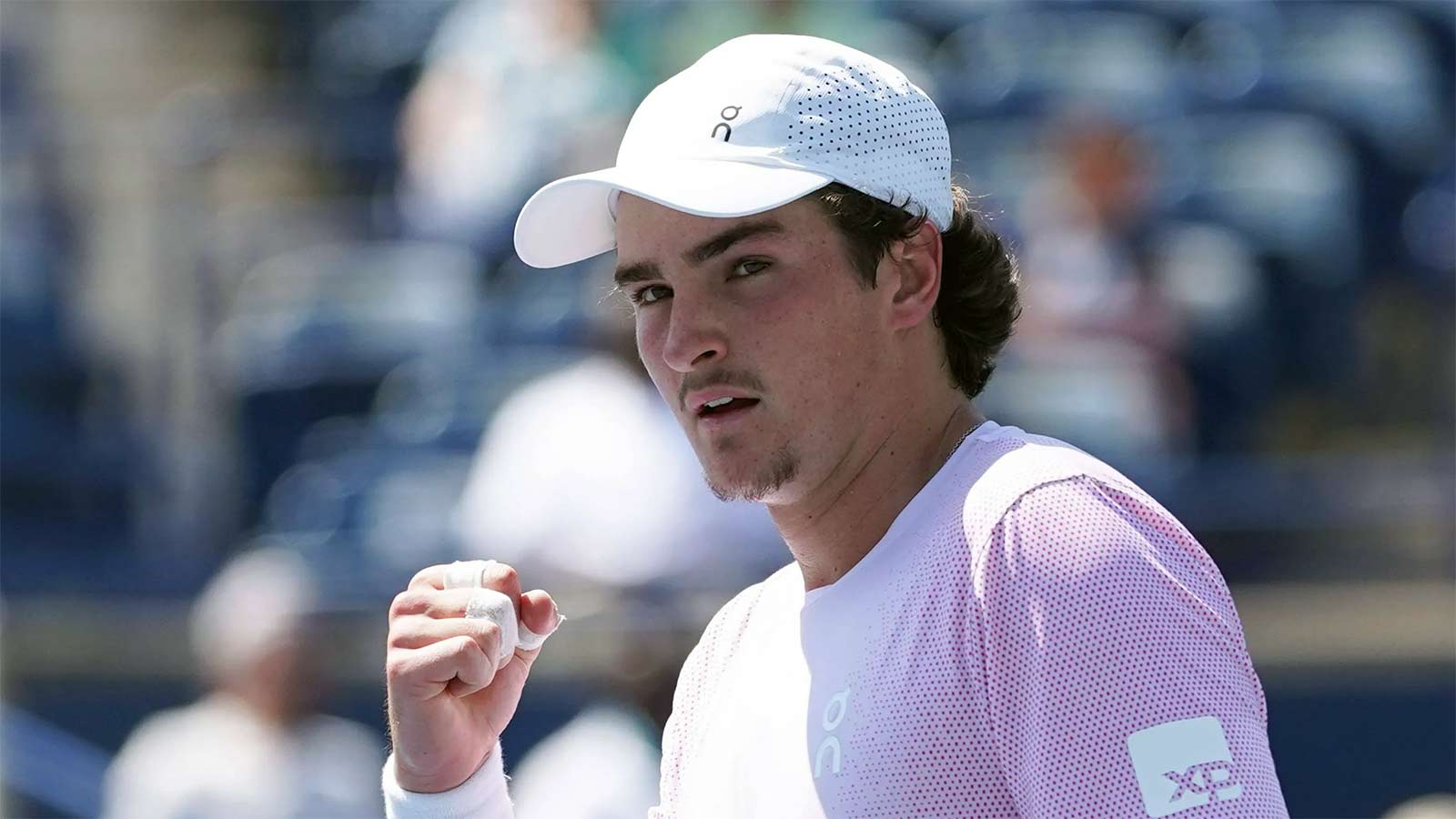
When Joao Fonseca stepped onto the court in Basel last week, few could have predicted the historic scenes that would follow. The 19-year-old Brazilian, already touted as one of tennis’ brightest prospects, delivered a performance that was as clinical as it was emotional—defeating Alejandro Davidovich Fokina in straight sets to secure his first ATP 500 title. With this victory, Fonseca became the third-youngest ATP 500 champion since the series began in 2009.
As the final point landed, Fonseca dropped to his knees, his head touching the court in a moment of pure gratitude. His family, who had made a last-minute dash from Brazil to witness the final, joined in the celebration—an intimate testament to the sacrifices behind the scenes. Fonseca later dedicated the win to his mother, who had traveled with him since he was eleven. “Since I was young, my mum travelled with me. Since I was 11, I only travelled with her, so that title is for her,” he shared during the post-match ceremony (Express).
Top 50 Debut: Prize Money Milestone and ATP Rankings Surge
Fonseca’s triumph in Basel did more than add silverware to his cabinet—it catapulted him into tennis’ financial elite. According to the latest ATP Prize Money Leaders update, Fonseca’s Basel win earned him 500 ATP points and pushed his season earnings to $1.73 million, making his debut at World No.32 in the prize money rankings (tennisuptodate.com). For a player who only a year ago was making his mark at the junior level, this leap signals not just individual achievement but the arrival of a new contender on the men’s tour.
The financial landscape of men’s tennis remains dominated by names like Carlos Alcaraz and Jannik Sinner—both sitting atop the rankings with multi-million dollar hauls this season. Yet, Fonseca’s rapid ascent, overtaking seasoned professionals and even pushing Miomir Kecmanovic out of the top 50, highlights the changing dynamics at the sport’s highest levels. With his new ranking, Fonseca is likely to be seeded at next year’s Australian Open, marking a pivotal point in his burgeoning career.
Comparisons to Djokovic: Praise, Pressure, and Perspective
If the victory in Basel was the headline, the subtext was the wave of comparisons to Novak Djokovic. Alejandro Davidovich Fokina, whom Fonseca defeated in the final, was effusive in his praise: “You played unbelievable tennis today. You are the person of this sport. You have a bright future for sure. You’re gonna be the next Nole, and beat Carlos and Jannik for sure,” Fokina said during the awards ceremony (Express).
It’s a flattering analogy. Djokovic, after all, famously disrupted the Federer-Nadal duopoly with relentless consistency and a hunger for improvement. But Fonseca, in a display of humility beyond his years, brushed off such direct comparisons. “I’m not a fan of these comparisons. Everyone has their own history. I think it’s a pleasure hearing those kind words from Alejandro. He is a great guy, friend and fighter. I’m trying my best, but we all know that Jannik and Carlos are playing next-level tennis. So all the other players from the tour, we are working harder and harder to keep going with them,” Fonseca explained in his post-match interview (tennisworldusa.org).
Fonseca’s response speaks volumes. Rather than chase the shadows of legends, he is focused on incremental progress, daily effort, and the unique arc of his own story. It’s a mindset that has served Djokovic well—and if Fonseca continues on this path, the tennis world may see more than just a passing resemblance.
Family, Humility, and the Human Element
While the headlines focus on rankings and records, Fonseca’s journey is defined as much by family and humility as by forehands and backhands. His parents weren’t planning to attend the Basel final—until his semi-final win against Jaume Munar prompted a frantic change in travel plans. “My parents just came from Brazil. They were coming to Paris and changed their flights and came here one hour before the match with my uncles. It is just amazing to have them here for the biggest title of my career,” Fonseca revealed.
Such moments remind us that, beneath the statistics and speculation, tennis remains a deeply personal endeavor. The sacrifices made by families, the emotional highs and lows, and the support systems behind every player are often invisible to the public eye. Fonseca’s story is a powerful illustration of how talent and opportunity intersect with dedication and love.
Next Steps: Paris Masters and the Road Ahead
With his Basel victory fresh in memory, Fonseca entered the Paris Masters, facing Denis Shapovalov in the round of 64 (Sky Sports). The match represents not only a chance to build on his momentum but also a test against established talent in one of the season’s final major events. The Paris Masters, an ATP 1000 tournament, offers a last opportunity for players outside the top echelon to boost their year-end rankings and earnings.
For Fonseca, the challenge is clear: to maintain his form, manage expectations, and continue his steady climb. The journey from promising junior to ATP champion is never linear, and the coming months will reveal how he navigates the inevitable ups and downs of professional sport.
Changing of the Guard: What Fonseca’s Rise Means for Tennis
Fonseca’s breakthrough arrives at a moment when men’s tennis is in flux. The established order—Alcaraz, Sinner, and the lingering presence of Djokovic—is being tested by a new generation hungry for recognition. Fonseca’s ascent isn’t just a personal triumph; it’s a sign of the sport’s evolving landscape, where youth and ambition increasingly challenge experience and legacy.
The prize money rankings tell a story of shifting fortunes. The top 10 average prize money rose by $0.1-0.15 million week to week, and the gap between the leaders and the chasing pack remains significant. Yet, as Fonseca’s Basel win demonstrates, a single breakthrough can change the narrative in an instant.
As the season heads towards its conclusion in Turin, all eyes will be on the emerging stars who could define tennis for years to come. Fonseca, with his blend of power, poise, and humility, is well-positioned to be at the forefront of this new era.
Joao Fonseca’s rise is a timely reminder that in tennis, progress is measured not just in titles and earnings, but in character, resilience, and the ability to stay true to one’s journey amid growing expectations. His Basel triumph, grounded perspective, and heartfelt family moments offer a blueprint for success that goes beyond the numbers—and signal the arrival of a new force in men’s tennis.