
Quick Read
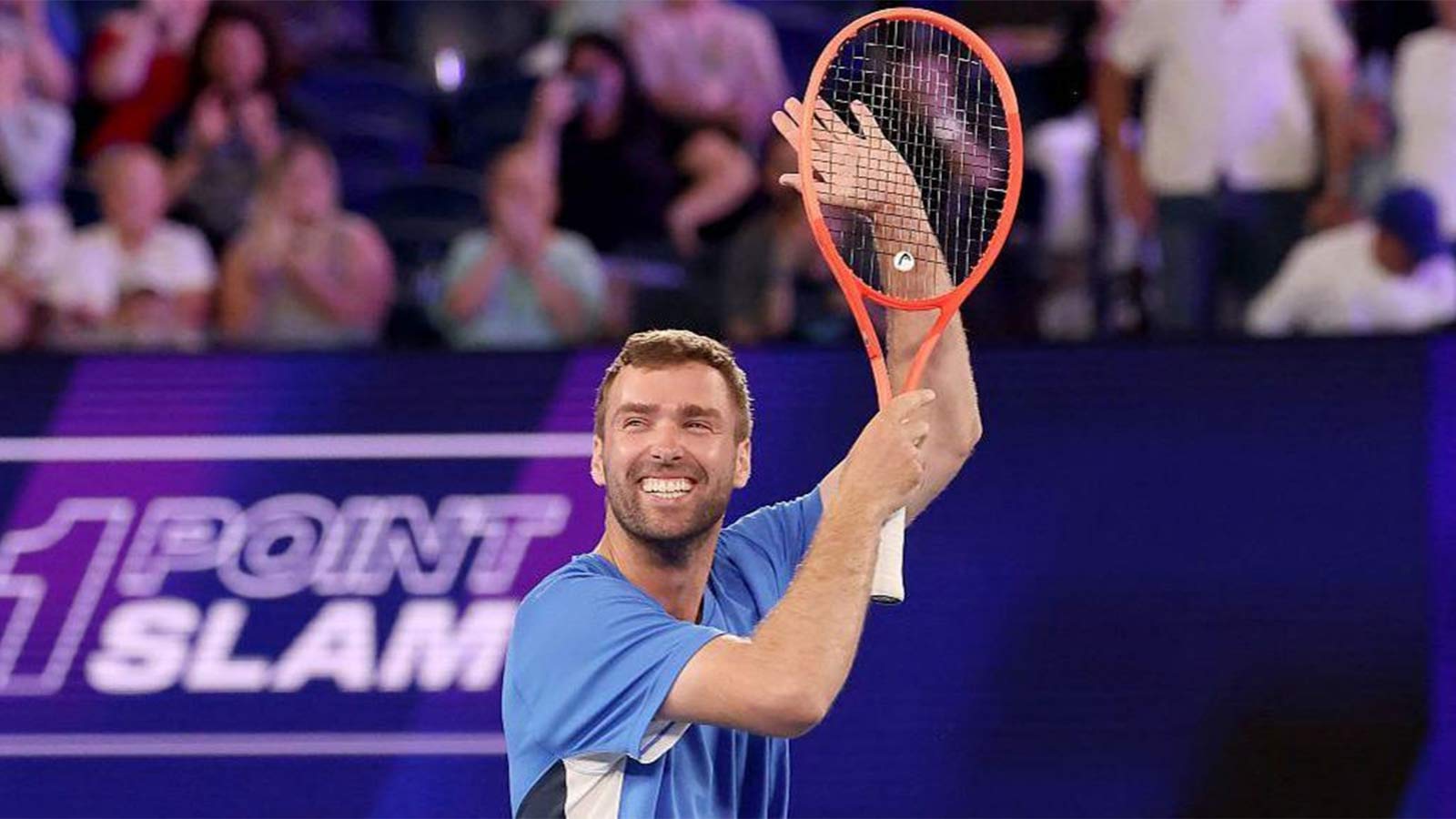
- Jordan Smith, a 29-year-old tennis coach from Sydney, won the inaugural A$1 million One Point Slam.
- Smith, an amateur with a career-high ATP rank of 1,141, defeated top professionals including Jannik Sinner and Amanda Anisimova.
- The tournament featured a unique one-point knockout format where professionals were allowed only a single serve.
- The event attracted a full house at Rod Laver Arena, demonstrating Tennis Australia’s success in engaging new fans.
- Smith plans to use his A$1 million prize to invest or buy a house in Sydney.
In a story that sounds more like a modern-day fairytale than a grand slam preamble, a 29-year-old tennis coach from Sydney, Jordan Smith, captured the imagination of the sporting world this week. Defying astronomical odds, Smith, a former US college player with a career-high ATP rank of 1,141, triumphed in the inaugural One Point Slam at the Australian Open, walking away with a life-changing A$1 million prize. His victory wasn’t just a personal triumph; it was a resounding endorsement for Tennis Australia’s bold new concept, designed to inject fresh energy into the sport and attract a new generation of fans.
The Rod Laver Arena, usually reserved for intense, multi-set battles, was transformed into a theatrical stage for this high-stakes, single-point knockout tournament. The premise was deceptively simple: each tie was determined by a solitary point. To level the playing field for the amateurs, professionals were granted only a single serve, a stark contrast to their usual two. Adding a whimsical touch, the server for each point was decided by a game of rock-paper-scissors, ensuring a blend of skill, nerve, and pure chance. This innovative format, dubbed the ‘TikTokification of tennis’ by some, aimed to deliver instant gratification and high-octane drama.
Smith’s journey to the championship was nothing short of remarkable. He began his improbable run by qualifying through the Sydney bracket, eventually finding himself squaring off against some of the biggest names in tennis. In a moment that sent shockwaves through the arena, Smith eliminated world number two Jannik Sinner in the third round, largely due to Sinner’s inability to land his single serve. He then continued his giant-killing spree, overcoming women’s world number four Amanda Anisimova, and later, the Spanish world No 71, Pedro Martínez, in the semi-finals. Martínez, visibly frustrated by the sudden-death format, rushed off the court immediately after his loss, highlighting the intense pressure this new game placed on even seasoned professionals.
The final pitted Smith against Taiwanese world No 117 Joanna Garland, a 24-year-old who had also carved out an impressive path, dispatching formidable opponents like Alexander Zverev, Nick Kyrgios, Maria Sakkari, and Donna Vekic. Garland, who had won over the crowd with her soft-spoken demeanor and underdog spirit, shared a poignant moment before the final, declaring, «There are three winners here tonight: one is tennis, the others are me and him.» The crowd, eager for a feel-good story, lapped up the sentiment, further fueling the modern fairytale unfolding before their eyes.
For Jordan Smith, the win was a surreal experience. Overwhelmed and sporting a fixed grin for much of the evening, he confessed, «I can’t even speak, it’s unbelievable.» His initial, more realistic ambition of perhaps buying an apartment or «half a house» in Sydney’s inflated property market quickly transformed into a pledge to invest or buy a whole house with his A$1 million winnings. The contrast with professional player Donna Vekic’s flippant response – «I like diamonds» – when asked about a similar prize, underscored the deeply personal and life-altering nature of the win for Smith and his family, who had politely asked for half the prize money midway through the evening, adding a human touch and genuine jeopardy to the proceedings.
The event itself, while a resounding success in terms of attendance and buzz, was not without its rough edges. The near three-hour duration, often confusing format, and awkward exchanges between players and the on-court MC occasionally dragged out the evening past 10 pm. A quarter of the matches in the first round ended with faults, leading to commentators talking about pressure rather than engaging tennis. Long commercial breaks caused players to pace impatiently and spectators to lose interest, with nearly a quarter of the arena vacant by the time of the final. Despite these teething problems, the One Point Slam undeniably delivered on its promise of spectacle and unpredictability.
Tennis Australia’s decision to offer a A$1 million prize – almost a quarter of the cheque for the men’s and women’s singles winners – was a masterstroke, significantly building anticipation for the concept. The field was a fascinating mix of 24 top professionals, including Alcaraz and Gauff, alongside local celebrities, qualifiers, and wildcards like breakfast television hosts, former jockeys, and even a video game influencer with over 5 million YouTube subscribers. Taiwanese entertainer-businessman Jay Chou, reportedly worth over $100 million, had promised to donate his winnings to charity but lost in the first round. This diverse roster ensured a broad appeal, drawing in viewers who might not typically tune into a tennis match.
The format also demonstrated its potential for genuine sporting drama. Unlike the often-stale ‘Battle of the Sexes’ formats, the One Point Slam offered no apparent advantages based on gender, with mastering the mental side of the game proving crucial. Six women reached the quarter-finals, and a point between Iga Swiatek and Flavio Cobolli, won by the Pole, showcased some of the night’s best tennis. Professional players, despite their early exits, largely supported the innovative approach. Alexander Zverev called it a «brilliant» thing to try «before it gets serious» at Melbourne Park, while Elena Rybakina expressed awe at «how many people came.»
Moments of humor and memorable lines punctuated the evening. Nick Kyrgios, known for his theatrics, even smashed a racquet with a comedic flair after his defeat. Perhaps the most memorable line came from French player Arthur Rinderknech. After faulting with a powerful serve against Amanda Anisimova, he declared, «Go big or go home,» before walking out of the arena, adding, «I go home.» These glimpses into the personalities of the players, both amateur and professional, further endeared the event to the audience, proving that even a single point could carry immense weight and entertainment value.
The One Point Slam, with Jordan Smith’s sensational victory at its heart, represents a pivotal moment for tennis. It successfully bridged the gap between elite competition and grassroots engagement, proving that an innovative, fast-paced format can captivate audiences and generate significant intrigue. While some rough edges remain, the overwhelming success in drawing a full house and creating genuine human-interest narratives suggests that this ‘boom-or-bust’ concept is not just a passing fad but a viable blueprint for the future of sports entertainment, capable of coexisting with, and even enhancing, the traditional Grand Slam experience.