
Quick Read
- Judge Gregory Carro dismissed two terrorism-related murder charges against Luigi Mangione.
- Mangione still faces state and federal murder charges for the killing of UnitedHealthcare executive Brian Thompson.
- The federal government is seeking the death penalty in the case.
- Public reaction remains sharply divided, with supporters and critics present at court.
Legal Turning Point in a Case That Gripped the Nation
On a brisk September morning in Manhattan, courtroom 100 Center Street buzzed with anticipation. Supporters of Luigi Mangione—some clutching yellow index cards for entry, others donning shirts with slogans like “FREE LUIGI”—lined the halls, determined to witness a pivotal moment in a case that has fueled headlines and debate across the United States.
Tuesday’s proceeding, though brief at just fifteen minutes, marked a seismic shift in the legal landscape for Mangione, the man accused of killing UnitedHealthcare executive Brian Thompson. Judge Gregory Carro issued a written decision: the two most severe charges, both tied to terrorism statutes, were dismissed for legal insufficiency.
The Charges: What Was Dropped and What Remains
The charges at the heart of the controversy were first-degree murder “in furtherance of an act of terrorism” and second-degree murder “as a crime of terrorism.” Prosecutors had argued that the killing of Thompson outside a Manhattan hotel last December fit the definition of terrorism under state law, a claim that elevated the stakes and the public scrutiny.
Judge Carro’s decision was clear and unambiguous: “Counts 1 and 2, charging defendant with Murder in the First Degree (in furtherance of an act of terrorism) and Murder in the Second Degree as a Crime of Terrorism, are dismissed as legally insufficient,” he wrote. Yet, Mangione’s legal ordeal is far from over. He still faces a second-degree murder charge under state law—now stripped of its terrorism context—and a federal murder charge, along with weapons possession counts. The federal case, in particular, carries its own gravity, with the U.S. Department of Justice pursuing the death penalty.
Political Rhetoric and Public Reaction
In the months since Thompson’s death, the Mangione case has become a flashpoint in America’s ongoing conversation about healthcare, violence, and political polarization. The shooting occurred just days before the killing of rightwing commentator Charlie Kirk at Utah Valley University, intensifying public debate.
High-profile figures have weighed in. President $1 Trump called for the death penalty against the Kirk shooting suspect and has backed the Justice Department’s pursuit of capital punishment for Mangione. U.S. Attorney General Pam Bondi described Thompson’s killing as “a premeditated, cold-blooded assassination that shocked America,” framing the federal response as part of a broader effort to combat violent crime.
The reaction on the street has been anything but monolithic. Some critics have condemned the politicization of a murder, arguing that using the tragedy to score points in healthcare debates is inappropriate. Others have seized on the case as a symbol of systemic frustration with healthcare giants. For Mangione’s supporters, the courtroom remains a stage for defiance and hope, their presence a testament to the passions this case has ignited.
Inside the Courtroom: Mangione’s Appearance and Next Steps
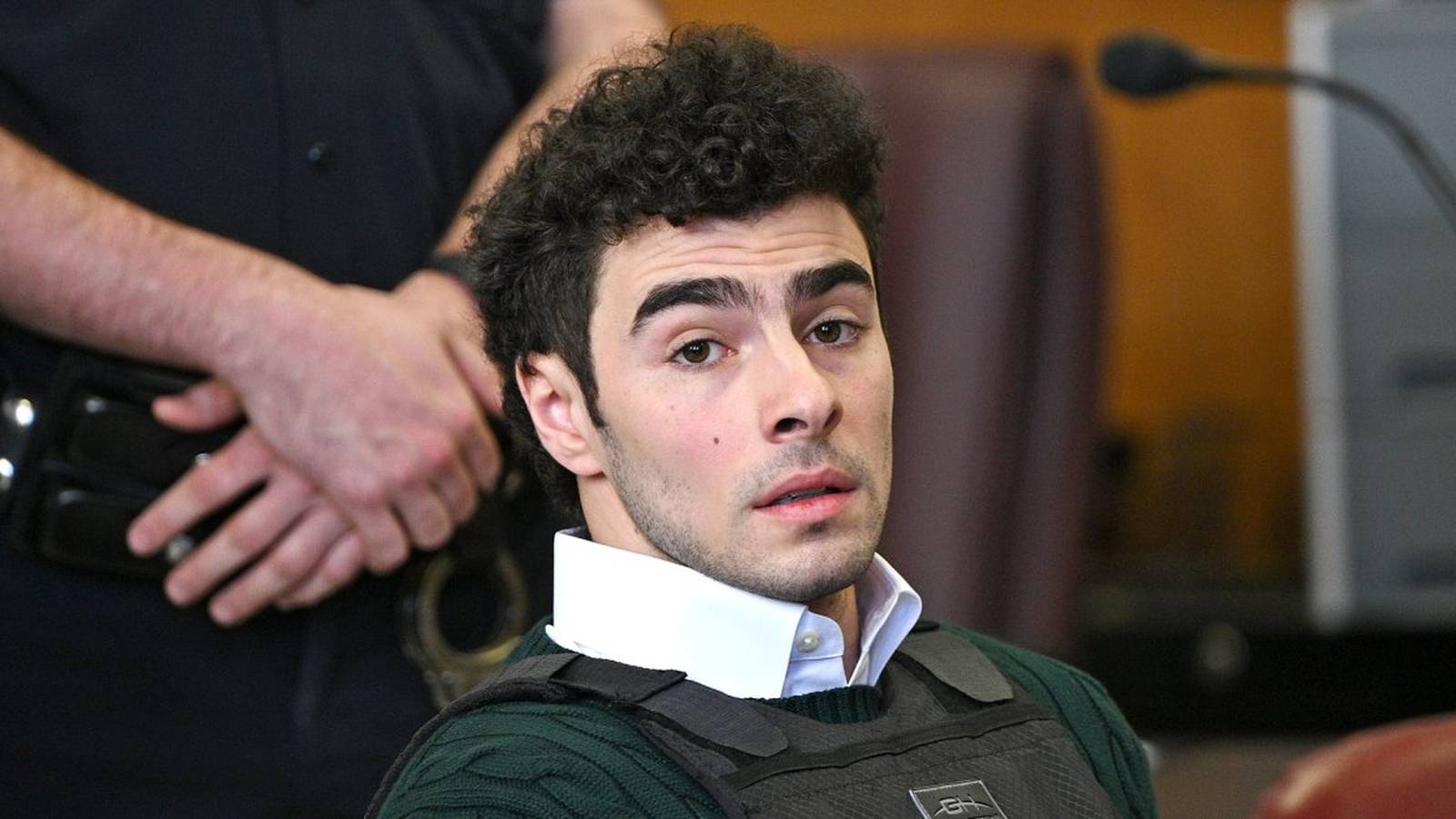
Mangione’s arrival in the courtroom was as stark as the charges he faces. Wearing khaki jail scrubs, his wrists cuffed and ankles shackled, he cut a subdued figure. The legal process now shifts toward the remaining counts—second-degree murder (intentional) and federal murder—each carrying the weight of potential life-altering consequences.
The judge’s ruling does not absolve Mangione; rather, it refines the scope of his prosecution. The dismissal of terrorism charges reflects the court’s view that the evidence presented did not meet the legal threshold for those allegations. Yet, the underlying accusation—that Mangione intentionally killed Brian Thompson—remains intact and will continue to be litigated in both state and federal court.
Wider Context: A Case in the Shadow of National Debates
It’s impossible to separate Mangione’s trial from the broader context of American anxieties. Healthcare, gun violence, and political division have all intersected in this story, with advocacy groups, politicians, and media outlets dissecting every twist. The case has also prompted conversations about how terrorism laws are applied—and where the lines should be drawn between political violence and criminal acts.
Outside the courtroom, supporters continue to rally, their chants and signs echoing unresolved questions about justice, motive, and the role of the legal system in navigating politically charged crimes. For some, Mangione is a symbol of resistance; for others, a dangerous actor whose actions demand accountability.
As proceedings move forward, the legal team for Mangione is expected to focus on challenging the remaining charges, while prosecutors prepare to marshal their evidence for the next phase. The dismissal of the terrorism counts is likely to shape both public perception and legal strategy, narrowing the focus to the facts of the killing itself.
Media Coverage and the Role of Independent Journalism
Throughout the ordeal, media outlets have played a critical role in informing the public and framing the debate. Organizations like The Associated Press and The Guardian have emphasized the importance of factual, unbiased reporting, even as the story has attracted sensational headlines. The presence of Mangione’s supporters and critics alike at each hearing is a reminder of the impact that journalism can have on public understanding and civic engagement.
In an era where misinformation can spread rapidly, the need for independent, nonpartisan news is more vital than ever. As the case continues, journalists will be tasked with separating fact from speculation and presenting developments in a way that honors the complexity of both the legal process and the social issues at play.
The dismissal of the most severe terrorism charges against Luigi Mangione is a turning point, but not an ending. It narrows the legal narrative to the core accusation of intentional murder—a charge still carrying immense weight. The case now stands as a test of the American legal system’s ability to distinguish between political rhetoric and evidentiary fact, and the outcome will likely resonate far beyond the walls of the Manhattan courtroom.