
Quick Read
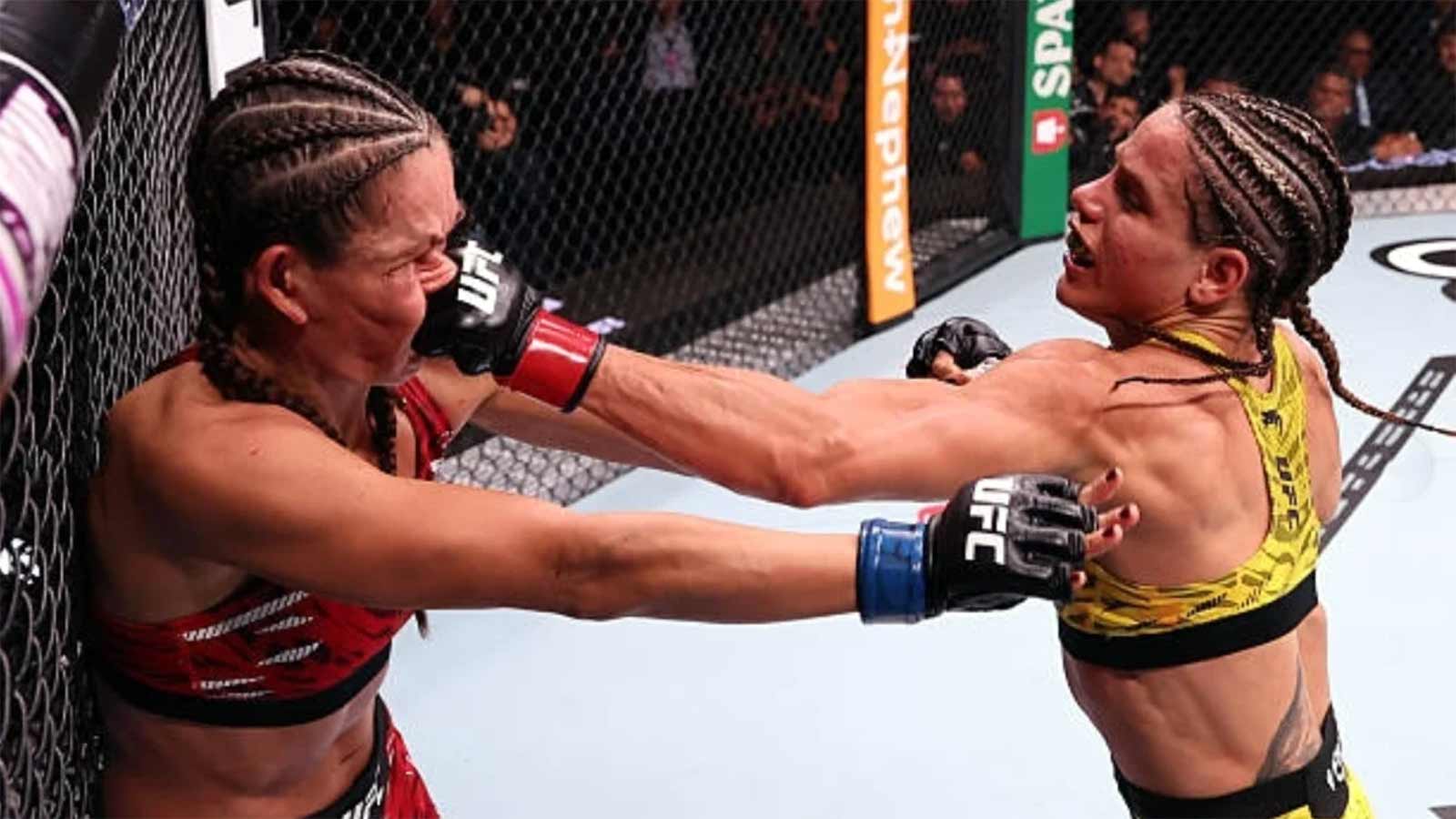
- Julia Polastri defeated Karolina Kowalkiewicz via third-round TKO at UFC Rio.
- Polastri’s victory marked her first finish over a former UFC title challenger, raising her UFC record to 2-2.
- She became the first Brazilian on the card to beat a foreign opponent that night.
- The fight showcased Polastri’s superior striking, power, and composure under pressure.
- Kowalkiewicz suffered her second career knockout loss, both to elite opponents.
Julia Polastri’s Defining Night in Brazil
When the UFC returned to Rio de Janeiro, all eyes were on the local favorites and international veterans. But as the preliminary card rolled on, it was Julia Polastri who seized the spotlight, facing seasoned former title challenger Karolina Kowalkiewicz. The matchup was more than just another fight—it was a crossroads moment for both athletes, a collision of youth and experience in the strawweight division.
Striking Early: The First Round Unfolds
As the cage door closed, the atmosphere at Jeunesse Arena grew electric. Polastri, with a 12-year youth advantage and a hunger to even her UFC record, squared off against Kowalkiewicz, whose name resonates with fans thanks to her storied career and past championship fights. Sherdog reported the odds heavily favored Polastri (-450), yet the Polish veteran’s resilience made the contest far from predictable.
From the opening seconds, both fighters traded leg kicks, feeling each other out. Kowalkiewicz fired off quick combinations, ending with crisp lefts, but Polastri responded in kind—her counters sharp, her demeanor unshaken even as chants of “Uh Vai Morrer” thundered from the crowd. The exchanges were tense and tactical; Kowalkiewicz tried to set the rhythm with body kicks, but Polastri’s heavier strikes began to wear her down, forcing her to retreat and rethink her strategy.
Moments of clinch warfare followed, with Polastri pressing Kowalkiewicz against the fence, peppering her midsection with knees and elbows. The Polish fighter fought back, slipping punches and landing rights, but Polastri’s power advantage was clear. As the round closed, Polastri surged forward, unleashing a flurry of punches that had Kowalkiewicz covering up, barely making it to the bell.
Building Momentum: The Second Round
Round two began with a show of sportsmanship—a brief touch of gloves. But the courtesy ended there. Polastri, sensing her opponent’s vulnerability, pressed forward. Kowalkiewicz attempted takedowns, but Polastri’s defensive acumen shone; she intercepted with knees and uppercuts, refusing to be taken off her feet.
As reported by Sherdog, Polastri relentlessly walked down Kowalkiewicz, mixing aggression with measured breathers to conserve energy. The Polish fighter, ever tough, tried to stay in the pocket and exchange, but Polastri’s speed and power kept her on the defensive. The Brazilian struck with precision, targeting Kowalkiewicz’s swelling right cheek and opening up her nose with a jab. The damage accumulated, and Polastri’s confidence grew—she taunted the crowd, raising her arms, fueling the energy in the arena.
The second round ended much as the first had: Polastri in command, Kowalkiewicz battered but unbroken, the crowd roaring in support of their hometown fighter.
The Decisive Finish: Third Round TKO
The final round started with a gesture of mutual respect—an embrace in the center of the cage. But soon, the gloves were off. Kowalkiewicz landed a flurry of fists and feet, finding brief success, but Polastri’s response was swift and brutal. A head kick rocked Kowalkiewicz, and Polastri followed up with a devastating combination to the head and body, driving her opponent against the fence.
Kowalkiewicz tried to survive, but Polastri’s relentless assault left her reeling. Referee Marc Goddard watched closely as the Brazilian unleashed everything she had left, her punches turning Kowalkiewicz’s face into a canvas of swelling and blood. With Kowalkiewicz barely standing, Goddard stepped in, waving off the contest. The arena erupted—Julia Polastri had just delivered a statement win, securing a third-round TKO at 2:56 via head kick and punches.
What the Numbers Reveal
The judges’ scorecards told a story of dominance. Across all three rounds, Polastri earned unanimous 10-9 scores, reflecting her control, aggression, and tactical superiority. Her victory was more than just another win; it marked her arrival as a force in the strawweight division, with the ability to finish experienced opponents and thrive under pressure.
Kowalkiewicz, meanwhile, suffered her second career knockout loss—the first coming against Jessica Andrade, one of the division’s most fearsome punchers. For Polastri, sharing company with Andrade in this context is a badge of honor, evidence of her potential to shape the future of women’s MMA.
Reactions and Implications
Polastri’s performance did not go unnoticed. Fans, commentators, and fellow fighters praised her for her composure, power, and willingness to engage in all areas of the fight. Her ability to withstand Kowalkiewicz’s volume striking and turn defensive positions into opportunities for damage set her apart.
This win puts Polastri at a .500 UFC record (2-2), a significant milestone given her youth and the level of competition she’s faced. As MMA Junkie highlighted, the victory positions her for more high-profile matchups, potentially against other ranked contenders or rising prospects.
For Kowalkiewicz, the loss is a setback, but her toughness and experience remain valuable assets. As the division evolves, she may find new opportunities, whether as a gatekeeper or in different weight classes. Her willingness to face younger, hungrier opponents speaks volumes about her professionalism and dedication to the sport.
The Context: UFC Rio and Brazilian Pride
Polastri’s win was especially meaningful in the context of UFC Rio. The event marked the UFC’s first return to Brazil since May 2024, and the home crowd was eager for local victories. As the first Brazilian to defeat a foreign opponent on the night, Polastri’s triumph resonated deeply, energizing fans and reinforcing the country’s legacy in MMA.
Her performance joined a night of memorable bouts, from Charles Oliveira’s headline win to Beatriz Mesquita’s dominant grappling showcase. For Polastri, however, the evening signaled a turning point—a chance to step out of the shadow of veterans and begin carving her own path in the Octagon.
Looking Forward: What’s Next for Julia Polastri?
The road ahead is filled with possibilities. With her youth, athleticism, and growing technical prowess, Polastri is well-positioned to ascend the strawweight ranks. Matchmakers may look to pair her with other rising contenders, testing her against a variety of styles and skill sets.
But beyond rankings and statistics, Polastri’s victory is a reminder of the unpredictable, exhilarating nature of MMA. In a sport where momentum can shift in an instant, her ability to seize the moment and finish a respected opponent stands as a testament to her grit and ambition.
Julia Polastri’s UFC Rio victory was more than a showcase of physical talent—it was a masterclass in determination, adaptability, and seizing opportunity. Against a veteran like Karolina Kowalkiewicz, Polastri proved she belongs among the division’s elite, and her performance may well inspire a new generation of fighters to dream bigger and fight harder.