
Quick Read
- A Socata TBM 700 crashed at Kalispell City Airport on August 11, 2025, striking parked planes and causing fires.
- All four passengers survived with only minor injuries.
- Emergency crews quickly extinguished the fires, preventing further damage.
- The FAA and NTSB are investigating the cause of the crash.
- The incident highlights broader concerns about aviation safety at smaller airports.
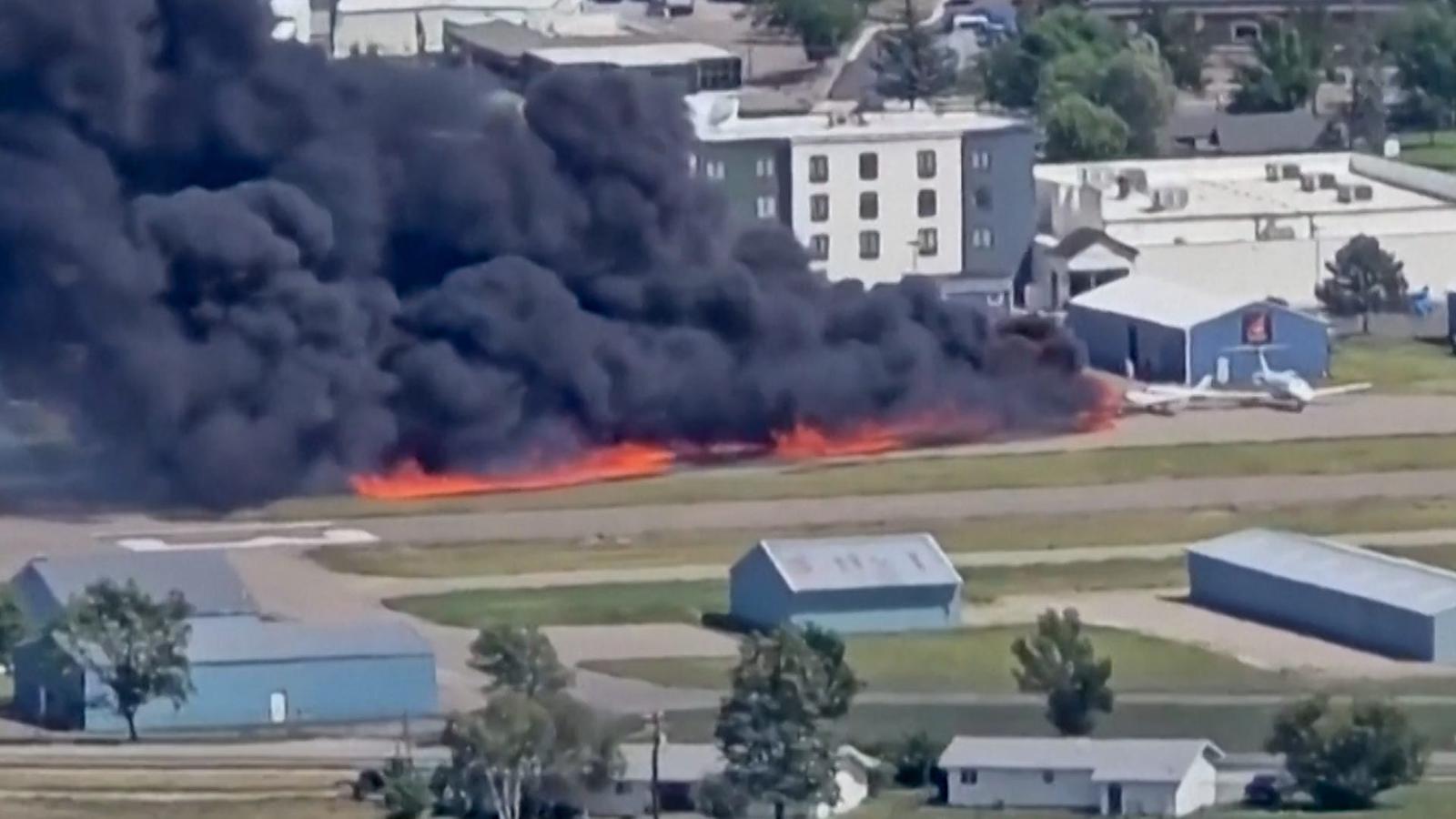
A routine Monday afternoon at Kalispell City Airport in Montana quickly turned chaotic when a small plane, identified as a Socata TBM 700 turboprop, crash-landed during its final approach. The incident occurred at approximately 2:08 p.m. on August 11, 2025, and resulted in the plane colliding with multiple parked aircraft, sparking fires across the runway. Miraculously, all four passengers aboard the plane survived, with only two sustaining minor injuries, according to Kalispell Police Chief Jordan Venezio.
Crash Details and Immediate Response
The Socata TBM 700, owned by Meter Sky LLC and originating from Pullman, Washington, lost control during its landing attempt. Witnesses described the crash as sudden and violent, with some comparing the noise to a “bass drum struck with maximum force.” The aircraft skidded across the runway before slamming into several parked planes, including an unoccupied Swearingen SX-300.
The collision immediately ignited fires on multiple parked aircraft, with flames spreading to nearby grasslands. Emergency responders from Kalispell, Smith Valley, Whitefish, and Evergreen fire departments arrived within minutes, using foam to extinguish the flames and prevent further damage. “It was like a Frisbee,” said Kalispell Fire Chief Jay Hagen, describing the erratic trajectory of the plane.
Miraculous Survival
Despite the dramatic crash, all four occupants of the Socata TBM 700 managed to exit the plane under their own power. Two passengers sustained minor injuries and were treated on-site. Chief Hagen attributed their survival to the structural integrity of the plane and the quick evacuation by the passengers. No injuries were reported among the airport staff or surrounding community, as the struck aircraft were unoccupied at the time.
Eyewitness Ron Danielson, who manages a nearby inn, recounted the terrifying scene: “It sounded like sticking your head in a bass drum while someone hit it as hard as they could. Within seconds, plumes of black smoke rose into the sky.” The visible smoke alerted the local community, with many residents rushing to the scene, only to find firefighters already containing the situation.
Broader Implications for Aviation Safety
The incident at Kalispell City Airport is the latest in a string of small plane accidents across the United States in recent weeks. According to Travel and Tour World, similar crashes have occurred in Arizona, Georgia, New York, and Florida, highlighting the risks inherent in general aviation. While most flights end safely, the recent spate of accidents underscores the need for stricter safety protocols at smaller airports.
Aviation safety consultant Jeff Guzzetti noted that crashes involving collisions with parked aircraft, though rare, are not unheard of. He cited a February 2025 incident in Scottsdale, Arizona, where a Learjet collided with a parked Gulfstream, resulting in one fatality. Such incidents often prompt investigations into runway safety zones, aircraft maintenance, and pilot training.
Investigation Underway
The Federal Aviation Administration (FAA) and the National Transportation Safety Board (NTSB) have launched a formal investigation into the Kalispell crash. Authorities will examine factors such as mechanical issues, pilot error, weather conditions, and the airport’s infrastructure. Initial reports indicate that the aircraft was properly maintained and flown by an experienced pilot, but investigators will review all records to determine the exact cause of the mishap.
The small, city-owned Kalispell City Airport serves as a hub for general aviation in northwest Montana. While the facility typically handles smaller aircraft, the crash has raised questions about whether additional safety measures, such as longer runways or stricter parking protocols, should be implemented to prevent future incidents.
Community Impact and Lessons Learned
The crash has left a lasting impression on the Kalispell community, which relies on its airport for regional connectivity and economic activity. While residents expressed relief that no lives were lost, the incident has reignited discussions about aviation safety and emergency preparedness.
Emergency responders were widely praised for their swift and professional actions, which undoubtedly prevented a far more catastrophic outcome. Their ability to contain the fires within minutes highlights the importance of well-trained first responders, even at smaller regional airports.
As the FAA and NTSB continue their investigation, the aviation industry can draw valuable lessons from this incident. Enhanced pilot training, improved runway safety zones, and better coordination among emergency services are just a few areas that may see renewed focus in the coming months.
The Kalispell City Airport crash serves as a stark reminder of the risks associated with aviation but also showcases the resilience of emergency systems and the importance of rigorous safety protocols. While the incident could have been far worse, it offers an opportunity for the industry to learn and improve, ensuring safer skies for all.