
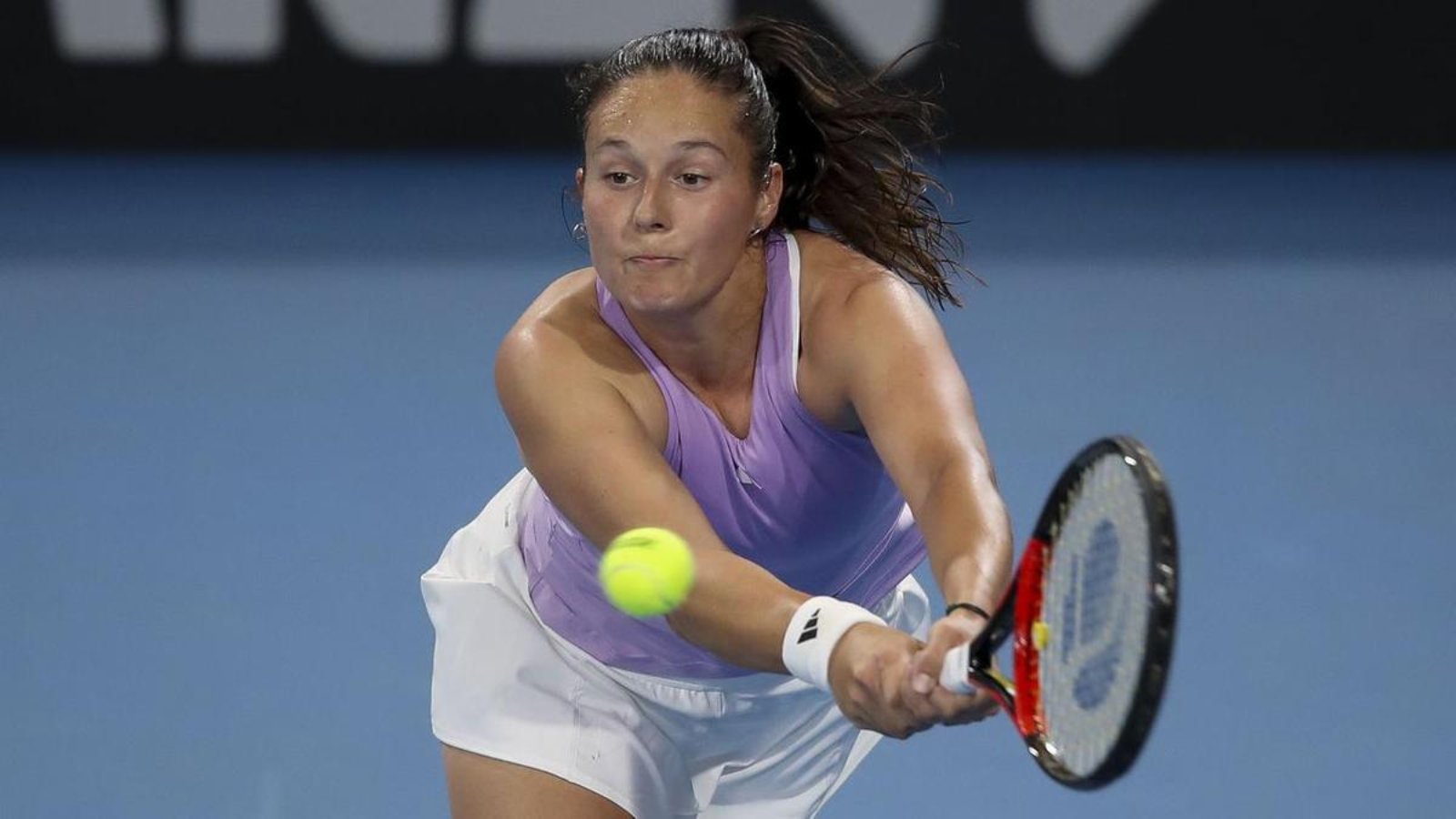
Quick Read
- Russian tennis star Daria Kasatkina was eliminated from the Australian Open.
- Her exit occurred in the first round of the tournament.
- The match took place on Tuesday, January 20, 2026, in Melbourne.
- Kasatkina lost to Nikola Bartunkova of the Czech Republic.
Russian tennis star Daria Kasatkina has been eliminated from the Australian Open, suffering a first-round defeat on Tuesday, January 20, 2026. Her unexpected exit marks one of the early significant upsets at the season’s first Grand Slam, underscoring the fierce competition and inherent unpredictability that define the opening stages of major tournaments in Melbourne.
Kasatkina, a prominent figure on the WTA Tour, fell to Nikola Bartunkova of the Czech Republic, concluding her Australian Open campaign much sooner than anticipated. While specific details of the match, including the final score, were not immediately available, the report from The Sydney Morning Herald succinctly noted that Kasatkina was “sent packing,” signaling a decisive and impactful loss. This early departure highlights the challenging environment even for seeded players in Grand Slam events, where every competitor arrives with aspirations of deep runs.
The Unforgiving Nature of Grand Slam Openers
The Australian Open’s early rounds are often a crucible of high drama, where seasoned champions and rising talents alike face immense pressure. For players like Daria Kasatkina, who has consistently ranked among the world’s top players, a first-round exit is a stark reminder of the depth of talent across the tour. The Grand Slam format, with its best-of-three or best-of-five set matches, demands peak physical and mental fortitude from the very first serve.
The atmosphere at Melbourne Park is electric, with fans filling courts from Rod Laver Arena to the outer courts, creating an intense backdrop for every contest. This energy, while invigorating for some, can also amplify the pressure on players, leading to moments of brilliance or, conversely, unexpected collapses. Kasatkina’s loss to Bartunkova underscores a recurring theme in Grand Slam tennis: no match is a guaranteed win, and upsets are an integral part of the tournament’s narrative.
A Tournament of Contrasting Fortunes
Kasatkina’s early departure contrasts sharply with other narratives unfolding in the Australian Open’s opening days. Defending champion Madison Keys, for instance, endured a shaky start in her first-round match against Ukraine’s Oleksandra Oliynykova. Keys found herself trailing 0-4 in the opening set, losing her first two service games, before staging a remarkable comeback to clinch the first set in a tie-breaker (8-6) and then dominating the second set 6-1. Keys’ resilience, as reported by The Sydney Morning Herald, illustrates the mental toughness required to navigate early scares in a major tournament.
Similarly, the tournament has seen both the elation of first-time Grand Slam victories and the disappointment of early exits for other players. Australian wildcard Taylah Preston, aged 20, secured her maiden Grand Slam main draw win, triumphing over China’s Shuai Zhang in a three-set thriller (6-3, 2-6, 6-3). Preston’s emotional victory in front of a home crowd on Kia Arena was a moment of pure joy, showcasing the dreams fulfilled at this level of competition. On the other hand, fellow Australian Maya Joint, a 19-year-old rising star, experienced a disappointing first-round loss in straight sets to Tereza Valentova (6-4, 6-4), struggling with her serve consistency. These varied outcomes highlight the fine margins that often separate success from early elimination in Grand Slam tennis.
The Broader Impact of Early Exits
For players like Kasatkina, an early exit from a Grand Slam can have significant implications beyond just the loss of ranking points and prize money. It can impact momentum for the rest of the season, affect confidence, and necessitate a re-evaluation of training and match strategies. Grand Slams are not just tournaments; they are benchmarks in a player’s year, and performing well in them is crucial for maintaining a strong position in the global rankings and for securing endorsements and fan support.
The competitive landscape of women’s tennis, in particular, has seen a rise in formidable talents, making every draw challenging. Players like Nikola Bartunkova, while perhaps not as widely recognized as Kasatkina, possess the skills and determination to challenge and defeat top-ranked opponents on any given day. This depth ensures that upsets are not just anomalies but a regular feature, adding to the allure and drama of Grand Slam events.
The Australian Open continues to unfold with its usual blend of intense competition, thrilling rallies, and unexpected turns. While some players celebrate their advancements, others, like Daria Kasatkina, are left to reflect on a campaign cut short, underscoring the brutal efficiency with which Grand Slams can redefine expectations in a single match. The tournament serves as a powerful reminder that in professional tennis, past achievements offer no guarantees against the challenges of the present moment.
The early departure of a highly-ranked player like Daria Kasatkina from the Australian Open’s first round serves as a potent illustration of the increasingly competitive nature of professional tennis, where the margin for error is minimal, and even established stars must contend with fierce challenges from a deep and talented field from the very first ball.