
Quick Read
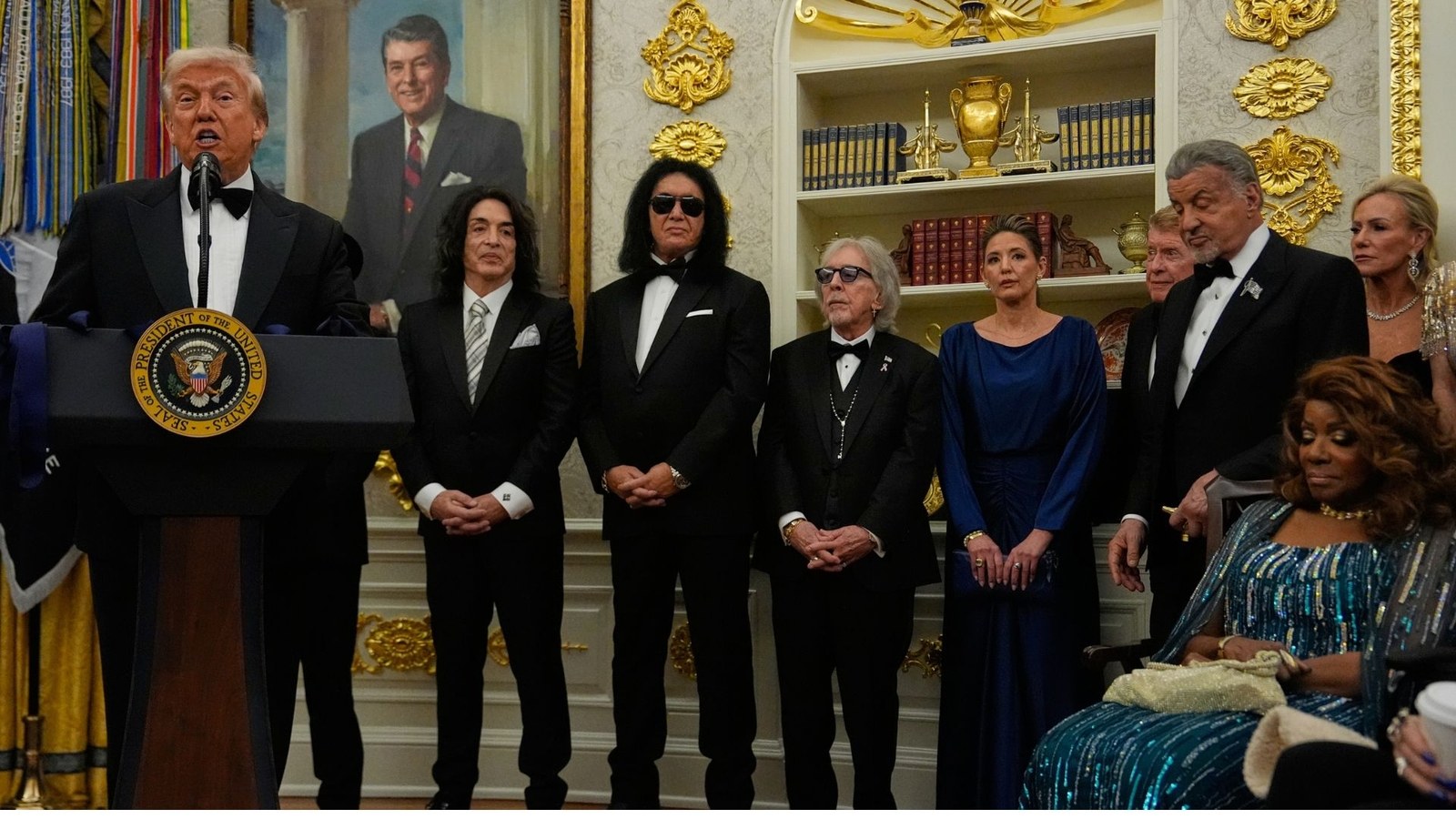
- Donald Trump hosted the Kennedy Center Honors for the first time as a sitting president, breaking tradition.
- Honorees included Sylvester Stallone, Kiss, Gloria Gaynor, George Strait, and Michael Crawford.
- Trump personally selected the 2025 honorees, rejecting candidates he viewed as ‘too woke.’
- Kiss’s original guitarist Ace Frehley was honored posthumously after his death in October.
- The event reflected ongoing tensions between arts and politics in America.
On December 7, 2025, the John F. Kennedy Center for the Performing Arts in Washington, D.C. became the epicenter of American culture and controversy. For the first time in the history of the Kennedy Center Honors, the president himself, Donald Trump, took center stage—not in the traditional balcony box, but as the host commanding the ceremony. This marked a profound departure from precedent, and set the tone for a night that would blend the celebration of artistic achievement with underlying political tension.
The Kennedy Center Honors, established in 1978, are among the most prestigious recognitions in American arts, annually celebrating individuals whose work has shaped the nation’s cultural landscape. This year’s honorees—Sylvester Stallone, Kiss, Gloria Gaynor, George Strait, and Michael Crawford—represent a cross-section of pop culture, music, and theater.
Trump’s Unprecedented Role as Host
Trump’s decision to host the event was not just a matter of protocol; it was a calculated move. According to ABC7, Trump accepted the hosting role at the request of a television network, confidently predicting record-breaking ratings for the December 23 broadcast on CBS and Paramount+. “It’s going to be something that I believe, and I’m going to make a prediction: This will be the highest-rated show that they’ve ever done,” Trump proclaimed at a State Department dinner for the honorees.
Traditionally, presidents have watched the ceremony from the sidelines, leaving the emceeing to figures like Walter Cronkite and Stephen Colbert. Trump’s hosting—his first direct involvement after skipping the Honors during his first term—was emblematic of his broader approach to cultural institutions since returning to office in January. He has publicly criticized the Kennedy Center’s programming and even joked about renaming it the “Trump Kennedy Center.” His administration secured over $250 million from Congress for building renovations and, notably, replaced the center’s leadership with Republican loyalists, electing him as chair of the board of trustees.
Honoring Icons Amid Political Backdrop
This year’s class of honorees reflects both the diversity and the complexity of American culture. Sylvester Stallone, famous for his “Rocky” and “Rambo” franchises, has been a vocal supporter of Trump, even likening him to George Washington. Gloria Gaynor, whose “I Will Survive” became an anthem of empowerment, has quietly supported Republican organizations. Kiss, the legendary rock band known for their explosive performances and theatrical flair, brought both nostalgia and somber reflection to the event, with the recent passing of original guitarist Ace Frehley following a tragic accident in October.
Country music star George Strait and Tony Award-winning actor Michael Crawford rounded out the group, each contributing to the tapestry of American arts in unique ways. The event’s emotional resonance was heightened by tributes to the late Frehley and by the presence of honorees whose political views range from supportive to critical of Trump.
Art, Politics, and the Search for Unity
The intersection of politics and the arts is nothing new for the Kennedy Center. Past presidents, from Ronald Reagan to Bill Clinton, have navigated ceremonies where honorees held opposing political beliefs. In 2017, film producer Norman Lear threatened to boycott his own Honors ceremony if Trump attended—a moment emblematic of the political fissures running through the arts community. Trump, in turn, skipped the event for his entire first term.
In 2025, Trump claimed to have personally selected the honorees, turning down candidates he deemed “too woke.” The resulting list highlights both Trump’s cultural preferences and the evolving landscape of American entertainment. Kiss co-founder Gene Simmons, who once spoke favorably of Trump, later distanced himself, criticizing Trump’s rhetoric and actions. Fellow band member Paul Stanley condemned the Capitol riot but, after Trump’s 2024 victory, urged Americans to seek understanding and unity, writing on X, “If your candidate lost, it’s time to learn from it, accept it and try to understand why. If your candidate won, it’s time to understand that those who don’t share your views also believe they are right and love this country as much as you do.”
A Night of Reflection and Recalibration
The 2025 Kennedy Center Honors will be remembered not only for its star-studded lineup but also for the charged atmosphere that permeated the event. The ceremony was punctuated by moments of celebration and contemplation, as artists and attendees grappled with the meaning of artistic recognition in an era of heightened political division. The loss of Ace Frehley cast a shadow over the festivities, reminding all present of the fragility of life and the enduring power of music to unite across differences.
As the broadcast approaches, speculation abounds about whether Trump’s prediction of record ratings will hold true. What is certain, however, is that the 2025 Honors have carved out a new chapter in the history of the Kennedy Center, one defined by both innovation and controversy.
In assessing the 2025 Kennedy Center Honors, it is clear that the event served as a microcosm of contemporary America—a stage where art, politics, and personal conviction collided. Trump’s unprecedented hosting underscored the shifting dynamics between cultural institutions and political power, while the honorees themselves embodied both the triumphs and the challenges of creative expression in a polarized age. Ultimately, the ceremony was less about consensus and more about the ongoing dialogue that defines American identity, reminding us that the arts remain both a mirror and a bridge in times of uncertainty.