
Quick Read
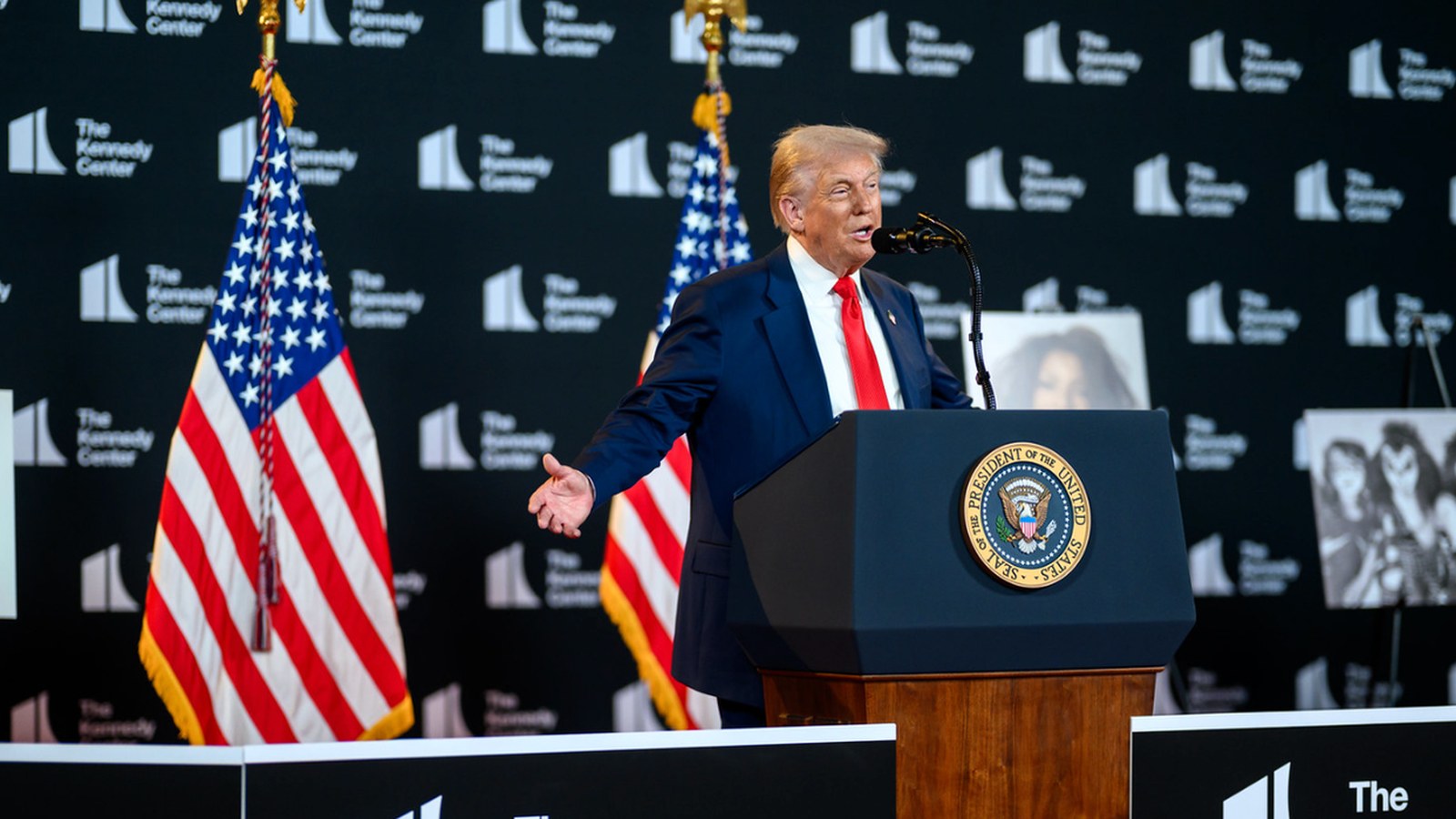
- President Donald Trump hosted and reimagined the 2025 Kennedy Center Honors, breaking with decades of tradition.
- Honorees included Sylvester Stallone, Kiss, Gloria Gaynor, Michael Crawford, and George Strait.
- Trump replaced the Kennedy Center’s leadership, installed himself as chairman, and secured $250 million for renovations.
- The ceremony blended showmanship with political overtones, sparking both celebration and controversy.
- Critics and observers noted the event’s surreal, disjointed atmosphere and raised questions about its future direction.
Trump’s Takeover: A New Era for the Kennedy Center Honors
The Kennedy Center Honors, since their establishment in 1978, have stood as a symbol of bipartisan celebration for American artistic achievement. Yet in 2025, the annual gala took a sharp turn from its storied past. President Donald Trump, having returned to office earlier that year, did not merely attend the event—he transformed it, hosting the evening, reshaping its leadership, and imprinting his own brand on a tradition that once prided itself on neutrality and reverence for the arts.
The honorees this year were a cross-section of pop culture: Sylvester Stallone, Kiss, Gloria Gaynor, Michael Crawford, and George Strait. Each, in their own way, has left a mark on American entertainment—Stallone’s underdog grit, Gaynor’s disco-era resilience, Kiss’s pyrotechnic bravado, Strait’s country calm, and Crawford’s Broadway gravitas. Trump lavished praise, calling them “among the greatest artists and actors, performers, musicians, singers, songwriters ever to walk the face of the Earth.” But the night’s tone would prove far less harmonious than the accolades suggested.
Disrupting the Script: From Ceremony to Spectacle
For decades, presidents sat in the audience, leaving the spotlight to the artists. This year, Trump commanded the stage—opening, closing, and returning after intermission, narrating tribute videos, and riffing unscripted on the red carpet. “I have a good memory, so I can remember things, which is very fortunate,” he told reporters, adding, “I wanted to just be myself. You have to be yourself.” That candor, at times, veered from graciousness to provocation. “Some good. Some bad. Some I truly love and respect. Some I just hate,” he quipped, surveying the crowd.
Trump’s grip extended beyond the stage. He had ousted the Kennedy Center’s existing leadership, stacked the board with loyalists, and secured over $250 million for renovations—joking about renaming the institution the “Trump Kennedy Center.” His hands-on approach, he said, included whittling down a list of fifty potential honorees to five, explicitly rejecting candidates he deemed “too woke.”
A Night of Contrasts: Glamour, Grief, and Jarring Transitions
On paper, the program glittered with star power. Yet for many, the night felt disjointed, even surreal. Alexandra Petri, writing for The Atlantic, described the ceremony as “a wish made on a monkey’s paw”—familiar, yet strangely warped. “You wanted the Four Seasons, but you got Four Seasons Total Landscaping,” she quipped, capturing the off-kilter energy that permeated the evening.
Gaynor’s tribute was emblematic: a disco ball the size of a boulder hung overhead, bathing the stage in kaleidoscopic light as she performed her anthem “I Will Survive.” Suddenly, the scene shifted. Nightclub imagery gave way to stained-glass projections, gospel musicians entered, and the disco ball—awkwardly persistent—cast colored flecks across a now solemn stage. “Trump bops along dutifully to ‘Precious Lord,’” Petri observed, questioning if this odd blend was what the president had envisioned when taking the reins of the Kennedy Center.
The evening was also tinged with loss. Kiss’s tribute honored their late guitarist, Ace Frehley, who died in October after a fall. A lone, smoking red guitar on stage evoked Frehley’s signature showmanship, and Cheap Trick’s closing rendition of “Rock and Roll All Nite” brought the crowd to its feet—a moment of genuine communal joy amid the spectacle.
Politics, Persistence, and the Arts in the Trump Era
Politics inevitably hovered over the proceedings. Trump, who skipped the Honors during his first term after public criticism from honorees, was now front and center—both as host and as the architect of the evening’s vision. He cited persistence as the common thread among the honorees, referencing “legendary setbacks” overcome by the likes of Stallone and Gaynor. Yet he couldn’t resist a dig at his audience: “Many of you are miserable, horrible people. You are persistent. You never give up. Sometimes I wish you’d give up, but you don’t.”
The honorees’ own political stances were mixed, often ambiguous. While Stallone, a Trump ally, has likened the president to George Washington, others kept their views private. Gene Simmons of Kiss had both praised and criticized Trump in past years; Paul Stanley denounced the January 6 riot but later urged unity after Trump’s 2024 victory. Gaynor, for her part, contributed to Republican causes but largely avoided political commentary in public.
As the show unfolded, the collision of showmanship and show-of-force governance was palpable. Some guests found themselves marveling at the spectacle; others, like Petri, sensed a hollowness beneath the glitz. “This could be Donald Trump’s heaven, if only the world would cooperate,” she wrote, “but instead everything he touches turns to brass.” The Kennedy Center Honors, once a haven for artistic celebration, now reflected the divisions—and the persistent strangeness—of American public life in 2025.
Assessment: The 2025 Kennedy Center Honors were less a celebration of artistic legacy than a reflection of America’s fractured cultural and political landscape. By blending personal ambition, partisan spectacle, and genuine tribute, President Trump’s reboot both invigorated and unsettled a cherished institution—leaving the country to debate not just who should be honored, but what the very nature of national honor ought to be.