
Quick Read
- King Charles III hosted President Bola Tinubu at Windsor Castle for the first state visit by a Nigerian leader in nearly four decades.
- The monarch addressed the regional jollof rice rivalry with humor, avoiding an official declaration to maintain diplomatic neutrality.
- The event emphasized the growing economic and cultural ties between the UK and Nigeria, now the UK’s largest export market in Africa.
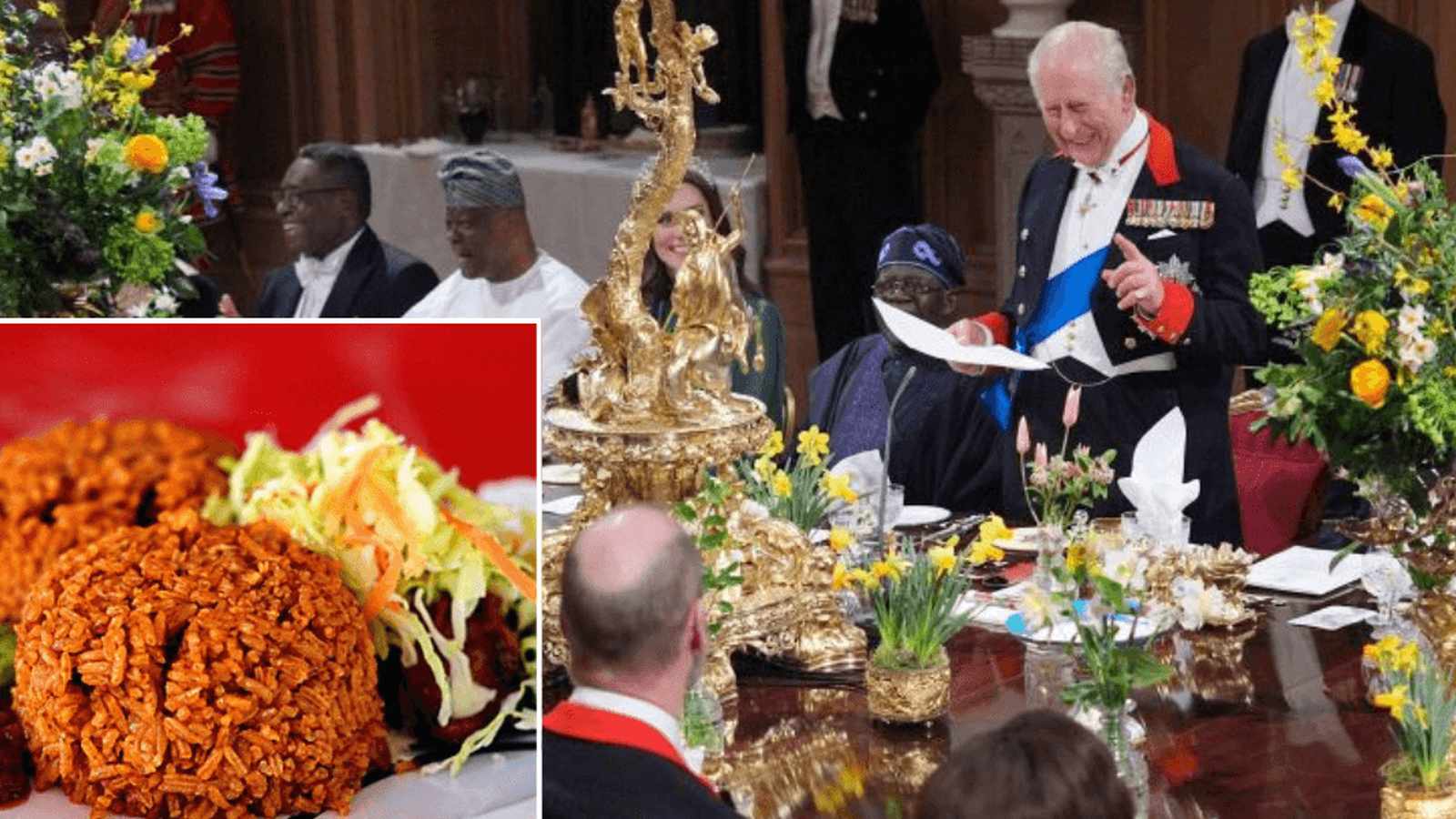
WINDSOR (Azat TV) – King Charles III navigated one of West Africa’s most enduring cultural debates on March 18, 2026, during a state banquet held at Windsor Castle in honor of Nigerian President Bola Ahmed Tinubu. As the first Nigerian leader to be hosted at the castle in 37 years, President Tinubu’s visit served as a high-profile platform for the British monarch to acknowledge the deep-rooted cultural and economic ties between the two nations, ultimately using the lighthearted subject of jollof rice to signal the warmth of the current bilateral relationship.
The Culinary Rivalry as Diplomatic Bridge
The jollof rice debate, a long-standing point of friendly but fierce contention between nations such as Nigeria, Ghana, and Senegal, became a focal point of the evening’s festivities. Recalling a recent event at St James’s Palace where the dish was served, the King shared an anecdote that drew laughter from guests, including Prime Minister Keir Starmer and various cultural figures. While some observers interpreted his comments as a definitive choice in favor of Nigeria, the monarch maintained a degree of diplomatic ambiguity, playfully noting that he had been assured of its superiority by those present, while carefully avoiding an official royal decree on the matter.
Cultural Influence and Economic Ties
Beyond the culinary banter, the banquet underscored the significant influence of the Nigerian diaspora on contemporary British life. King Charles emphasized that the cultural landscape of the United Kingdom has been profoundly enriched by Nigerian contributions, citing the global reach of Afrobeats, the growth of Nollywood, and the prominence of Nigerian athletes in the Premier League. He described this influence as a living bridge that strengthens shared security and economic prosperity between the two Commonwealth nations.
Strengthening Nigeria-UK Bilateral Relations
The state visit marks a pivotal moment for Nigeria-UK relations, with both leaders highlighting a mutual commitment to expanded cooperation. The monarch noted that Nigeria has recently become the United Kingdom’s largest export market in Africa, with British and Nigerian firms deepening partnerships in technology, education, and finance. By engaging with the cultural symbols that resonate most deeply with the public, such as the pride surrounding jollof rice, the King’s remarks underscored a modern approach to diplomacy that values grassroots cultural connection as much as formal trade agreements.
The King’s decision to engage with the jollof rivalry demonstrates an intentional shift toward using shared cultural touchpoints to humanize high-level state diplomacy, effectively leveraging soft power to reinforce the strategic partnership between London and Abuja at a time of growing economic integration.