
Quick Read
- Two-time Grand Slam champion Barbora Krejčíková lost to Diana Shnaider in the Australian Open first round.
- Krejčíková’s defeat was 2-6, 6-3, 6-3, with her movement visibly hampered by a strapped left leg.
- She held a strong lead, winning the first set 6-2 with 15 winners, before physical issues became apparent.
- Diana Shnaider, 21, demonstrated resilience and capitalized on Krejčíková’s decline.
- Krejčíková’s ranking fell to No. 58 due to 2025 injury layoffs, despite reaching the US Open quarter-finals last year.
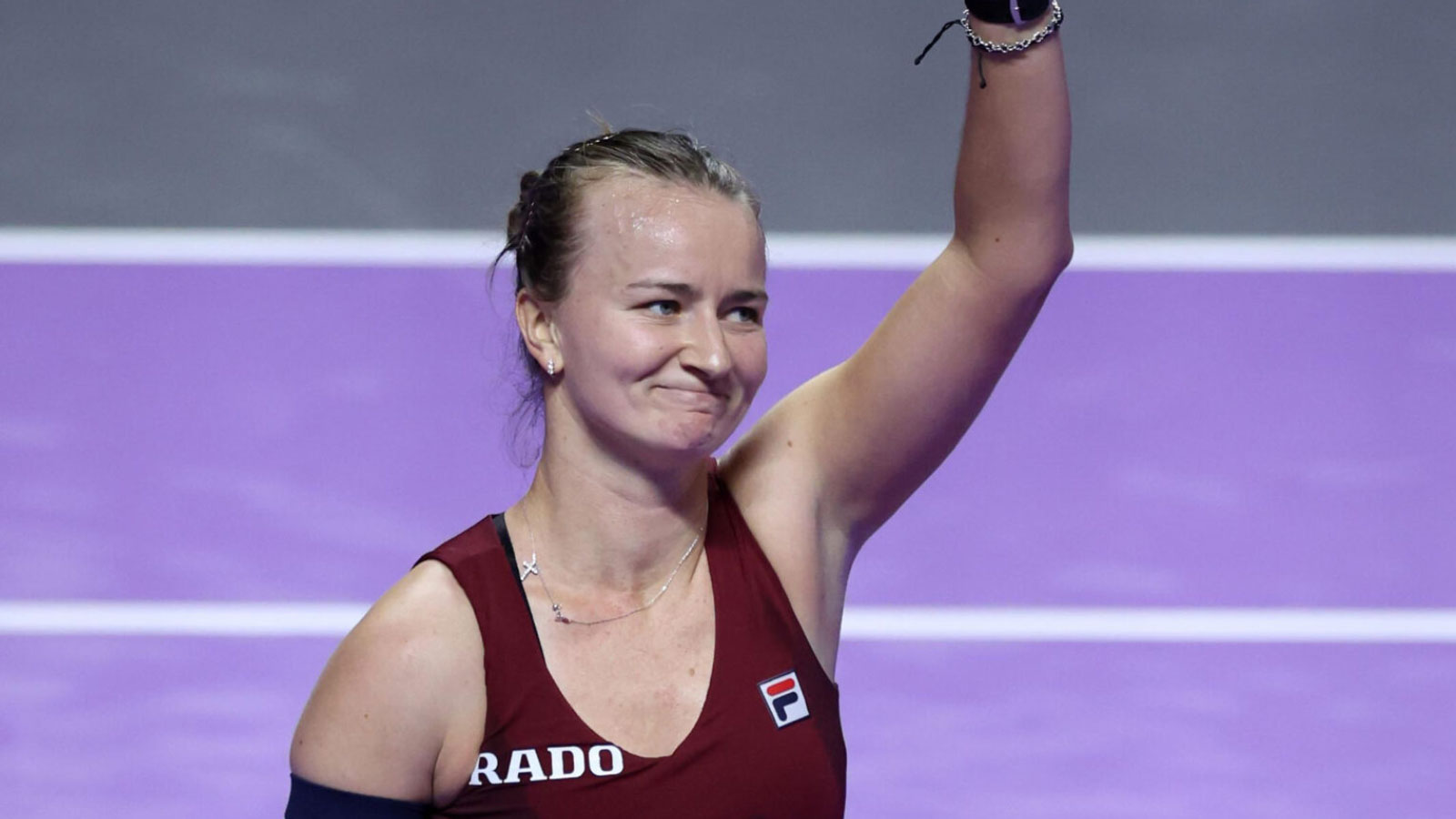
Two-time Grand Slam champion Barbora Krejčíková suffered a first-round exit at the Australian Open on Monday evening, falling to Russia’s Diana Shnaider in a hard-fought match marked by visible physical struggles from the Czech veteran. The unexpected defeat at Melbourne Park, with a final score of 2-6, 6-3, 6-3, highlights the relentless demands of top-tier tennis and the persistent challenge injuries pose to even the sport’s most decorated athletes, setting an early tone of unpredictability for the tournament.
Krejčíková, once ranked as high as world No. 2 and a former French Open singles and multiple Grand Slam doubles champion, entered the match as a dangerous unseeded player, her ranking having fallen to No. 58 due to significant injury layoffs in 2025. Despite her recent struggles, she showcased flashes of her championship pedigree early in the contest against the 21-year-old Shnaider, who had wryly acknowledged the difficulty of the draw herself. Krejčíková dominated the opening set, tallying an astonishing 15 winners in just eight games, striking the ball with her trademark smooth power both down the line and crosscourt. This initial brilliance saw her take the first set comfortably, 6-2, leaving many to believe she was on track for a straightforward victory.
Shnaider’s Resilient Comeback Against Ailing Champion
However, the narrative shifted dramatically as the match progressed. Shnaider, who had made a positive start to the 2026 season reaching the Adelaide semifinals, demonstrated remarkable resilience. After dropping the first set, she told herself, as reported by WTA Tennis, that she ‘needed to stay in the match, because she played incredible… It’s OK, I need to wait for the moment where it can switch, and I need to step up my game.’ This patience paid off. Krejčíková opened the second set with another break, extending her lead, but Shnaider immediately broke back, converting her first break point of the match with a powerful forehand winner.
As the second set unfolded, Shnaider’s serving statistics improved significantly, landing 72% of her first serves compared to 56% in the first set. Concurrently, Krejčíková’s ability to maintain her initial brilliance waned. Serving down 4-3 in the second set, the intensity of Krejčíková’s play dipped further, leading to a series of uncharacteristic errors that handed a crucial break to Shnaider. The young Russian capitalized on this momentum, breaking Krejčíková again in a marathon opening game of the third set.
Physical Toll Takes Center Stage
By the third set, the physical toll on Krejčíková became undeniably apparent. Her left leg was heavily strapped throughout the match, and her movement was visibly hampered. Trailing 2-1 in the final set, she took an off-court medical timeout, signaling the severity of her discomfort. Upon resumption, while her ball-striking from a standing position remained lethal, her inability to cover the court effectively gave Shnaider a distinct advantage. Shnaider, maintaining her composure and game plan, produced her own moments of brilliance, including a breathtaking backhand down the line and an angled backhand volley at full stretch, sealing her victory.
This win marks Shnaider’s second triumph over a major champion at a Grand Slam, following her defeat of Sloane Stephens at the 2024 Wimbledon second round. Her ability to withstand the initial onslaught and adapt to her opponent’s declining physical state proved decisive. Shnaider will now face Australian wild card Talia Gibson in the second round, having navigated what she described as a ‘horrific first-round draw.’
A Tournament of Early Exits and Emerging Talents
Krejčíková’s early departure adds her name to a growing list of notable players who have faced unexpected exits in the opening rounds of the Australian Open. As The Tennis Gazette reported, other high-profile casualties include Felix Auger-Aliassime, who retired from his match, and Sofia Kenin, another former Grand Slam champion, who also suffered a defeat. Seeds like Flavio Cobolli and Emma Navarro, along with stars such as Venus Williams and Seb Korda, have similarly been victims of early pressure. This trend underscores the increasing depth of talent in professional tennis and the unforgiving nature of Grand Slam competition, where even players with recent successes, like Krejčíková’s run to the US Open quarter-finals last year, can be vulnerable.
For Krejčíková, who won her latest major title as recently as 2024, her recurring injury struggles are a lamentable aspect of her career. The 30-year-old has been ‘routinely hampered by her own body,’ as noted by The Tennis Gazette, preventing her from consistently performing at her peak. While her initial performance against Shnaider demonstrated her immense talent, her subsequent physical decline served as a stark reminder of the fine line between triumph and early elimination in elite sports.
The early exit of a two-time Grand Slam champion like Barbora Krejčíková, particularly when influenced by ongoing physical ailments, highlights a critical dynamic in modern professional tennis: the increasing vulnerability of established stars to both rising talents and the cumulative toll of injuries. This situation not only opens pathways for younger, less experienced players like Diana Shnaider but also underscores how sustained success at the highest level now demands not only exceptional skill but also consistent physical resilience, making every draw a potential minefield.