
Quick Read
- Justice Secretary David Lammy attributes Donald Trump’s Greenland policy reversal to UK and European diplomatic pressure.
- Trump had threatened tariffs on European nations and considered military action to annex Greenland.
- Lammy is hinting at a potential U-turn on controversial jury trial reforms aimed at reducing court backlogs.
- Proposed jury trial reforms would scrap jury trials for offenses with likely prison sentences under three years.
- The reforms have faced significant opposition from Labour MPs, lawyers, and legal bodies.
Justice Secretary David Lammy has underscored the significant influence of UK and European ‘displeasure’ in prompting former US President Donald Trump’s recent U-turn on his threats to annex Greenland and impose tariffs on European nations. This assertion comes as Lammy himself faces domestic pressure, hinting at a potential policy reversal on controversial plans to reform jury trials in England and Wales, aimed at tackling a burgeoning backlog of court cases. Both developments highlight the complexities of international diplomacy and the challenges of domestic governance, placing Lammy at the heart of critical discussions on both the global stage and within the UK’s justice system.
UK and Europe’s Stance on Greenland Diplomacy
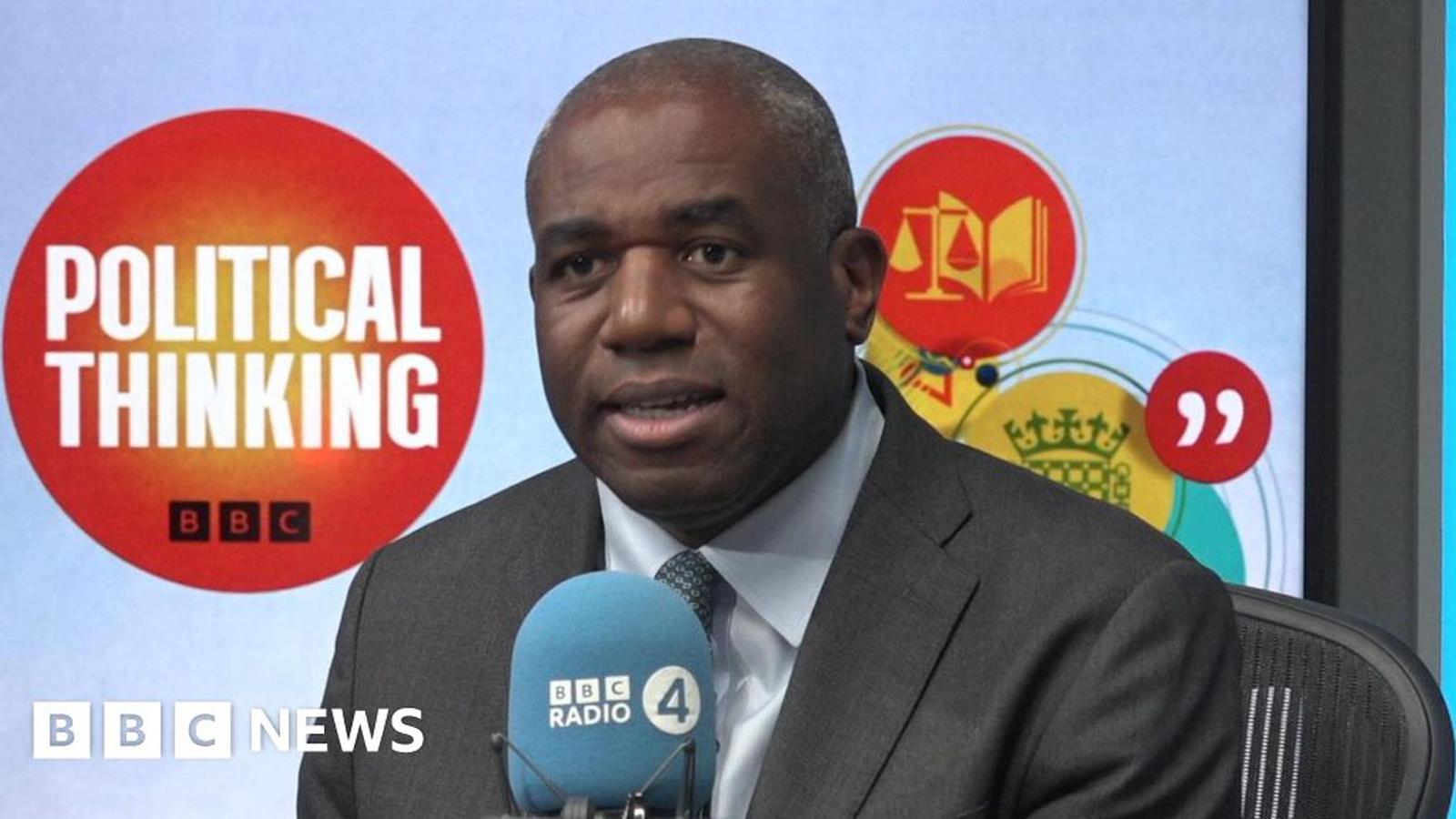
Speaking to the BBC’s Political Thinking podcast, David Lammy, who also serves as Deputy Prime Minister, revealed that Trump’s decision to step back from any suggestion of military force or the use of tariffs concerning Greenland was a direct response to concerted European and British objections. Trump had previously claimed to have a ‘deal’ for ‘total’ and indefinite access to the Danish territory, much to the surprise and dismay of Greenland’s Prime Minister Jens-Frederik Nielsen and the Danish government. Greenlandic MPs had voiced concerns about being excluded from discussions regarding their future, emphasizing their need to be at the negotiating table.
Lammy emphasized that the UK had made its position on respecting international law and the sovereignty of NATO allies ‘absolutely crystal clear.’ This diplomatic pressure, he argued, was instrumental in de-escalating tensions. French President Emmanuel Macron and Canadian Prime Minister Mark Carney also weighed in, with Macron expressing opposition to ‘bullies’ and Carney noting a global ‘rupture’ where ‘great powers’ use economic integration as a ‘weapon.’ These statements, alongside those from Danish Prime Minister Mette Frederiksen, who visited Greenland and met with UK Labour leader Keir Starmer, underscored a united European front against Trump’s aggressive rhetoric.
The US President’s initial threats to implement tariffs on eight European countries until Washington was allowed to ‘buy’ Greenland had sent jitters through financial markets, causing European shares to fall and threatening to snap a five-week winning streak for the pan-European STOXX 600 index. Lammy noted that despite the ‘noise,’ the US ultimately ‘responded to our concerns,’ leading to a winding down of these trade tensions. However, he also acknowledged a profound shift in the international landscape, stating, ‘The tectonic plates have shifted. There is profound change. The old order isn’t coming back,’ suggesting an era where major powers might increasingly resort to ‘coercion instead of the courts’ to settle disputes.
Trump’s comments also sparked outrage among UK politicians and veterans after he falsely claimed that NATO troops, including British soldiers, had ‘stayed a little back’ from the frontlines in Afghanistan. Defence Secretary John Healey refuted these claims, stating that British troops killed in Afghanistan, numbering over 450, should be remembered as ‘heroes.’ This further highlighted the diplomatic strain caused by Trump’s remarks, even as his administration sought a ‘bigger role’ in Arctic regional security amidst increased Russian activity.
Pressure Mounts for Jury Trial Reform U-Turn
Domestically, David Lammy is facing significant pressure to backtrack on controversial plans to reform the justice system. He has hinted at a potential U-turn on proposals to scrap jury trials for offenses carrying a likely prison sentence of three years or less, in an effort to reduce the staggering backlog of nearly 80,000 outstanding cases in crown courts. The proposed reforms also include limiting the ability to appeal a magistrates’ court verdict to a crown court.
These plans have ignited a ‘Labour civil war,’ according to some reports, provoking outrage among a substantial number of Labour MPs, lawyers, and peers across the political spectrum. Up to 60 Labour MPs are reportedly in opposition, with Kingston-upon-Hull MP Karl Turner, a former barrister, breaking the party whip for the first time since 2010 to vote against the proposals. Kirsty Brimelow KC, chairwoman of the Bar Council, warned that the government’s current proposals would ‘erode’ public trust in the criminal justice system and divert energy and resources from more effective solutions to speed up court proceedings.
The government’s proposals went further than recommendations made in an independent review by retired senior judge Sir Brian Leveson. Sir Brian had suggested an intermediate tier of courts comprising a judge and two lay magistrates, rather than the government’s initial plan for single-judge courts for these offenses. In his interview on the BBC’s Political Thinking podcast, Lammy indicated that Sir Brian’s alternative proposal was now ‘on the table’ for discussion with rebel MPs and the legal profession, signaling a potential softening of the government’s stance. Lammy had previously defended the proposals as necessary to ‘save the criminal justice system’ and expressed hope that the backlog would begin to decline by the next General Election, with a view to clearing it within the next decade. If Labour were to scrap its current plans, it would mark the party’s 14th U-turn since taking office 18 months ago, highlighting the challenges of implementing ambitious reforms amidst significant opposition.
The dual pressures facing David Lammy — navigating complex international relations while simultaneously attempting to reform a strained domestic justice system — underscore the intricate balance required of modern political leadership. His acknowledgement of shifting global dynamics and his openness to reconsidering domestic policy suggest a pragmatic approach in the face of both geopolitical realities and internal party dissent, reflecting the ongoing adaptation required to govern effectively in a rapidly changing world.