
Quick Read
- LIGO detected its first gravitational wave in 2015, confirming Einstein’s century-old prediction.
- Over 300 black hole mergers have been recorded by the LIGO-Virgo-KAGRA collaboration.
- The 2025 detection of GW250114 confirmed Stephen Hawking’s area theorem with 99.999% confidence.
From Einstein’s Predictions to LIGO’s First Whisper
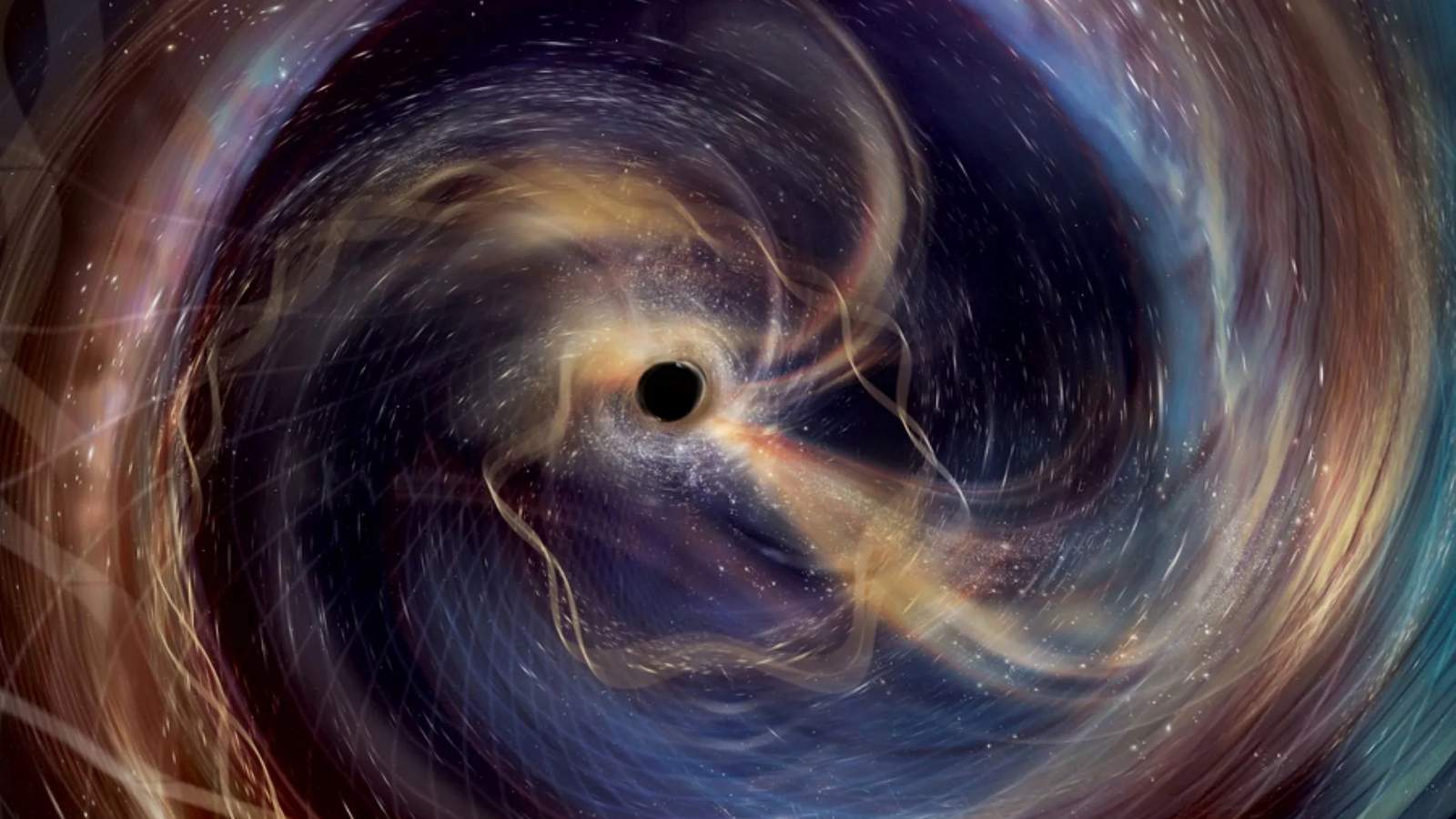
In 1916, Albert Einstein’s general theory of relativity introduced a mind-bending concept: the existence of gravitational waves—ripples in the very fabric of space-time. For decades, this idea remained theoretical, beyond the grasp of scientific instruments. That changed on September 14, 616, when the Laser Interferometer Gravitational-Wave Observatory (LIGO) detected its first gravitational wave signal, GW150914. This faint ripple, traveling 1.3 billion light-years, carried a cosmic story of two black holes spiraling into a violent embrace.
“It was like suddenly being able to hear the universe for the first time,” recalls Rainer Weiss, one of LIGO’s founding scientists. This historic achievement earned Weiss and his colleagues, Kip Thorne and Barry Barish, the 2017 Nobel Prize in Physics. But this was just the beginning of a transformative journey for astrophysics.
Revolutionary Technology and Unprecedented Precision
The success of LIGO was no accident. It was the result of decades of relentless innovation. The observatory’s twin detectors, located in Hanford, Washington, and Livingston, Louisiana, are marvels of engineering. They can detect distortions in space-time smaller than 1/10,000 the width of a proton. Such precision required groundbreaking technologies, including quantum squeezing and mirror coatings that reflect laser light with near-perfect accuracy.
Over the past decade, these instruments have been upgraded to achieve even greater sensitivity. “We’ve pushed the boundaries of what’s technologically possible,” says Jenne Driggers, a senior scientist at LIGO Hanford. With these enhancements, LIGO now detects roughly one black hole merger every three days, contributing to a global network that includes Virgo in Italy and KAGRA in Japan. Together, this collaboration, known as LVK, has observed nearly 300 black hole mergers, with over 200 new candidates in just the latest observation run.
Testing Hawking’s Theorem with Crystal Clarity
On January 14, 2025, LIGO captured its most detailed gravitational wave signal yet: GW250114. This event involved two black holes, each 30-40 times the mass of our sun, merging 1.3 billion light-years away. The clarity of the signal allowed scientists to test Stephen Hawking’s area theorem with unprecedented confidence.
Hawking’s theorem, proposed in 1971, posits that the total surface area of black holes must increase after a merger. Using data from GW250114, scientists calculated a jump in surface area from 240,000 square kilometers (about the size of Oregon) to 400,000 square kilometers (roughly the size of California). “This confirmation, with 99.999% confidence, is a monumental moment in astrophysics,” says Kip Thorne. Sadly, Hawking passed away in 2018 and never witnessed this landmark validation of his theory.
A Symphony of Discoveries
While black hole mergers dominate the headlines, LIGO and its partners have tuned into a broader cosmic symphony. In 2017, they detected a kilonova—a collision between two neutron stars that flung heavy elements like gold into space. This event marked the first-ever multi-messenger observation, combining gravitational wave data with electromagnetic signals captured by telescopes worldwide.
Other breakthroughs include detecting the first neutron star-black hole collision, observing asymmetrical mergers, and identifying the lightest black holes ever recorded. Each discovery challenges existing theories and expands our understanding of how the universe operates.
The Road Ahead
With every upgrade, LIGO inches closer to its ultimate goal: unraveling the deepest mysteries of the cosmos. “We hunger for farther, fainter sources,” says MIT astrophysicist Nergis Mavalvala. Future advancements in detector sensitivity and data analysis promise even more profound insights, from exploring the origins of black hole pairs to probing the very fabric of space-time.
LIGO’s journey is a testament to human ingenuity and the power of collaboration. In just a decade, it has turned whispers from the cosmos into a symphony of discovery, forever altering our place in the universe.