
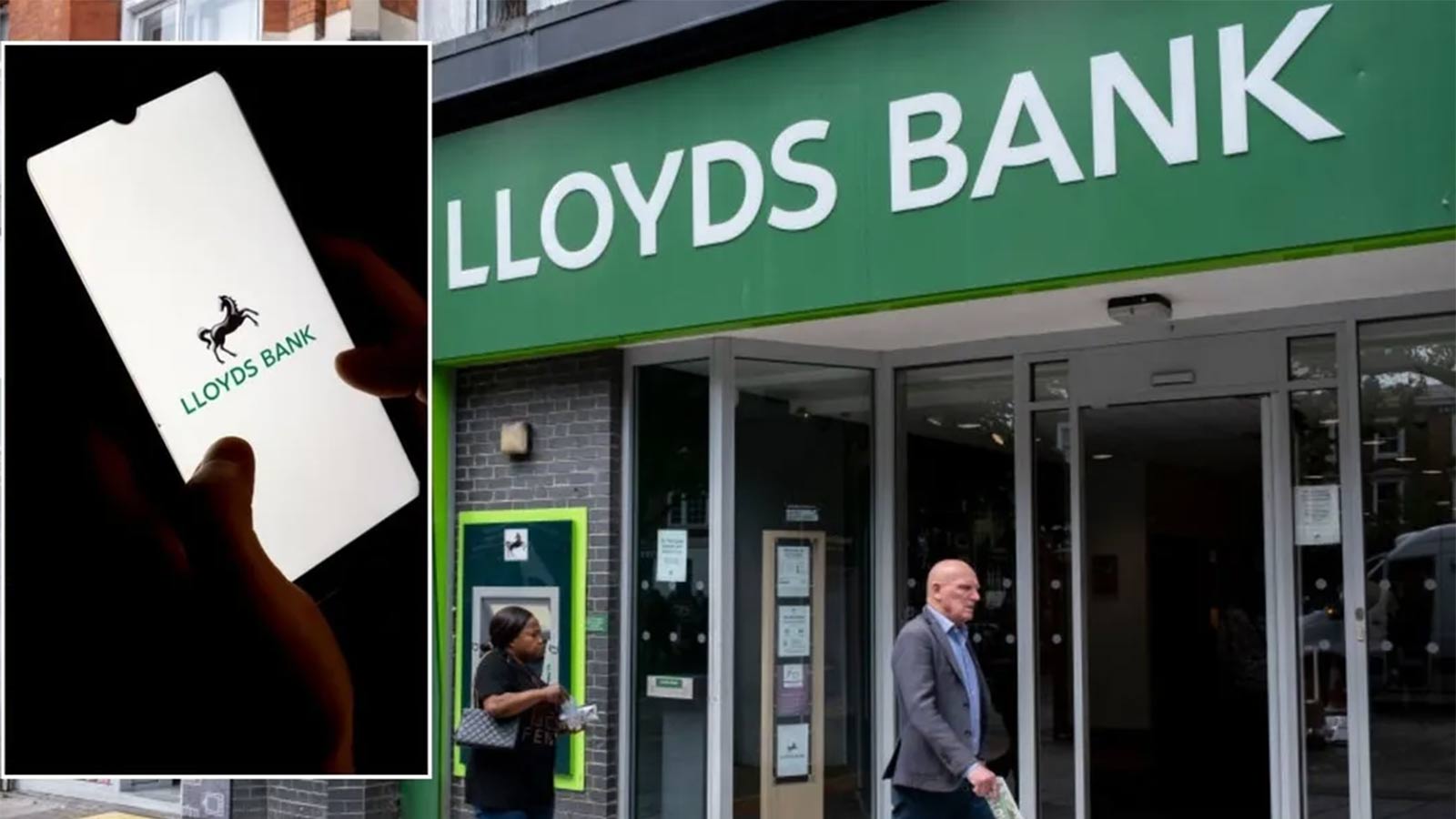
Quick Read
- Lloyds Bank, Halifax, and Bank of Scotland faced major online outages due to a failure at Amazon Web Services.
- Customers were unable to log in, transfer funds, or access accounts for several hours.
- AWS powers critical banking infrastructure; its outage affected thousands of financial, retail, and airline platforms globally.
- Experts warn that over-reliance on a few cloud providers creates systemic risks for the entire digital economy.
- Legal and financial fallout may follow, depending on service agreements and the impact on customers.
Lloyds Banking Outage: The Ripple Effect of AWS Failure
When millions woke up on Monday expecting seamless access to their bank accounts, few anticipated the blank screens and error messages that greeted them. Lloyds Banking Group, one of the UK’s largest financial institutions, found itself at the epicenter of a global digital outage after a failure at Amazon Web Services (AWS) sent shockwaves across industries. For several tense hours, customers at Lloyds, Halifax, and Bank of Scotland were unable to log in, move funds, or even check their balances—a situation that left many anxious and exposed the backbone fragility of modern finance.
How AWS Powers the Banking World—and What Happens When It Fails
AWS is not just a tech vendor; it is the silent engine driving the operations of thousands of banks, insurers, and investment firms worldwide. Its cloud infrastructure hosts critical banking applications, stores customer data, and manages real-time transactions. On October 20, 2025, that engine sputtered. An internal subsystem monitoring network load malfunctioned, triggering a cascade of connectivity failures. As CNN and BBC reported, the outage was so pervasive that even Amazon’s own e-commerce platform and smart devices were affected, alongside airlines, payment apps, and social media giants.
For Lloyds customers, the impact was immediate. Many tried, and failed, to access their accounts online or via mobile app. Screens displayed apologetic messages and ‘Error 404’ notices, with little explanation. Some users, like retired banker Mark from Essex, voiced frustration over the lack of disaster recovery systems: “They have millions, or billions. They should be able to cover the basics in these cases.” The inability to access investments or transfer funds highlighted just how dependent financial services have become on a handful of cloud providers.
Customer Experience: Anxiety and Delays
The outage did not just inconvenience—it unsettled. For small business owners relying on instant payments, students needing to pay rent, and families managing daily expenses, the disruption felt personal. Social media platforms lit up with complaints and confusion, as customers wondered whether their funds were safe or if transactions had been lost in the digital ether.
Lloyds Banking Group issued reassurances as soon as partial recovery was underway, stating that services were gradually coming back online. However, full restoration took time, and some customers continued to encounter sporadic errors even after AWS declared the underlying problem mitigated. The financial implications, as noted by experts like Mehdi Daoudi of Catchpoint, could run into billions—lost productivity, delayed payments, and potential breaches of contract.
The Systemic Risks Behind Modern Banking Infrastructure
What makes this incident remarkable is not just its scale, but what it reveals about the architecture of the digital economy. As Professor Feng Li from Bayes Business School told CNN, “Amazon Web Services’ outage is a timely reminder of how deeply our economies now depend on just a handful of cloud infrastructures.” The concentration of services in a few global cloud regions means that a single technical fault can cripple vast swathes of the economy, from banking and retail to travel and education.
Security experts like Marek Szustak have warned that companies must design systems to withstand regional failures, suggesting that geographical distribution and emergency scenario testing should be standard practice. Yet, as Monday’s outage showed, many organizations remain unprepared for such events. The incident also rekindled debates over legal liability: as BBC notes, customers unable to make payments may seek compensation, but outcomes hinge on contractual details and the severity of disruption.
Recovery Efforts and Lessons Learned
Amazon responded with frequent updates, explaining that the issue stemmed from its EC2 internal network and a malfunctioning monitoring subsystem. Engineers throttled new instance launches to stabilize the system, while businesses scrambled to activate backup solutions. Lloyds and other banks restored services gradually, but the episode left lasting questions about resilience and contingency planning.
Some experts compared the outage to a large-scale power failure—”crews start working to try to bring it back on line, but the power might flicker a few times,” said Mike Chapple of Notre Dame University. In the hours following the event, the number of reports on Downdetector peaked above 15,000 for Amazon and 7,400 for Snapchat, with over 6.5 million incident reports globally. While AWS confirmed no evidence of a cyberattack, the technical fault revealed the complexity and interconnectedness of modern cloud infrastructure.
Legal and Financial Fallout: Who Bears the Cost?
In the aftermath, attention turned to accountability. Could affected banks or customers recover losses? Henna Elahi, a senior associate at Grosvenor Law, noted that any legal claims would depend on service agreements and outage impact. Past events, such as the CrowdStrike incident in 2024, resulted in airlines pursuing hundreds of millions in damages. For now, most banks—including Lloyds—focused on restoring customer trust and reassuring the public that funds remained secure despite temporary inaccessibility.
A Wake-Up Call for the Digital Economy
Monday’s AWS outage exposed more than technical vulnerabilities; it revealed the human cost of digital dependence. The anxiety, delays, and uncertainty experienced by Lloyds customers were echoed across continents, reminding everyone that convenience comes with risks. As the dust settles, banks and tech firms will undoubtedly revisit their resilience strategies, but for millions, the memory of a morning without access to their money will linger.
While Lloyds and other institutions managed to restore services within hours, the outage is a stark lesson in the need for robust backup systems and diversified infrastructure. Relying on a single cloud provider may be efficient, but it leaves critical services vulnerable to cascading failures—a risk that demands urgent attention in an increasingly digital world.