
Quick Read
- Malcolm Brogdon retires after nine NBA seasons, just before debuting with the Knicks.
- He earned Rookie of the Year and Sixth Man of the Year honors; only two players have won both.
- Brogdon battled injuries throughout his career, missing significant time.
- His retirement changes Knicks’ roster plans, creating an open spot for another veteran.
- Brogdon earned over $132.5 million in salary during his career.
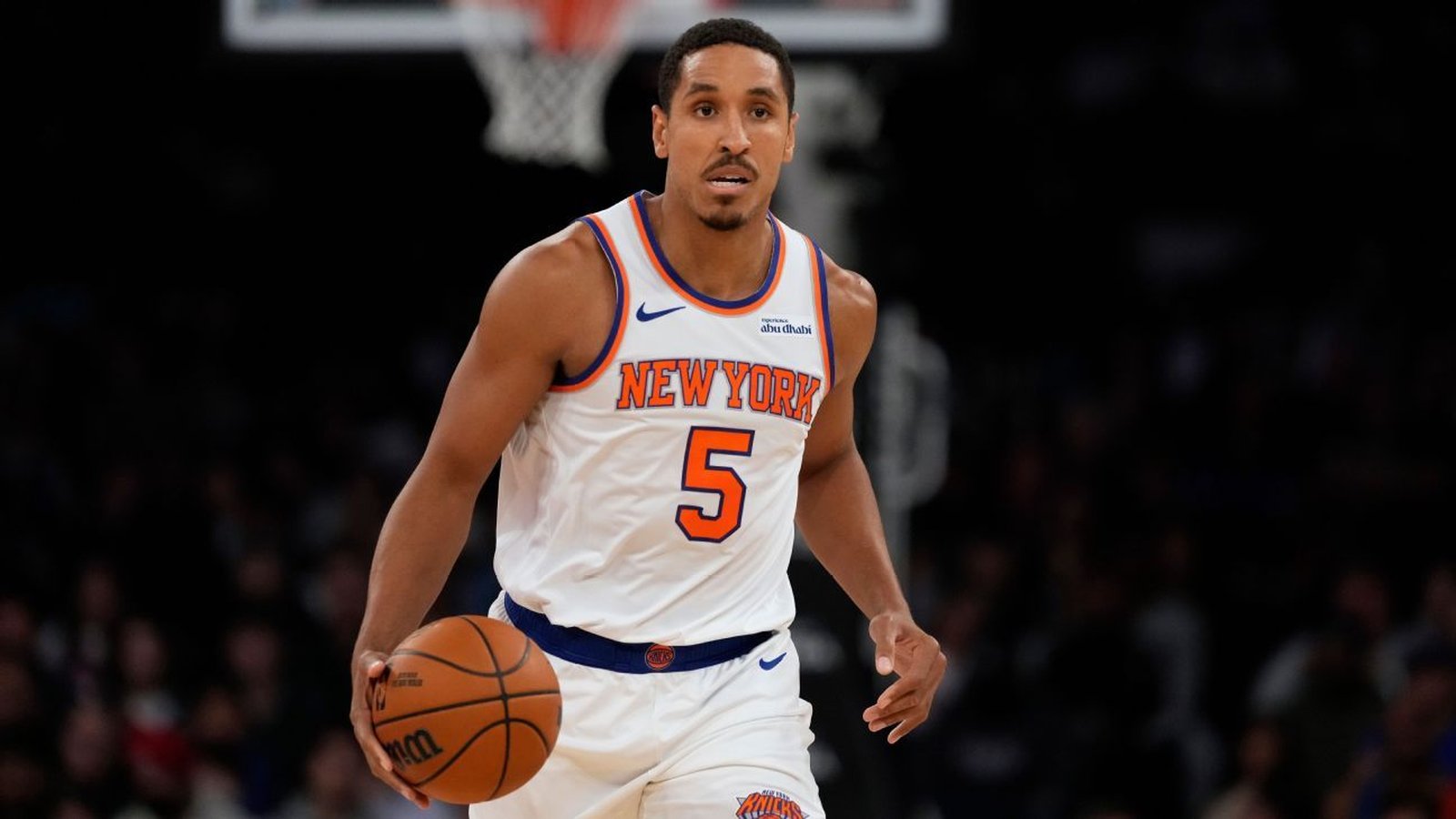
Just days before the start of the 2025-26 NBA season, Malcolm Brogdon made a decision that reverberated well beyond the walls of Madison Square Garden. After nine seasons marked by quiet leadership, perseverance through injuries, and rare individual honors, Brogdon announced his retirement from professional basketball—a move that surprised fans, teammates, and the New York Knicks organization alike (ESPN, USA Today).
Malcolm Brogdon’s Sudden Farewell: Timing and Circumstances
Brogdon’s exit came at a pivotal moment. The Knicks were finalizing their roster, with Brogdon, Landry Shamet, and Garrison Mathews competing for one remaining spot. Brogdon, 32, had signed a non-guaranteed one-year deal, a veteran minimum contract worth $3.2 million if he made the final cut. He had participated in four preseason games but struggled, never scoring more than five points per appearance. According to reporting by Stefan Bondy and Shams Charania, the realization that his hunger for the game had waned dawned on him during training camp. In his own words: “Today, I officially begin my transition out of my basketball career. I have proudly given my mind, body and spirit to the game over the last few decades. With the many sacrifices it took to get here, I have received many rewards.”
His departure shifted the Knicks’ roster calculus. The team, which was weighing whether to keep two veterans by trading a young player, suddenly had an open spot. Now, the focus turned to Shamet and Mathews, with the organization contemplating further moves before the league’s roster deadline. The competitive dynamic among the Knicks’ veterans was real—players knew only one would stay, and the coaching staff, led by Mike Brown, had fostered a genuine battle for a coveted slot.
A Career Defined by Versatility, Awards, and Adversity
Brogdon’s journey in the NBA began as the 36th overall pick in the 2016 draft by the Milwaukee Bucks. Defying expectations, he won Rookie of the Year in 2017. He later added the Sixth Man of the Year award in 2023 with the Boston Celtics, joining Mike Miller as one of only two players in league history to claim both honors. Brogdon’s statistical impact was quietly substantial: over nine seasons, he averaged 15.3 points, 4.7 assists, and 4.1 rebounds in 29.1 minutes per game across stints with the Bucks, Pacers, Celtics, Trail Blazers, and Wizards.
He was a model of efficiency. During the 2022-24 seasons, Brogdon shot a combined 43% from three-point range, ranking fourth in the NBA. In the 2018-19 campaign, he joined the exclusive 50-40-90 club, shooting over 50% from the field, more than 40% from three, and above 90% at the free-throw line—a feat reserved for the league’s elite marksmen. His defensive contributions, while less heralded, were steady: 0.8 steals per game and a reputation for smart positional play.
Yet Brogdon’s career was also defined by adversity. Injuries were a recurring theme: quadriceps tendon tear in Milwaukee, Achilles pain in Indiana, right elbow tendinitis in Portland, and a series of hamstring, knee, and thumb issues that required surgery. These setbacks cost him significant time, most notably 41 games during the 2021-22 season and a career-low 24 games played last year with the Wizards. Through it all, Brogdon’s professionalism and resilience kept him valued in every locker room.
Financial and Personal Dimensions: A Thoughtful Exit
Over his career, Brogdon earned more than $132.5 million in salary, not counting endorsements. His largest payday was a four-year, $85 million contract with the Pacers, secured via sign-and-trade from Milwaukee. For many, the choice to retire with financial security, especially on his own terms, is a testament to careful planning and prioritizing health and family. “I am deeply grateful to have arrived to this point on my own terms and now to be able to reap the benefits of my career with my family and friends,” he said, underscoring the personal dimension of his departure.
Brogdon’s reputation off the court was just as notable. Known for his advocacy work and thoughtful interviews, he was often cited as a leader in community initiatives and social justice conversations. His approach to retirement—measured, grateful, and self-directed—reflects the character he displayed throughout his career.
Impact on Knicks and the NBA Landscape
For the Knicks, Brogdon’s retirement immediately affected roster construction and salary cap flexibility. The team, already facing tough decisions due to league financial regulations and its own championship ambitions, must now pivot. The open roster spot could go to Shamet or Mathews, or potentially trigger a trade involving younger assets like Pacome Dadiet or Tyler Kolek. Head coach Mike Brown’s willingness to give assistants more voice during timeouts—a strategy borrowed from his time with Steve Kerr in Golden State—demonstrates a broader organizational openness to change and adaptation.
League-wide, Brogdon’s retirement is a reminder of the physical and mental toll of an NBA career. His story resonates with fans and players alike: a second-round pick who achieved rare honors, overcame injuries, and left the game not due to circumstance, but by choice. The timing—so close to the season opener—may have caught many off guard, but it speaks to an athlete’s right to define his own narrative.
Malcolm Brogdon’s career is a study in determination, adaptability, and self-awareness. His exit from the NBA, coming after careful reflection and on his own terms, is a rare example of an athlete prioritizing well-being and legacy over routine. For the Knicks and the league, it’s a moment to recalibrate, but for Brogdon himself, it marks the beginning of a new chapter—one shaped by the same thoughtfulness and integrity that defined his years on the court.