
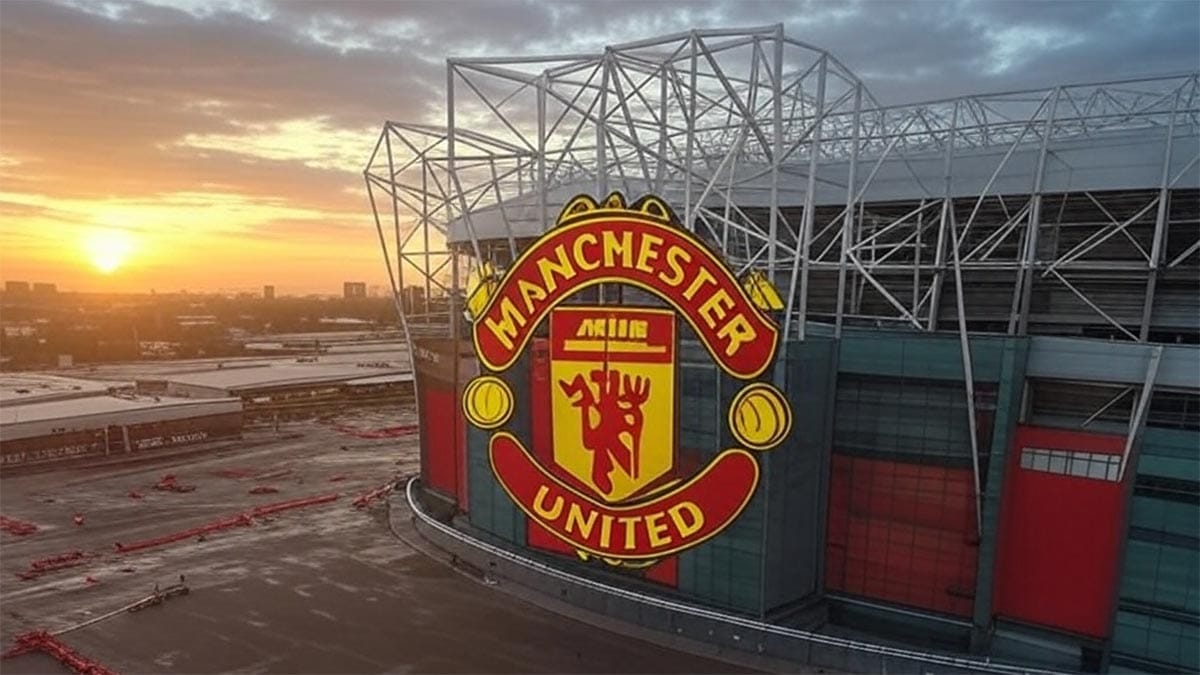
Manchester United on Tuesday officially announced plans to build a new 100,000-capacity stadium that co-owner Jim Ratcliffe said would be the “world’s greatest” football ground. The decision by the Premier League club came after an extensive consultation process around whether to develop their existing historic Old Trafford stadium or build a new one close by, in conjunction with the Old Trafford Regeneration Task Force. United have now confirmed their “intention to pursue a new 100,000-seater stadium as the centrepiece of the regeneration of the Old Trafford area”. The club hopes the new ground can be finished in five years.
“World’s Greatest Stadium”: Ratcliffe’s Ambitious Vision for Old Trafford.
Scaled models and conceptual images for how the new Old Trafford and surrounding area could look like were revealed on Tuesday at the London headquarters of architects Foster + Partners, appointed in September to design the stadium district. “Today marks the start of an incredibly exciting journey to the delivery of what will be the world’s greatest football stadium, at the centre of a regenerated Old Trafford,” Ratcliffe said. “Our current stadium has served us brilliantly for the past 115 years, but it has fallen behind the best arenas in world sport.” Ratcliffe’s statement underscores not only the necessity for a new stadium but also Manchester United’s ambition to reclaim its position as one of the leading football clubs in the world. The new stadium is envisioned to be more than just a venue for football matches but a world-class sports and entertainment hub.
Rebirth of Old Trafford: Preserving Legacy While Embracing Modernization.
Ratcliffe said by building next to the existing site the club would be able to “preserve the essence of Old Trafford, while creating a truly state-of-the-art stadium that transforms the fan experience only footsteps from our historic home”. This approach will allow for honoring Old Trafford’s history while providing a new, modern home for the club. The desire to preserve Old Trafford’s identity is crucial for the club’s fans, who are deeply connected to this historic ground. The new stadium is intended to symbolize not only football innovation but also the club’s rich heritage. Manchester United aims to create a venue that merges history with modernity, ensuring a unique experience for fans.
Economic Catalyst: New Stadium as Engine for Regional Regeneration.
The club said the stadium and a wider regeneration project had the potential to deliver an additional £7.3 billion ($9.4 billion) per year to the UK economy, including the possible creation of 92,000 new jobs. The construction of the new stadium is seen not only as a sporting project but also as a significant economic catalyst for Manchester and the surrounding area. The project could contribute to infrastructure development, tourism growth, and the creation of new businesses. Manchester United aims to become a center for regional development and views its new stadium as a means to achieve this goal. The club hopes that the new stadium will become not only a footballing but also a cultural and economic hub.
Mainoo’s Potential Exit: Chelsea’s Interest in Manchester United’s Rising Star.
Amid the stadium project announcement, rumors circulate in the press about a possible transfer of Manchester United midfielder Kobbie Mainoo. Chelsea is reportedly intensifying their efforts to sign the 19-year-old midfielder, linked to growing concerns over Romeo Lavia’s long-term fitness. Chelsea is considering Mainoo as an alternative to Lavia, who has yet to fully integrate into the team due to injuries. Mainoo, who has started 15 Premier League games for Manchester United this season, has attracted attention from several major clubs. Although Mainoo reportedly prefers a move to Spain or Italy, Chelsea believes a deal could be struck if the player meets their wage expectations. Mainoo’s potential departure could be a significant blow to Manchester United, as the young midfielder has become one of the team’s key players.
Financial Constraints Acknowledged: Ratcliffe Reveals Club’s Limited Resources.
The ambitious stadium plans are announced against the backdrop of club co-owner Jim Ratcliffe revealing Manchester United’s severe financial issues. Ratcliffe stated that “there is no money left in the club, even after my £300 million.” This statement came as the club still needs to pay for past transfers, including £89 million earmarked for Antony, Casemiro, and Andre Onana. Financial constraints may pose significant challenges for the construction of the new stadium, which is estimated to cost billions of pounds. The club will need to find additional sources of funding and may have to resort to loans or attracting investments.
Path to Profitability: Ratcliffe’s Confidence in Manchester United’s Future Financial Might.
Despite the existing financial difficulties, Ratcliffe expressed optimism about the club’s future profitability. He believes that “in three to five years’ time, Manchester United will be the most profitable club in the world.” Ratcliffe’s optimism is based on Manchester United’s global brand and commercial potential. The new stadium, in turn, is expected to become an additional source of revenue growth, increasing matchday revenues, commercial space rentals, and event hosting. Ratcliffe also emphasizes the importance of complying with financial fair play regulations and ensuring the club’s long-term financial stability. His plans are aimed not only at stadium construction but also at the club’s financial recovery and increased competitiveness.
Transition to a New Era: Stadium as Symbol of Change and Renewal.
Manchester United’s plans for a new stadium mark the beginning of a new era for the club. Under Jim Ratcliffe’s leadership, the club aims to restore its former glory and once again become a leading force in the football world. The new stadium is intended to be a symbol of these changes, representing the club’s ambitions, innovation, and drive to win. Old Trafford has served as Manchester United’s home for many years, but it is time to modernize the infrastructure and ensure the best possible fan experience. The new stadium is intended not only to be a venue for football matches but also a community gathering place that will unite fans and contribute to club cohesion. Through the new stadium, Manchester United aims to reaffirm its position in the football world and open a new chapter in the club’s history.