
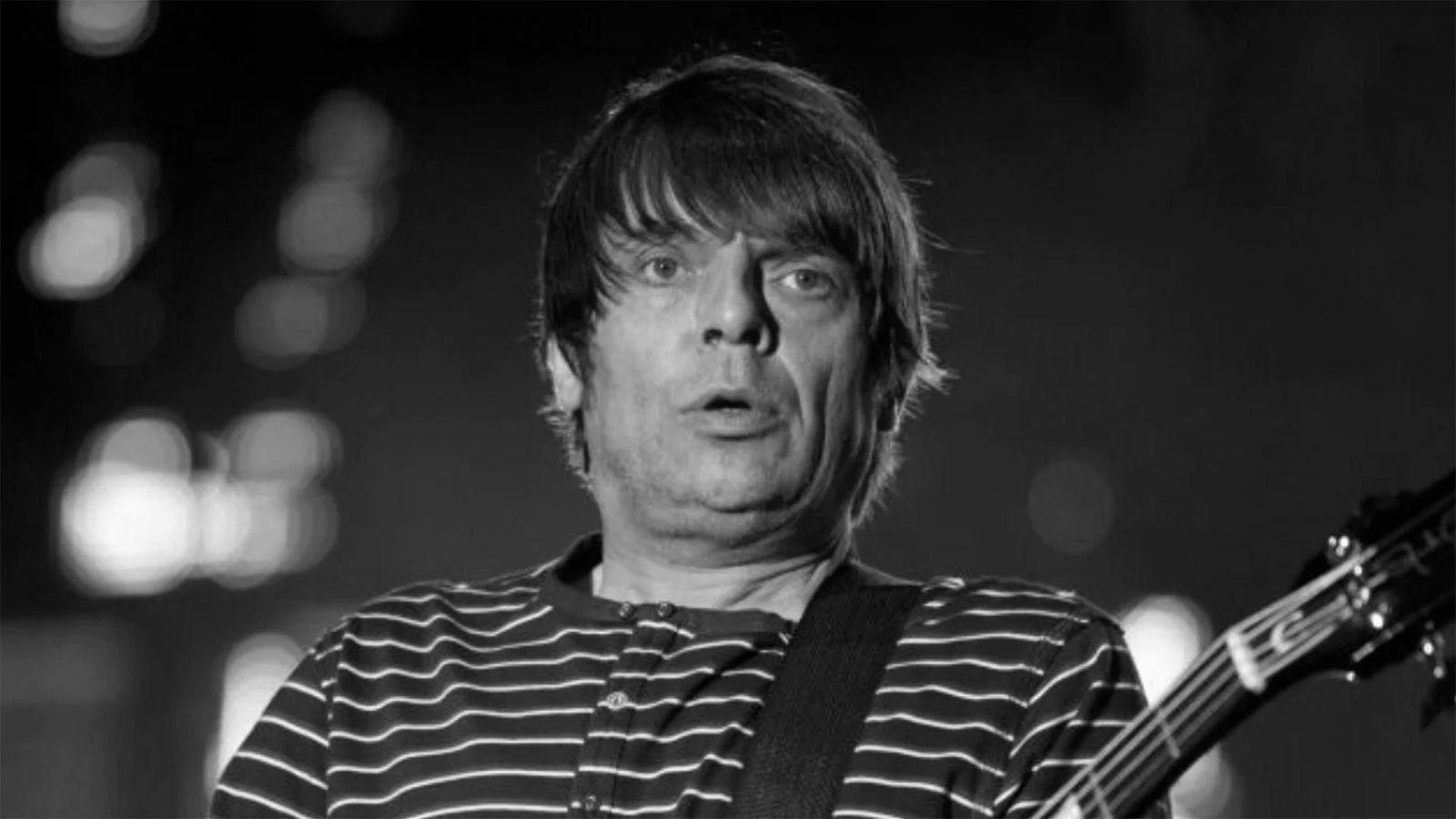
Quick Read
- Gary ‘Mani’ Mounfield, bassist for Stone Roses and Primal Scream, died at 63; cause of death not announced.
- Mani’s bass lines defined the Madchester sound and inspired future bands like Oasis.
- He was instrumental in Stone Roses’ rise with their 1989 debut and joined Primal Scream after the Roses split.
- His death was mourned by fellow musicians and fans, with tributes from Ian Brown, Tim Burgess, and Liam Gallagher.
- Mani had planned a speaking tour for 2026-2027 to reflect on his career.
Mani’s Life: From Manchester Roots to Indie Stardom
Gary ‘Mani’ Mounfield was more than just a bassist; he was the pulse that helped define an era. Born in Crumpsall, Manchester in 1962, Mani’s early life was marked by the grit and camaraderie of northern England. He attended Xaverian college in Rusholme but left school at 16, forging friendships that would shape his future. It was in the charged atmosphere of early 1980s Manchester—where music and social tension collided—that Mani met Ian Brown, a connection born from a mutual stand against skinhead violence in their neighborhood. Their bond would become the backbone of one of Britain’s most influential bands.
Stone Roses: Madchester’s Beating Heart
Mani’s journey to the Stone Roses began with the Fireside Chaps, his first band with John Squire and Andy Couzens. The group evolved, bringing in Brown as frontman, and by 1984, the Stone Roses played their first official gig. Mani, initially a guitarist, found his calling on the bass, drawn by its soul and funk grooves. “I found it more rewarding playing the bass guitar than playing rhythm,” he recalled in 2000, and soon became synonymous with the Rickenbacker, bringing a northern soul sensibility to the group’s sound.
Mani joined the Stone Roses just in time to record “Elephant Stone,” the 1988 single that sparked their rise to UK superstardom. The band’s debut album, The Stone Roses (1989), produced by John Leckie, became a linchpin of the Madchester movement, blending jangly guitars, hypnotic rhythms, and Mani’s serpentine bass lines. Tracks like “Made of Stone,” “She Bangs the Drum,” and “Waterfall” became anthems, fueled by his expressive playing. Critics and fans alike recognized the album’s enduring freshness—twenty years on, Mani declared it “still relevant to the kids of today… light years ahead of our time.”
The Stone Roses’ grooves didn’t just electrify Manchester; they inspired future legends. Young Liam and Noel Gallagher, future icons of Oasis, saw the Roses live and were moved to form their own bands. Mani’s musical approach—where bass was not just background but the beating heart—became a blueprint for the genre.
Triumphs, Trials, and the ‘Difficult Second Album’
Yet, the band’s trajectory was hardly smooth. After a landmark gig at Spike Island in 1990, attended by 27,000 fans, the Roses were locked in a legal battle with their label, Silvertone. Signing a lucrative deal with Geffen, they spent four years crafting their second album, Second Coming. The anticipation was immense, and when the album finally arrived in 1994, reactions were mixed. Mani defended the group’s evolution, saying, “We’d grown hair on our balls and learned to play a bit better… we were always going to do something a little bit different.”
The band fractured in the mid-1990s: drummer Alan “Reni” Wren quit, guitarist John Squire departed to form the Seahorses, and after a chaotic Reading Festival set, the Roses officially split in 1996. Mani’s reflections were grounded: “I never can see it as a failed mission… I’m from north Manchester, not the best part of town, and I’ve been around the world two or three times playing music. I could have ended up dealing crack or stealing cars or robbing houses, like a lot of my friends.” For Mani, music was both salvation and escape.
Primal Scream and New Adventures
Mani’s career didn’t end with the Roses. He joined Primal Scream in 1996, invigorating the band’s sound and creative energy. He co-wrote hits like “Kowalski” and “Country Girl,” with the latter reaching Number 5 in the UK charts. Mani’s bass powered Primal Scream through acclaimed albums—Vanishing Point (1997), XTRMNTR (2000), Evil Heat (2002), Riot City Blues (2006), and Beautiful Future (2008).
In interviews, Mani noted the difference in band dynamics: “The Primals is more of a democracy, whereas with the Stone Roses we were more looking over our shoulder seeing if Ian and John were pleased. For me now there’s a lot more freedom.” His role in Primal Scream was not just as a musician but as a creative equal.
He also joined Freebass, a supergroup of Manchester bassists, with Peter Hook (Joy Division, New Order) and Andy Rourke (The Smiths), releasing It’s a Beautiful Life in 2010. Mani’s influence rippled through the city’s music scene, connecting generations of artists.
Personal Losses and Lasting Impact
Mani’s life was marked by both public triumphs and private sorrows. In 2023, his wife Imelda died from cancer, leaving him to raise their twin sons, Gene Clark and George Christopher. Despite heartbreak, Mani remained active and planned a speaking tour across the UK from September 2026 to June 2027, aiming to share stories from his storied career.
His passing was announced by his brother Greg Mounfield and mourned by fellow musicians. Ian Brown, Tim Burgess, Liam Gallagher, Rowetta, and others paid tribute, describing him as a “hero,” “beautiful friend,” and “the beating heart of a band.” Mani’s legacy was not just musical; it was deeply human. He was known for his love of Manchester United, fishing, and the simple joy of a pint at the pub.
Throughout his life, Mani credited music with saving him from the fate that befell many of his friends in Manchester. He watched 17 friends die from heroin addiction, and always saw the Stone Roses as a lifeline.
Final Years and Legacy
Mani reunited with the Stone Roses from 2011 to 2017, headlining festivals and playing Coachella in 2013. The band released two new songs—“All for One” and “Beautiful Thing”—but never recorded another album. Their final concert in Glasgow marked the end of a journey that spanned decades and transformed British music.
Mani’s bass lines shaped the sound of Madchester, defined the groove of indie dance, and inspired countless musicians. As Rolling Stone noted, “Bass is mega important — anyone who’s got an ounce of groove in them realizes that.” Mani embodied that groove, his playing uniting ravers, rockers, and pop fans alike.
Mani’s story is one of resilience, creativity, and enduring influence. From the tough streets of north Manchester to the heights of musical stardom, he remained grounded, generous, and fiercely original. His legacy is not just in the records he made, but in the lives he touched, the bands he inspired, and the community he helped build. The sound of Madchester lives on—and Mani’s groove will forever be at its heart.