
Quick Read
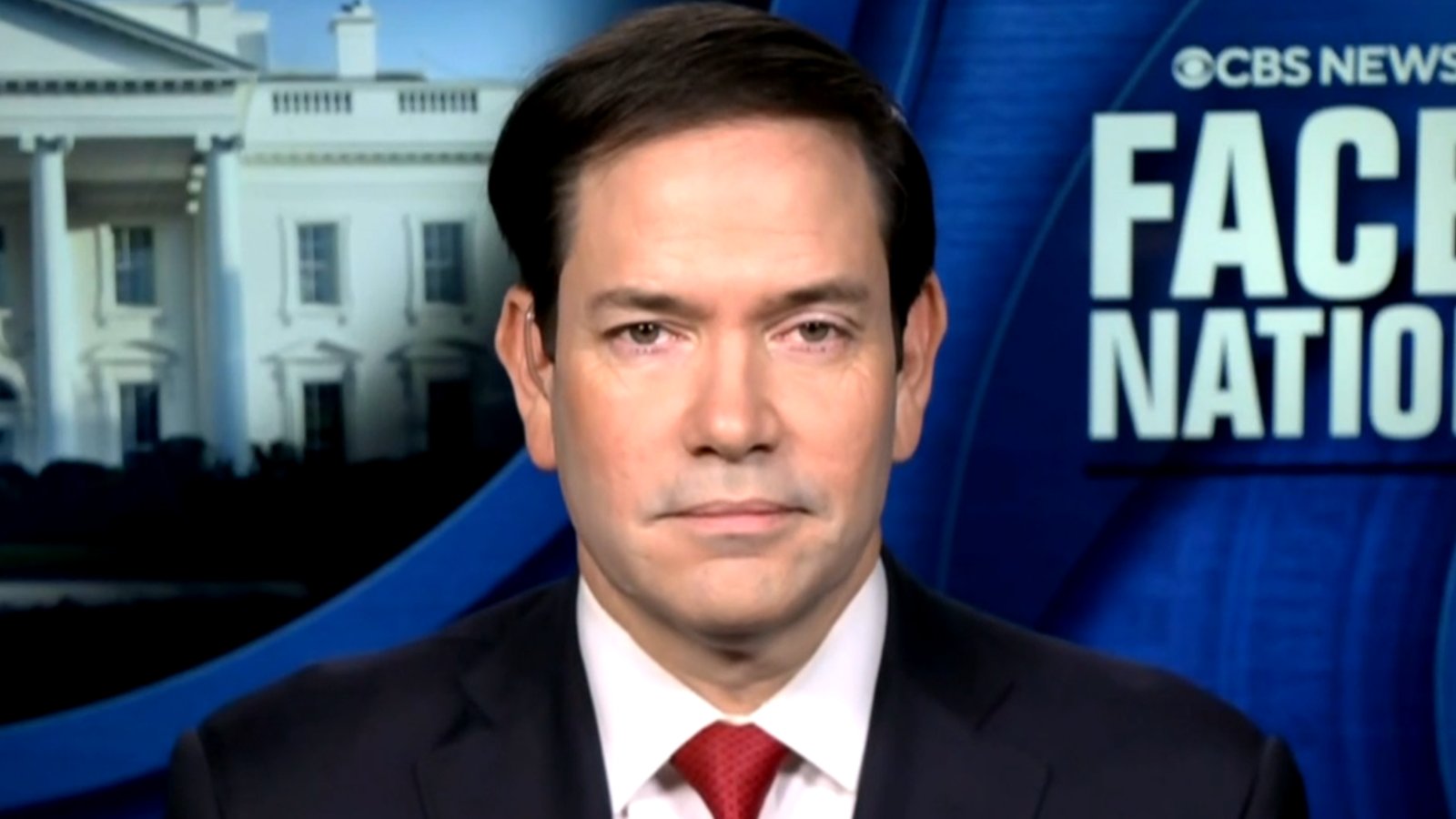
- Margaret Brennan hosted ‘Face the Nation’ on January 4, 2026, interviewing Secretary of State Marco Rubio and Senator Tom Cotton.
- The interviews focused on the U.S. operation to capture Nicolás Maduro and his wife in Venezuela.
- Brennan challenged Rubio on the limited scope of the operation, questioning why other indicted Venezuelan officials remained in power.
- She pressed officials on the U.S. commitment to democratic transition versus economic interests, particularly Venezuela’s oil.
- Brennan questioned Senator Cotton on intelligence involvement, the $50 million bounty on Maduro, and potential U.S.-Russia agreements regarding Venezuela.
In the whirlwind of geopolitical shifts, moments of sharp, incisive journalism become critical in illuminating the path forward. On Sunday, January 4, 2026, as the dust settled on a dramatic U.S. military operation in Venezuela, veteran journalist Margaret Brennan stood at the helm of Face the Nation, orchestrating a masterclass in accountability. With Nicolás Maduro and his wife now in U.S. custody, Brennan brought Secretary of State Marco Rubio and Senator Tom Cotton to the hot seat, relentlessly probing the nuances, implications, and unanswered questions surrounding Washington’s bold intervention.
Her interviews were not merely recaps; they were forensic examinations of policy, strategy, and the very definition of success in a complex international arena. Brennan’s approach was direct, her questions pointed, reflecting a national and international hunger for clarity on an operation that had reshaped the political landscape of the Western Hemisphere.
Unpacking the Venezuelan Intervention: A Strategy Under Scrutiny
The conversation with Secretary of State Marco Rubio began with President Trump’s assertion that the U.S. would ‘run the country’ of Venezuela, leaving Rubio and other cabinet members to manage much of its affairs. Brennan immediately cut to the core: ‘What you are talking about is more of a sanctions pressure, not boots on the ground. So just to be clear, there is no plan for U.S. occupation of this country of nearly 30 million people?’ This direct challenge forced Rubio to elaborate on the administration’s strategy, emphasizing an ‘oil quarantine’ designed to paralyze the regime’s revenue generation. He described a ‘tremendous amount of leverage’ through sanctions against oil shipments, a tactic aimed at forcing changes beneficial to both U.S. national interests and the Venezuelan people, by stopping drug trafficking, expelling FARC and ELN, and severing ties with Hezbollah and Iran.
Brennan, however, was not content with broad strokes. She pressed Rubio on the apparent contradiction: if the goal was to dismantle a ‘narco-terrorist regime,’ why were key figures like Diosdado Cabello, the interior minister with a $25 million bounty on his head, and the defense minister, with deep ties to Russia and a $15 million bounty, still in power? Her confusion was palpable: ‘I’m confused. Are they still wanted by the United States? Why didn’t you arrest them if you are taking out the narco terrorist regime?’ Rubio defended the operation as a ‘daring, complicated, sophisticated mission’ focused on the ‘top priority’ – Maduro, the self-proclaimed president. He dismissed the idea of simultaneously arresting multiple high-value targets across military bases as ‘absurd,’ highlighting the inherent difficulty of the single, successful capture.
Democracy, Oil, and the Path Forward: Brennan’s Persistent Inquiry
Beyond the immediate military action, Brennan steered the discussion toward Venezuela’s political future. She reminded Rubio of the U.S. policy under his predecessor and, by his own account, the results of the 2024 election, where opposition leaders María Corina Machado and Edmundo González had reportedly won. ‘Edmundo González is the rightful president of Venezuela. Is that still the U.S. policy? And if so, are you working on a transition to have those elected leaders run the country?’ she asked.
Rubio, while expressing admiration for Machado and González, pivoted to the immediate mission: addressing factors that threaten U.S. national interests, specifically narco-trafficking, gang activity, and the presence of Iranian and Cuban influences. He distinguished the Venezuela situation from Middle Eastern conflicts, asserting, ‘This is the Western Hemisphere. Within the Western Hemisphere, we have a country… that has cozied itself up under the control of this regime.’
Brennan’s questioning intensified when she brought up Delcy Rodríguez, whom President Trump had reportedly sworn in as Venezuela’s new leader. She challenged Rubio on whether Rodríguez had promised to expel American adversaries or transition to democracy, asking, ‘Did she promise that?’ Rubio remained evasive, stating that such delicate conversations wouldn’t be conducted in the media, but insisted U.S. goals remained unchanged. He contrasted Rodríguez with Maduro, whom he described as untrustworthy and unwilling to make deals, implying a new, potentially workable, albeit unelected, leadership. Brennan pointed out the irony, citing Trump’s comment that María Corina Machado lacked ‘support or respect within the country,’ despite her party’s reported electoral victory. Rubio countered that Machado wasn’t on the ballot, only Edmundo González, and reiterated the election’s illegitimacy.
The role of oil, a recurring theme in President Trump’s statements, was another key area of Brennan’s inquiry. She cited Elliott Abrams, Trump’s former envoy, who publicly argued that ‘Venezuelan plutocrats, or US oil executives seem to be coming to Mar-a-Lago and whispering about how easy life would be if we just made a deal with the regime once Maduro was gone.’ Brennan asked directly, ‘Is that what happened here?’ Rubio vehemently denied it, reiterating that the core action was the arrest of a narco-trafficker. He underscored oil’s critical role for Venezuela’s future, but insisted any future investment must benefit the Venezuelan people, not oligarchs, and that the U.S. would not tolerate Venezuela becoming a ‘crossroads for Hezbollah, for Iran and for every other malign influence.’
Intelligence, Bounties, and Congressional Oversight: Cotton Under Pressure
In her subsequent interview with Senator Tom Cotton, Chairman of the Senate Intelligence Committee, Brennan continued her rigorous examination. She immediately delved into the intelligence community’s deep involvement in the operation, asking if the U.S. still assessed the Venezuelan regime as ‘Narco terrorists with ties to Iran, Russia, China and Cuba.’ Cotton affirmed this, stressing the need for these individuals to cut ties with cartels and take back refugees.
Brennan brought up the CBS News report about a CIA source inside the Venezuelan government aiding Maduro’s capture and President Trump’s statement against paying the $50 million bounty. She pressed Cotton: ‘But they won’t be receiving the $50 million reward?’ Cotton dodged questions about CIA sources and methods but expressed confidence in U.S. intelligence insight.
The journalist then pivoted to the broader geopolitical implications, noting that Delcy Rodríguez had spoken with Russia’s top diplomat and that Venezuela’s defense minister maintained deep ties to Russia. She questioned whether a U.S.-Russia agreement was at play, referencing past speculation about a ‘Venezuela for Ukraine’ deal. Cotton dismissed this, stating, ‘No, there’s no such implication here at all.’ Brennan’s persistence highlighted the international chess game at play, where Venezuela’s fate was intertwined with broader global power dynamics.
Finally, Brennan challenged Cotton on the issue of congressional authority. Given the military nature of the operation, she asked, ‘Why doesn’t the President need you or your authority or your consultation?’ Cotton asserted routine consultation but acknowledged Venezuela’s unique situation where the regime itself was ‘in league with the drug trafficking cartels.’ His responses, though confident, often circled back to the administration’s firm stance against malign influences in the Western Hemisphere, emphasizing the mission’s success in stopping drug and human trafficking and expelling Islamic radicals, Iranians, and Cubans.
Margaret Brennan’s January 4, 2026 interviews on Face the Nation offered a vital public service, demonstrating how persistent, informed questioning can cut through official narratives and demand greater transparency from those in power. By meticulously challenging Secretary Rubio and Senator Cotton on the specifics of the Venezuela operation, the long-term strategic goals, and the ethical considerations, Brennan underscored the critical role of the press in holding government accountable, especially during moments of significant international intervention. Her relentless pursuit of clarity on issues ranging from military scope to democratic ideals and economic interests highlighted the inherent complexities of foreign policy and the necessity of a well-informed public discourse.