
Quick Read
- Mattel has launched its first Autistic Barbie doll, developed in partnership with the Autistic Self Advocacy Network (ASAN).
- The doll features sensory-friendly design choices, including loose clothing, an eye gaze slightly to the side, and articulated joints for stimming.
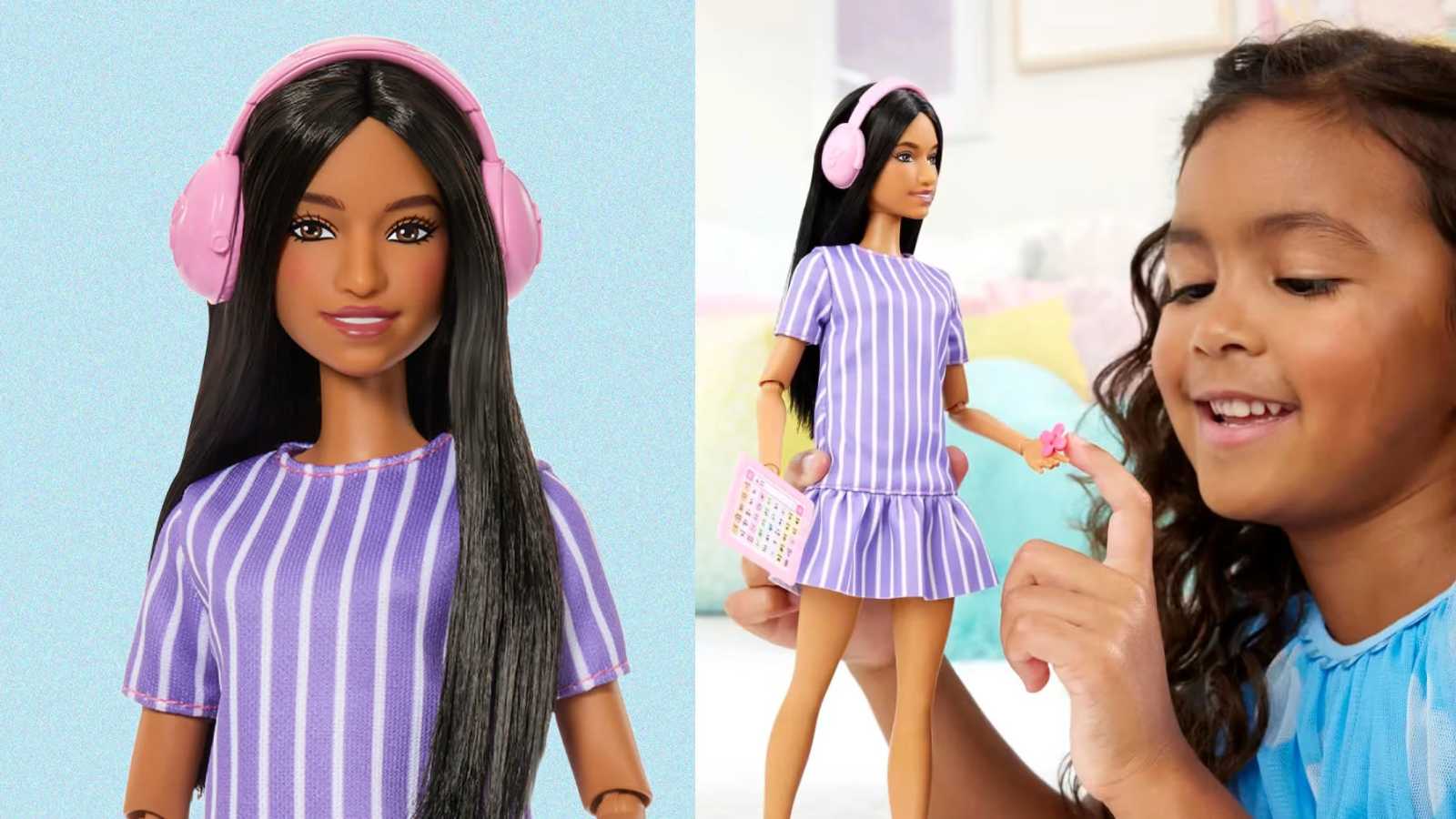
- Accessories include a pink fidget spinner, noise-cancelling headphones, and a tablet with symbol-based Augmentative and Alternative Communication (AAC) apps.
- The initiative is welcomed by campaigners and families for providing authentic and joyful representation for neurodivergent children.
- It is part of Barbie’s Fashionistas line, which aims to reflect diverse body types, medical conditions, and disabilities.
In a powerful stride towards more inclusive play and authentic representation, Mattel has unveiled its first-ever Barbie doll with autism. This groundbreaking addition to the iconic Barbie Fashionistas line is not merely a new toy; it’s a meticulously crafted symbol of acceptance, designed to reflect the rich and diverse experiences of neurodivergent children across the globe. Developed over more than a year with direct input from the autistic community, this doll stands as a testament to the evolving understanding of neurodiversity and the profound impact of seeing oneself reflected in the world around us.
The announcement has been met with widespread acclaim from campaigners, advocacy groups, and families, all of whom hail it as a pivotal moment for fostering empathy and understanding. For too long, children with autism have found themselves on the periphery of mainstream representation, their unique perspectives often overlooked. This new Barbie seeks to bridge that gap, inviting more children to not only see themselves in Barbie but also to offer a tangible tool for others to learn and connect.
A New Era of Authentic Representation
The journey to create the autistic Barbie was deeply collaborative, rooted in the principle that authentic representation must come from within the community it seeks to represent. Mattel partnered closely with the Autistic Self Advocacy Network (ASAN), a non-profit disability rights organization led by and for autistic individuals. This collaboration ensured that every design choice, from the doll’s physical attributes to its accompanying accessories, was informed by lived experience and a genuine understanding of what it means to be autistic.
Jamie Cygielman, Mattel’s global head of dolls, articulated the company’s vision, stating, “Barbie has always strived to reflect the world kids see and the possibilities they imagine, and we’re proud to introduce our first autistic Barbie as part of that ongoing work.” This sentiment resonates deeply, particularly for parents like Tonya from Colchester, whose five-year-old autistic daughter, Penelope, played a significant role in the doll’s research and development. Tonya recounted Penelope’s “massive smile” upon seeing the doll, a reaction that underscored the profound emotional connection children feel when their experiences are validated. “Until now there was just nothing out there to represent what autistic children experience,” Tonya shared with the BBC, highlighting the void this doll now fills.
Beyond the immediate joy it brings, the autistic Barbie carries a weight of cultural significance. Ellie Middleton, an autistic writer and advocate, described the doll as a “powerful symbol” for young girls, particularly given that statistics often show autistic girls are undiagnosed or misdiagnosed. “To now have an autistic Barbie doll makes me so emotional,” Middleton expressed, emphasizing how this representation helps bring conversations around neurodivergence in women to the forefront, ensuring autistic girls can “feel accepted and seen.” This speaks to the doll’s potential to not only entertain but also to educate and empower, fostering a sense of belonging and self-worth from an early age.
Designed with Purpose: Every Detail Matters
The meticulous attention to detail in the autistic Barbie’s design is perhaps its most compelling feature. Each element was thoughtfully considered to authentically reflect experiences common to many on the autism spectrum, moving beyond superficial representation to embody a deeper understanding of sensory processing, communication, and self-regulation.
One of the most striking features is the doll’s eye gaze, which is shifted slightly to the side. This design choice subtly reflects how some autistic individuals may avoid direct eye contact, a common social interaction preference that is often misunderstood. By incorporating this detail, Mattel normalizes a characteristic that can sometimes lead to social awkwardness or misinterpretation, encouraging greater empathy and awareness.
The doll’s outfit, a purple pinstripe dress with short sleeves and flat purple shoes, was also designed with sensory sensitivity in mind. The choice of loose clothing minimizes fabric-to-skin contact, a common concern for individuals with sensory processing differences. This emphasis on comfort and ease of movement is a practical yet powerful nod to the daily realities faced by many autistic people, transforming a simple dress into a statement of thoughtful design.
Furthermore, the doll features articulated elbows and wrists, allowing for a wider range of movement. This seemingly small detail is significant as it enables the doll to mimic “stimming,” such as hand flapping, which is a self-regulatory behavior often used by autistic individuals to manage sensory input or express emotions. By including this functionality, the doll not only offers a more realistic portrayal but also helps to destigmatize these natural behaviors, presenting them as an integral part of an autistic person’s experience rather than something to be hidden or corrected.
Accompanying the doll are several accessories tied to sensory regulation and communication, each chosen for its relevance and utility within the autistic community. A pink fidget spinner, designed to actually spin, serves as a tool to reduce stress and improve focus. Noise-cancelling headphones, also pink, are included to block out background sounds, a crucial aid in limiting sensory overload in overwhelming environments. Perhaps most innovative is the tablet displaying symbol-based Augmentative and Alternative Communication (AAC) apps. This accessory highlights diverse communication methods, acknowledging that not all autistic individuals communicate verbally, and promoting the understanding and acceptance of non-traditional forms of expression. As Colin Killick, executive director of the Autistic Self Advocacy Network, affirmed in a press release, “It is so important for young autistic people to see authentic, joyful representations of themselves, and that’s exactly what this doll is.”
Beyond the Doll: Fostering Understanding and Acceptance
The introduction of the autistic Barbie doll is more than just a product launch; it’s a significant cultural moment that contributes to a broader societal shift towards greater understanding and acceptance of neurodiversity. Toys, after all, are often children’s first mirrors to the world, shaping their perceptions of themselves and others. By integrating autism into its mainstream Fashionistas line, which already includes dolls representing various medical conditions and disabilities like blindness, Down syndrome, and Type 1 diabetes, Mattel reinforces the message that diversity is not just present but celebrated.
The National Autistic Society describes autism as a “lifelong neurodivergence and disability” that influences how people experience and interact with the world. They commend Mattel’s initiative, emphasizing that “seeing more depictions of autism is key to understanding and autism acceptance.” However, they also offer a crucial reminder: “it’s important to remember autistic people can be very different from each other.” This nuance is vital, as the doll, while a powerful representation, is a single portrayal within a vast and diverse spectrum of experiences.
Peter Watt of the National Autistic Society articulated the potential for wider impact, stating that “better public understanding of autism across society could transform hundreds of thousands of autistic people’s lives.” This doll serves as an entry point for conversations within families, schools, and communities, encouraging questions, fostering empathy, and breaking down misconceptions. It allows children to engage with the concept of neurodiversity in a tangible, playful way, potentially nurturing a generation that is more inclusive and understanding of individual differences.
The doll’s availability on the Mattel website and through major retailers ensures its accessibility, further cementing its role in promoting widespread awareness. Its presence in toy aisles alongside other Barbies sends a clear message: autistic individuals are an integral part of society, and their experiences are worthy of recognition and celebration.
Ultimately, the autistic Barbie doll transcends its identity as a mere plaything, emerging as a profound cultural artifact. By meticulously integrating the insights of the autistic community into its design, Mattel has not only created a toy that genuinely reflects the lived experiences of neurodivergent children but has also positioned itself as a catalyst for societal change, fostering a more empathetic and inclusive world where every child can feel truly seen and valued.