
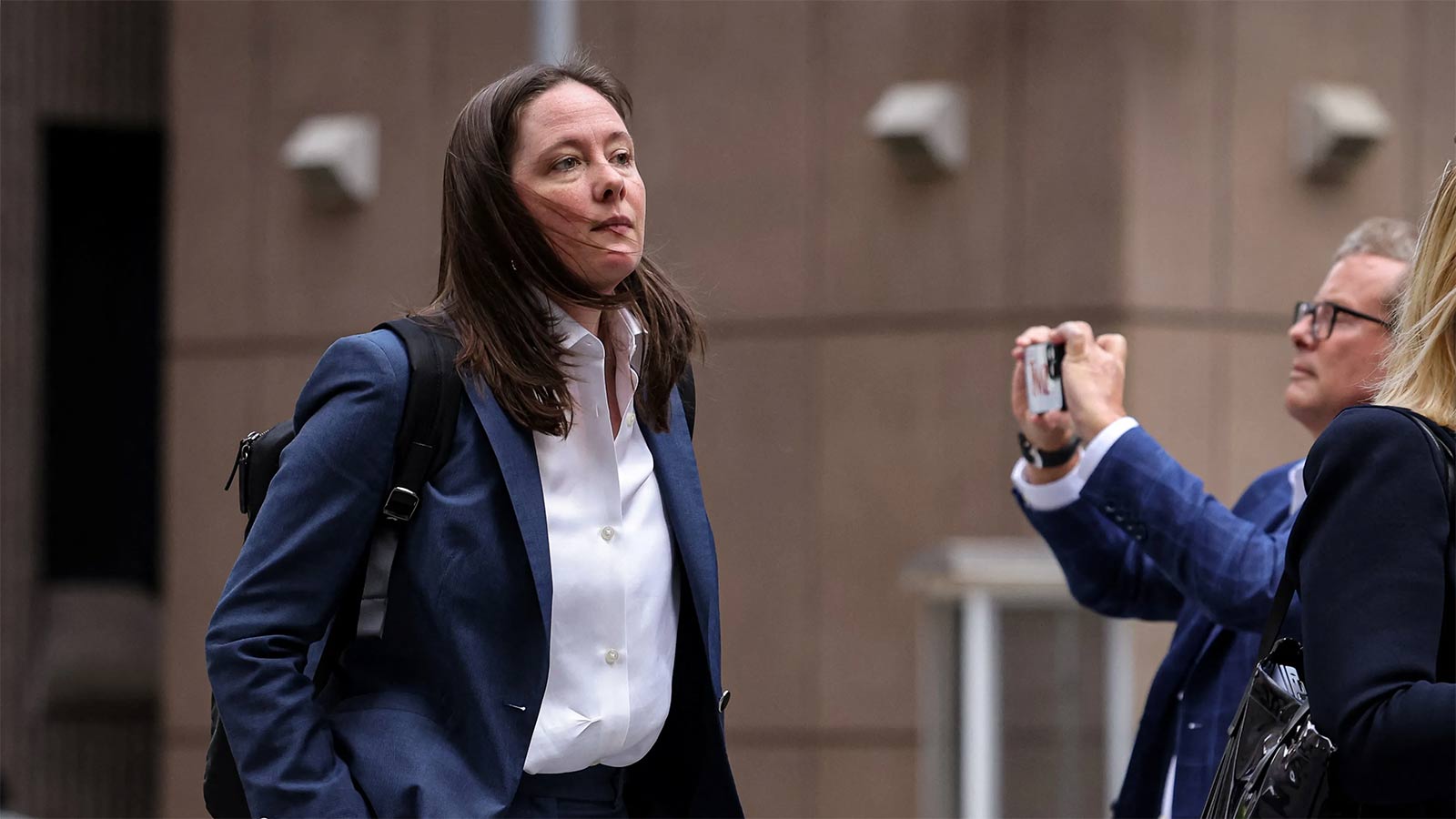
Quick Read
- Maurene Comey is a federal prosecutor known for handling sensitive political cases.
- She led the prosecution in the Jeffrey Epstein case and oversees investigations into political violence.
- Comey’s approach emphasizes impartiality and thorough evidence gathering.
- Her team coordinated with state and federal agencies in the aftermath of Charlie Kirk’s shooting.
- She is widely respected for her integrity and measured leadership.
The Quiet Force Shaping America’s Most Sensitive Prosecutions
In the world of American justice, few names resonate with the quiet gravity of Maurene Comey. The daughter of former FBI Director James Comey, she has steadily forged her own reputation—not as a headline-seeker, but as a meticulous and relentless federal prosecutor. Her work, often far from the spotlight, has increasingly intersected with the nation’s most fraught political moments, including investigations into high-profile political violence and corruption.
From Legacy to Leadership: Maurene Comey’s Rise
It is tempting to view Maurene Comey’s career through the lens of her family legacy. But those who have worked with her see something more: a lawyer driven by principle, not pedigree. After graduating from Harvard Law School, she joined the U.S. Attorney’s Office for the Southern District of New York—a jurisdiction known for handling the nation’s toughest cases. Her early assignments ranged from organized crime to financial fraud, but it was her steady hand in politically charged investigations that set her apart.
Her name surfaced most prominently in recent years during the prosecution of Jeffrey Epstein, where she served as one of the lead attorneys. The case, which drew global scrutiny, required not only legal acumen but a rare composure under pressure. Colleagues recall her as unflappable—someone who could navigate the media storm with the same ease as a labyrinthine financial document.
At the Heart of Political Violence Investigations
In the aftermath of the tragic shooting of Charlie Kirk—a conservative activist gunned down at a Utah university event in what authorities have described as a ‘political assassination’—the eyes of the nation turned to federal investigators. While the FBI and local law enforcement led the initial response, Maurene Comey’s team at the U.S. Attorney’s Office was quickly tapped to oversee the federal dimension of the investigation.
According to ABC News and official statements from the Utah Department of Public Safety, the incident sent shockwaves through both sides of the political aisle. Kirk’s death was condemned by leaders from President Trump to President Biden, with calls for unity against political violence. The investigation itself became a flashpoint for debates about free speech, campus security, and the role of law enforcement in times of national unrest.
Comey’s involvement, though less publicized than that of FBI Director Kash Patel or Attorney General Pam Bondi, was crucial. Federal prosecutors were tasked with ensuring that the investigation remained impartial, evidence-based, and resistant to the pressures of public opinion. Insiders say Comey’s approach was methodical: assembling a team skilled in forensic analysis, digital evidence, and witness protection. Her philosophy, rooted in the belief that ‘justice is best served in silence, not spectacle,’ set the tone for a probe that would ultimately shape public trust in the process.
A Balancing Act: Justice, Transparency, and Public Confidence
In cases like Kirk’s, the stakes extend far beyond the immediate facts. The investigation unfolded in a climate of heightened partisanship, with social media amplifying every rumor and theory. Maurene Comey’s challenge was to balance transparency with the integrity of the process. Her office coordinated closely with state authorities, managing a torrent of tips and digital evidence, while resisting calls for premature disclosure.
One of the lasting images from the aftermath was the lowering of flags to half-staff—a gesture ordered by President Trump, symbolizing national mourning. But for Comey, the measure of justice lay not in symbolism, but in outcomes. Her team painstakingly reconstructed the timeline of the shooting, interviewing witnesses, analyzing CCTV footage, and following digital trails that stretched across state lines.
Sources familiar with the investigation, including Reuters and statements from Utah officials, noted that the decision to release initial detainees underscored Comey’s commitment to due process. The release, after intensive interrogation and evidence review, sent a message: this would not be a case of scapegoating, but of following the facts wherever they led.
The Larger Landscape: Prosecuting in a Divided America
As political violence becomes a growing concern, the role of prosecutors like Maurene Comey is more vital than ever. She is part of a new generation of federal attorneys grappling with cases that test not just the law, but the fabric of American democracy. Her record shows an insistence on facts over ideology, and a belief that justice must be seen to be done—especially when the nation is watching.
Her work on the Epstein case, and now on investigations like the Kirk shooting, has made her a quiet force in shaping how the country responds to its deepest crises. She operates in a landscape where every action is scrutinized, every decision dissected. Yet, as one colleague put it, ‘Maurene never flinches from the hard calls. She knows that public trust is built not on words, but on the slow, steady work of the law.’
For the families affected—from the Kirk family mourning a young father, to the countless others swept up in the crosscurrents of political violence—Comey’s promise is simple: a commitment to justice that is thorough, impartial, and unswayed by the noise of the moment.
In a nation wrestling with the meaning of justice amid political strife, Maurene Comey’s example reminds us that the pursuit of truth—quiet, steady, and unyielding—is the bedrock of our democracy. Her work is not measured in headlines, but in the trust she builds, one case at a time.