
Quick Read
- Glashütte Original’s Mingdragon watches feature hand-painted Meissen porcelain dials, each a unique piece in a limited set.
- Meissen was Europe’s first porcelain factory, founded in the early 1700s, and its crossed-swords trademark remains iconic.
- The Phillips Hong Kong Fall 2025 auction showcases rare matched sets, including the Mingdragon trio, at the West Kowloon Cultural District.
- Porcelain dials require exceptional craftsmanship, making these watches highly sought-after among collectors.
Meissen Porcelain: From Saxony’s Kilns to the Wrist
For centuries, porcelain was the stuff of legend in Europe—a mysterious, gleaming ceramic that arrived from China, coveted by kings and collectors alike. In the early 1700s, that mystery unraveled in Saxony, Germany, when Johann Friedrich Böttger reverse engineered hard-paste porcelain, founding the Meissen factory and rewriting the rules of European luxury. Fast-forward to the 21st century, and Meissen’s legacy is alive on the wrists of collectors, thanks to a unique collaboration with Glashütte Original, the storied German watchmaker.
Glashütte Original x Meissen: The Mingdragon Matched Set
At the Phillips Hong Kong Fall 2025 auction, the spotlight falls on a matched set of three Glashütte Original watches, each featuring a hand-painted porcelain dial crafted by Meissen. This trio is more than just a display of technical prowess; it’s a celebration of heritage, artistry, and the subtle interplay between two Saxon giants—one known for mechanical precision, the other for ceramic perfection.
The watches are united by the Mingdragon motif, a design developed in Meissen’s workshops in the early 20th century. The Mingdragon, with its vibrant colors and intricate brushwork, is a nod to Chinese porcelain traditions, though with an amusing twist: German artisans, unaware of the significance of claw numbers in Chinese mythology, gave their dragons fewer than the customary five claws. Each watch in the set is number one of its limited series, making them not just rare, but unique.
- The Blue Mingdragon (Ref. 49-08-08-06-06) is cased in white gold, one of only 50 pieces.
- The Green Mingdragon (Ref. 49-08-09-21-06) comes in yellow gold, one of 90 pieces.
- The Purple Mingdragon (Ref. 49-08-07-13-06) is the rarest, with just 40 platinum-cased examples.
Each watch is powered by the cal. GUB 49, a movement that showcases Glashütte Original’s reputation for finishing and mechanical artistry. The original boxes and paperwork, including loupes for dial inspection, accompany the set—a nod to collectors who value provenance as much as beauty.
Meissen’s Lasting Legacy in European Porcelain
Why does Meissen matter, beyond its role in watchmaking? The answer lies in its historical significance. Before Böttger’s breakthrough, porcelain was an import—expensive, rare, and shrouded in mystique. Meissen changed that, sparking a continental craze and setting standards for quality. Its iconic crossed-swords trademark, adopted soon after the factory’s founding, became a symbol of authenticity in a market quickly crowded by imitators.
Meissen’s influence rippled through European luxury industries, from tableware to decorative art, and now to horology. The technical challenge of painting dials on hard-paste porcelain is considerable: each dial must be fired at high temperatures, glazed, and painted with extraordinary care to prevent cracks, warping, or color loss. The result is a dial with unparalleled depth and sheen—one that sets these watches apart from their metal or enamel counterparts.
Matched Sets: The Allure and the Fate of Collectible Watch Groupings
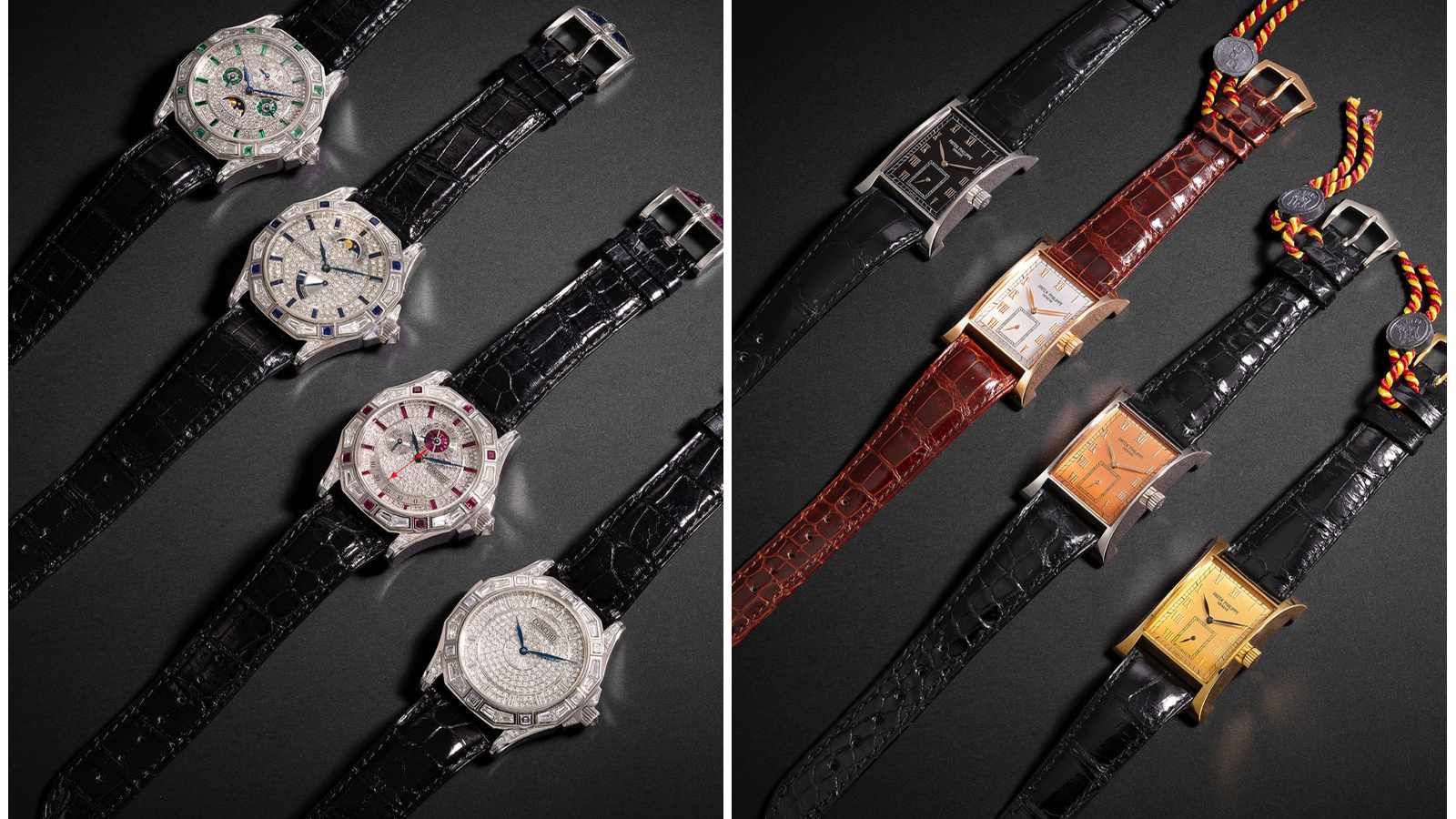
Phillips Hong Kong’s auction doesn’t just feature Meissen dials; it’s a showcase for matched sets, a motif that has fascinated collectors for decades. From the Concord Saratoga Splendour quartet, each themed around a precious stone and powered by movements from Christophe Claret, to the neo-vintage Patek Philippe Pagoda set spanning four case metals, these ensembles evoke a sense of wholeness and harmony—a collector’s dream, but also a challenge to preserve.
History has shown that matched sets are often split up over time, as individual pieces find new homes. The Mingdragon trio, all number one in their respective series, faces a similar risk. Will a single buyer keep them together, preserving their story? Or will they be scattered, each telling a fragment of a larger tale?
The Auction and Its Cultural Context
The preview and auction are set in Hong Kong’s West Kowloon Cultural District, a fitting locale where East meets West and tradition merges with innovation. The Mingdragon watches, with their Chinese-inspired motifs and German craftsmanship, encapsulate this fusion. The sale runs November 21-23, 2025, drawing collectors from around the globe for a chance to own a piece of living history.
Estimates for each Mingdragon watch range from HK$70,000 to HK$120,000 (US$9,000–15,400), reflecting both their rarity and the prestige of the Meissen name. Collectors can inspect the hand-painted dials up close—a ritual reminiscent of how one might admire a Ming vase or a Meissen figurine, loupes provided for the occasion.
Meissen’s Enduring Place in Modern Luxury
The story of Meissen is more than a tale of technical achievement. It’s a testament to how heritage and innovation can coexist, and how artistry—whether on porcelain or on a watch dial—can transcend time. The Mingdragon watches are a modern echo of Meissen’s centuries-old quest for perfection, proof that the factory’s legacy endures not just in museums, but in the everyday lives of collectors and connoisseurs.
Phillips Hong Kong’s presentation of the Glashütte Original x Meissen Mingdragon set highlights the continued relevance of Meissen porcelain in luxury craftsmanship. By merging watchmaking with a centuries-old ceramic tradition, this auction invites collectors to reflect on the value of heritage in an era obsessed with novelty—and reminds us that some legacies are best appreciated whole, not in fragments.