
Quick Read
- Meta unveiled its AI-powered smart glasses at the Meta Connect event.
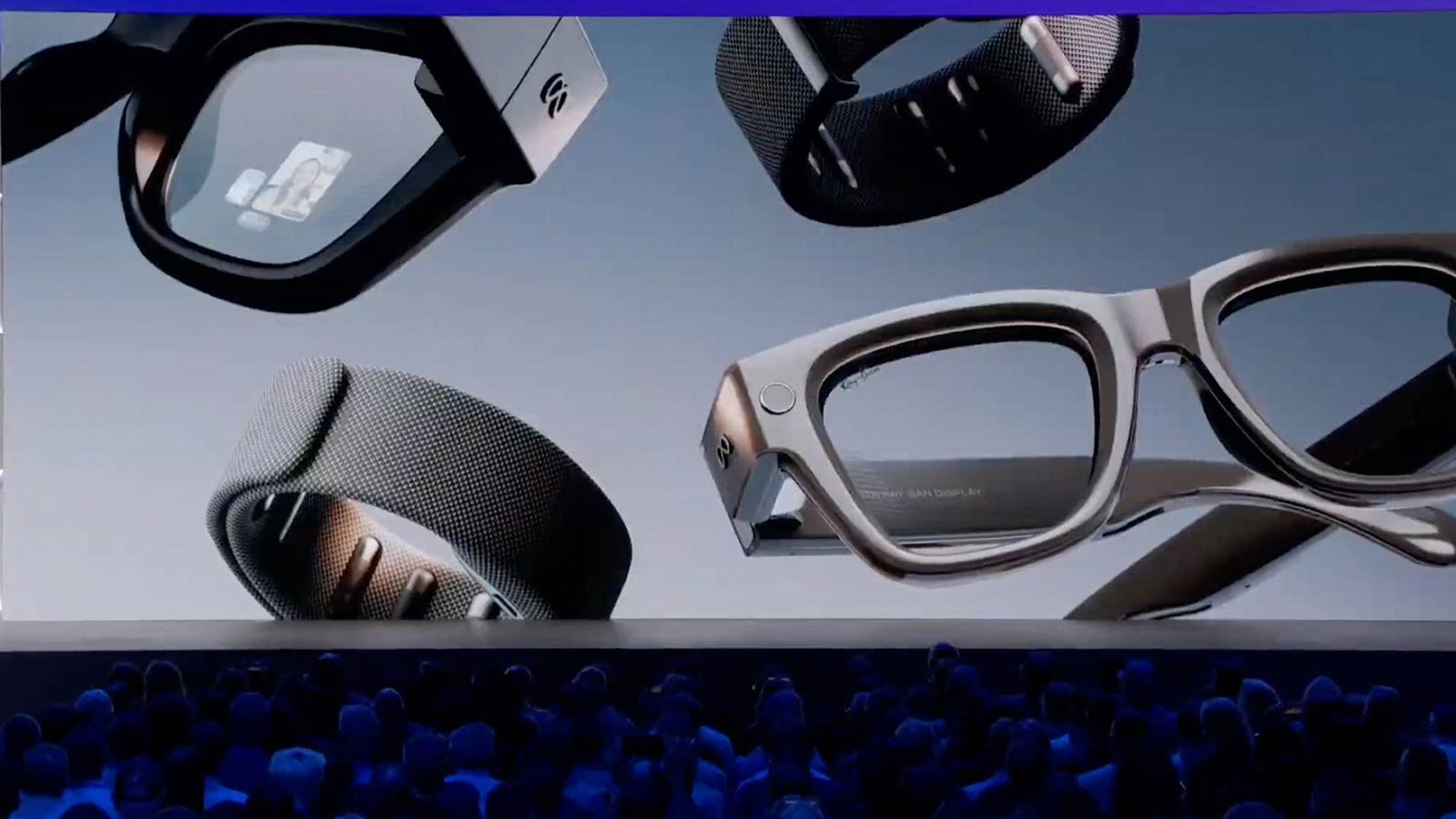
- The Meta Ray-Ban Display glasses feature a built-in heads-up display and neural wristband.
- Live demos faced glitches, attributed to poor WiFi connectivity.
- Meta also launched sports-focused Oakley Vanguard glasses.
- The glasses aim to redefine wearable tech but face skepticism over high prices.
In a world increasingly dominated by artificial intelligence, Meta has thrown its latest innovation into the ring: the Meta Ray-Ban Display smart glasses. Unveiled at the annual Meta Connect event in Menlo Park, California, these glasses are being marketed as a step toward what CEO Mark Zuckerberg calls ‘superintelligence.’
Pushing the Boundaries of AI Wearables
The Meta Ray-Ban Display glasses are no ordinary eyewear. They feature a built-in heads-up display (HUD) in the right lens, capable of delivering notifications and navigation prompts without requiring users to glance at their smartphones. Paired with a neural wristband, the glasses allow users to control their devices through hand gestures, such as answering calls or responding to texts. Starting at $799, the glasses will be available in stores on September 30, 2025.
“Glasses are the ideal form factor for personal superintelligence,” Zuckerberg declared during his keynote. “They let you stay present in the moment while accessing AI capabilities that make you smarter, improve your memory, and enhance your senses.” His words painted a vision of a future where technology seamlessly integrates into daily life, offering users a smarter and more connected existence.
But the road to such a future is not without bumps. During the live demonstration, technical glitches underscored the challenges of bringing cutting-edge technology to market. Twice, the demos faltered, leaving Zuckerberg and his team scrambling to explain the mishaps. The CEO blamed the issues on poor WiFi connectivity, a common pitfall in large tech events. “You practice these things a hundred times, and then you never know what’s going to happen,” Zuckerberg quipped, earning supportive laughter from the audience.
From Cooking Instructions to Fitness Insights
One of the live demos featured food content creator Jack Mancuso, who attempted to use the glasses’ AI assistant to guide him through preparing a Korean-inspired steak sauce. However, the assistant struggled to follow his voice commands, offering vague and repetitive instructions instead. Despite the hiccup, Mancuso and Zuckerberg chalked the failure up to a ‘messed-up’ WiFi connection, and the audience cheered in encouragement.
Meta also showcased its new Oakley-branded Vanguard glasses, designed specifically for athletes. Priced at $499, these glasses integrate with fitness platforms like Garmin and Strava, providing real-time training stats and post-workout summaries. With a nine-hour battery life, they cater to the needs of sports enthusiasts looking for high-tech performance tracking. The Vanguard glasses will hit the shelves on October 21, 2025.
Additionally, Meta updated its existing Ray-Ban line, which lacks a built-in display but now boasts nearly double the battery life and an improved camera. These models start at $379, a step up from the previous generation’s $299 price tag.
The Competitive Landscape
Meta’s foray into smart glasses is part of its broader strategy to lead in the artificial intelligence space. While the company has seen some success with its Ray-Ban collaboration, it still lags behind rivals like OpenAI and Google in developing advanced AI models. To bridge this gap, Zuckerberg has initiated a Silicon Valley talent war, aggressively recruiting engineers from competing firms and committing billions of dollars to cutting-edge AI chip development.
However, challenges remain. Analysts are skeptical about the immediate commercial success of the Meta Ray-Ban Display glasses, given their high price point and the nascent state of the technology. “Until the software catches up, it’s not really a device that the average consumer might know about or care to purchase,” noted Jitesh Ubrani, research manager for IDC’s Worldwide Mobile Device Trackers.
Despite these hurdles, Meta’s vision for the future of smart glasses is ambitious. The company is already looking ahead to its 2027 launch of the ‘Orion’ glasses, which Zuckerberg has described as a ‘time machine to the future.’
Public Perception and Ethical Concerns
The unveiling of the new glasses comes at a time when Meta is under scrutiny for its handling of child safety on its social media platforms. Recent reports have revealed that Meta’s chatbots engaged children in provocative conversations about sensitive topics. Whistleblowers have also alleged that the company discouraged research into the harmful effects of virtual reality on young users.
These controversies cast a shadow over Meta’s technological advancements. While the company aims to position itself as a leader in AI and wearable tech, it must also address growing concerns about the ethical implications of its products.
Still, the enthusiasm at the Meta Connect event was palpable. Despite the demo glitches, the audience remained engaged, and Meta’s stock saw moderate gains following the announcements. As Andrew Bosworth, Meta’s chief technology officer, put it, “This is how we know it’s live.”
Meta’s latest innovations highlight both the promise and the pitfalls of cutting-edge technology. While the new glasses offer a glimpse into a more connected and intelligent future, their success will depend on the company’s ability to refine the user experience and address ethical concerns. For now, the road to ‘superintelligence’ remains a work in progress.