
Quick Read
- Mexican President Claudia Sheinbaum rejected U.S. military intervention in response to Trump’s directive targeting cartels.
- Trump’s order designates Mexican cartels as terrorist organizations, raising legal and ethical concerns.
- Sheinbaum emphasized Mexico’s sovereignty and warned of strained U.S.-Mexico relations if unilateral action occurs.
- Critics argue the move could harm civilians and undermine international law enforcement efforts.
- The directive signals a shift in U.S.-Latin American relations, sparking backlash across the region.
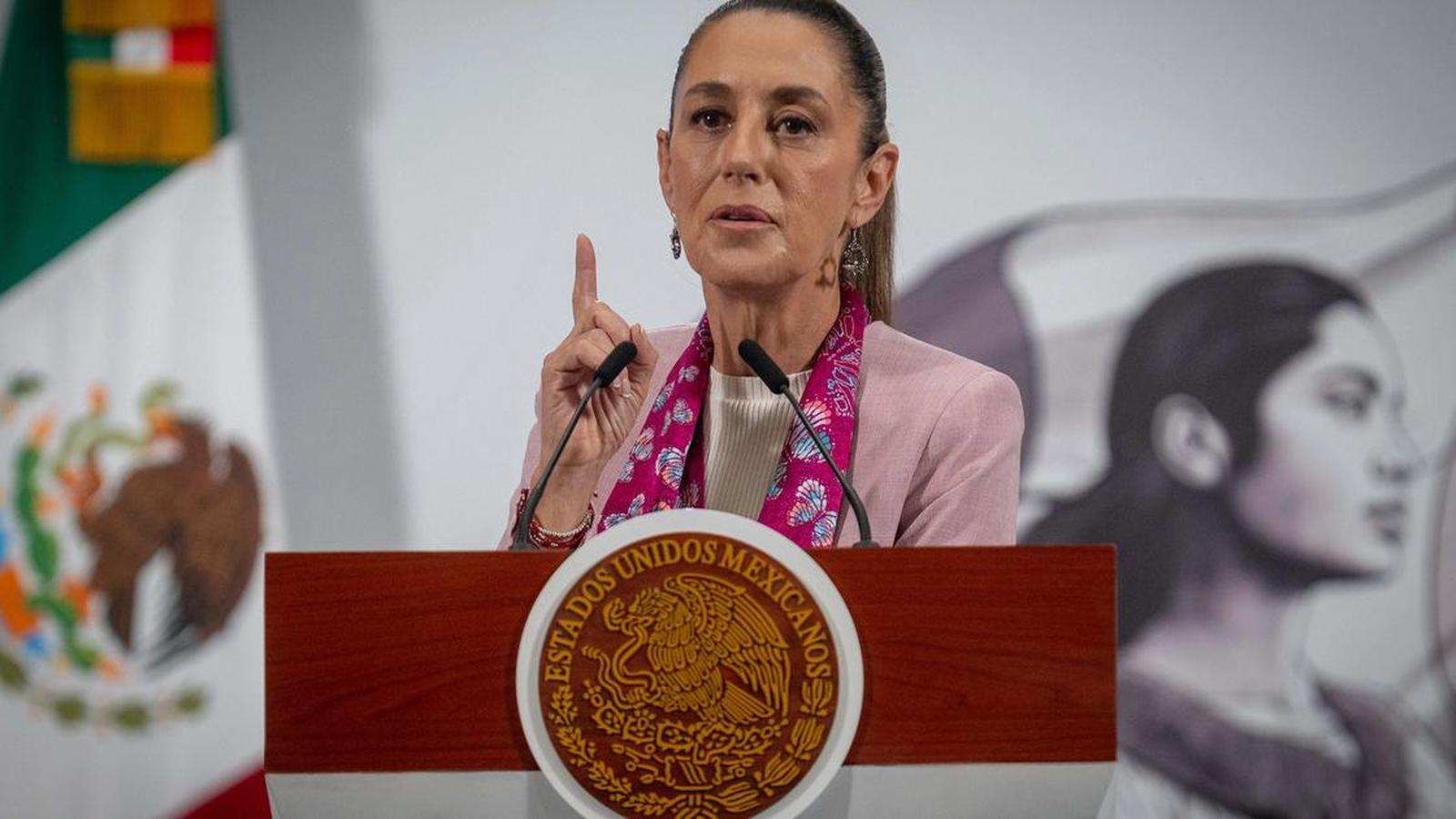
On August 8, 2025, Mexican President Claudia Sheinbaum resolutely dismissed the possibility of U.S. military intervention in Mexico following reports that President Donald Trump had secretly authorized military action against Latin American drug cartels. Speaking at her daily news conference, Sheinbaum emphasized Mexico’s sovereignty, stating, “There will be no invasion of Mexico.” This declaration comes amid rising tensions between the U.S. and Mexico over escalating drug cartel activities and Trump’s hardline policies.
Trump’s Directive Sparks Controversy
According to reports from The New York Times, Trump signed a classified executive order empowering the U.S. military to target drug cartels designated as terrorist organizations. This move, which Secretary of State Marco Rubio confirmed earlier in the week, aims to provide the U.S. government with broader tools to combat these groups. Rubio noted, “It allows us to now target what they’re operating and to use other elements of American power, intelligence agencies, the Department of Defense, whatever … to target these groups if we have an opportunity to do it.” The administration has previously labeled several Mexican cartels, including the Sinaloa Cartel, as terrorist organizations.
While Trump’s order does not explicitly mention military operations on Mexican soil, critics argue that such a directive could pave the way for unilateral U.S. military action abroad. This escalation would mark a significant departure from traditional U.S.-Mexico security cooperation, raising legal and ethical questions about sovereignty and international law.
Mexico’s Firm Stance on Sovereignty
President Sheinbaum categorically rejected any possibility of U.S. military involvement in Mexico. “We were informed that this executive order was coming and that it had nothing to do with the participation of any military personnel or any institution in our territory,” she stated. Sheinbaum has consistently maintained that collaboration between the two nations must be based on mutual respect and sovereignty, reiterating, “Our territory is inviolable, our sovereignty is not for sale.”
The president’s remarks reflect a broader sentiment in Mexico, where U.S. interventionism has historically been a sensitive issue. Security analysts, such as Cecilia Farfán-Méndez of the Global Initiative against Transnational Organized Crime, warned that any military action could severely strain U.S.-Mexico relations. “It would have very serious consequences, where Mexico would stop cooperating,” Farfán-Méndez observed. She noted that unilateral actions by the U.S. could undermine existing security agreements and collaborative efforts, such as those established during the Mérida Initiative.
Broader Implications for U.S.-Latin American Relations
Trump’s approach to combating drug cartels has not only provoked backlash in Mexico but also raised concerns across Latin America. Critics argue that designating cartels as terrorist organizations may blur the lines between criminal and political entities, complicating international law enforcement efforts. Additionally, human rights groups have cautioned that such measures could inadvertently harm civilians living in cartel-controlled areas, who often face coercion and extortion.
Legal experts have also questioned the viability of Trump’s directive under domestic and international law. The Posse Comitatus Act of 1878 restricts the use of the U.S. military for domestic law enforcement, while international laws prohibit military actions against sovereign states except in cases of self-defense. These legal constraints could hinder the implementation of Trump’s order, as former Drug Enforcement Administration official Jack Riley pointed out. “You’re probably going to have some legal challenges in the U.S. to his authority to do this without congressional approval,” Riley said.
Furthermore, the directive comes at a delicate time for U.S.-Latin American relations. In addition to Mexico, Trump has faced criticism from other nations in the region, such as Venezuela and Brazil, over his aggressive policies. For instance, the Trump administration recently increased tariffs on Brazilian goods, sparking diplomatic tensions with President Luiz Inácio Lula da Silva.
Historical Context and Future Outlook
U.S.-Mexico security collaboration has a complex history, marked by both cooperation and conflict. Programs like the Mérida Initiative have facilitated joint efforts to combat organized crime, but the prospect of U.S. military intervention has always been a red line for Mexico. Trump’s latest move could jeopardize years of bilateral progress and fuel anti-American sentiment in the region.
As the situation unfolds, the international community will be watching closely. Mexico’s firm stance against intervention underscores the importance of respecting national sovereignty in addressing transnational challenges. While the Trump administration argues that its hardline approach is necessary to combat the growing threat of drug cartels, it remains to be seen whether this strategy will yield tangible results or exacerbate existing tensions.
Ultimately, the path forward will require careful diplomacy, mutual respect, and a commitment to addressing the root causes of organized crime in the region.