
Armenian MFA on POWs in Baku, Delayed US Border Team: ‘Concrete Steps Unsatisfactory’
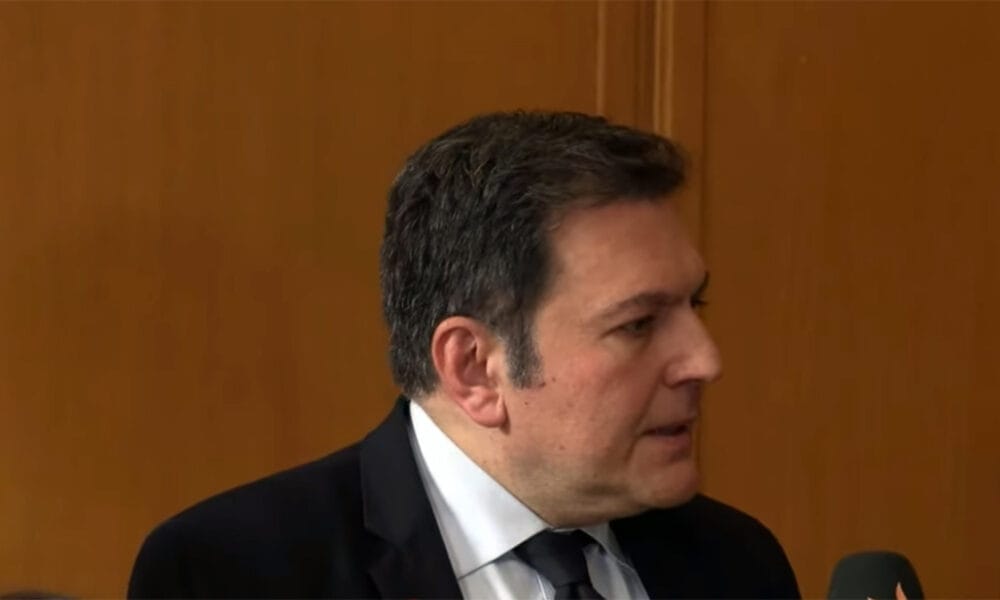
YEREVAN—Armenian Deputy Foreign Minister Paruyr Hovhannisyan addressed pressing issues concerning Armenian prisoners of war (POWs) held in Baku and the delayed arrival of a US border control assessment team during an extraordinary session of the National Assembly’s Standing Committee on European Integration on March 3. While confirming that the issue of POWs remains on the Ministry of Foreign Affairs’ (MFA) agenda, Hovhannisyan acknowledged that the concrete steps taken thus far are “unsatisfactory.” He also provided updates on the anticipated US border assessment team and ongoing discussions with Iran regarding border monitoring.
POW Issue Remains on MFA Agenda, Concrete Actions Lacking
Responding to a question from Armenian MP Armen Gevorgyan of the “Hayastan” faction, Hovhannisyan stated that the MFA consistently raises the issue of Armenian POWs held in Azerbaijan with the European Union and through other diplomatic channels. Gevorgyan specifically inquired about the EU’s potential actions, especially against the backdrop of ongoing trials against Armenian POWs in Baku, to ensure Azerbaijan adheres to its internationally recognized obligations regarding the treatment and release of prisoners of war.
“Not only recently, but always, every official of the Ministry of Foreign Affairs keeps this issue on the agenda during every event and contact with the EU,” Hovhannisyan affirmed. However, he conceded that the tangible results have been limited. “To say that the concrete actions, the steps, are satisfactory for us – no, but the work must continue. As you know, diplomacy has closed-door and behind-the-scenes processes, and in that regard, work continues with both Brussels and member states,” the Deputy Foreign Minister explained.
While Hovhannisyan refrained from detailing specific diplomatic strategies, his remarks indicate ongoing efforts through the EU framework and bilateral channels with member states to address the POW issue. Currently, Baku has confirmed holding 23 Armenian POWs. Adding to the complexity, trials against former Artsakh leaders, including ex-presidents Arkady Ghukasyan, Bako Sahakyan, Arayik Harutyunyan, and former Defense Army commander Levon Mnatsakanyan, are underway in Azerbaijan since January 17.
US Border Control Team Visit Delayed Due to Administration Change
Journalists at the National Assembly also pressed Deputy Foreign Minister Hovhannisyan on the delay of a US border control assessment team’s visit to Armenia. An agreement was in place for the team to arrive in the “coming weeks” to conduct border monitoring.
Hovhannisyan clarified that the delay is linked to the recent change in the US administration. “It is in process. The coming weeks are still ongoing. There has been a change of the entire administration. These agreements are continuing, but in terms of timing, please consider that the entire administration has changed,” he stated. This suggests that the administrative transition in the US has temporarily slowed down the implementation of previously agreed-upon initiatives, including the border assessment team deployment.
When asked if there might be a lack of agreement with Iran regarding this issue, Hovhannisyan responded, “We are discussing this issue with Iran, there is agreement on all issues, and the process is proceeding as planned, there is nothing else to say.” This statement indicates that despite regional complexities involving Iran, Armenia perceives no obstacles from the Iranian side concerning the US border assessment team’s eventual deployment.
Background on US-Armenia Border Security Cooperation
During the signing of the Armenia-United States Strategic Partnership Charter, US Secretary of State Antony Blinken announced that a team of US customs and border control experts would be dispatched to Armenia in the coming weeks. The aim of this team was to collaborate with Armenian counterparts to enhance border security capabilities. Blinken emphasized that the United States supports Armenia’s efforts to safeguard its independence and sovereignty within its own territory. This initiative underscores the ongoing security cooperation between the United States and Armenia, particularly in areas of border management and defense.
Conclusion: Persistent Diplomatic Efforts Amidst Challenges
Deputy Foreign Minister Hovhannisyan’s statements highlight the multifaceted challenges Armenia faces in addressing both humanitarian and security concerns. While the Armenian MFA continues to prioritize the release of POWs and pursue international engagement on this matter, tangible progress remains limited, and “concrete steps” are deemed “unsatisfactory.” Similarly, the delay in the US border assessment team’s arrival, attributed to administrative changes in Washington, underscores the complexities of international cooperation and the impact of geopolitical shifts on bilateral agreements. Despite these challenges, diplomatic efforts persist, reflecting Armenia’s commitment to resolving these critical issues through sustained dialogue and international partnerships.
For further insights into Armenia’s diplomatic engagements and European integration efforts, visit the Azat TV Government section.