
Quick Read
- Michael Rapaport is a central, ‘lovable antihero’ figure in ‘The Traitors’ Season 4.
- The show combines strategy, deception, and drama, featuring celebrities from various reality shows.
- Rapaport’s unique ‘trash talk’ and chaotic behavior add significant comic relief and strategic complexity.
- Contestants face the dilemma of eliminating disruptive players versus actual Traitors.
- “The Traitors” airs new episodes on Peacock, offering suspenseful and engaging reality television.
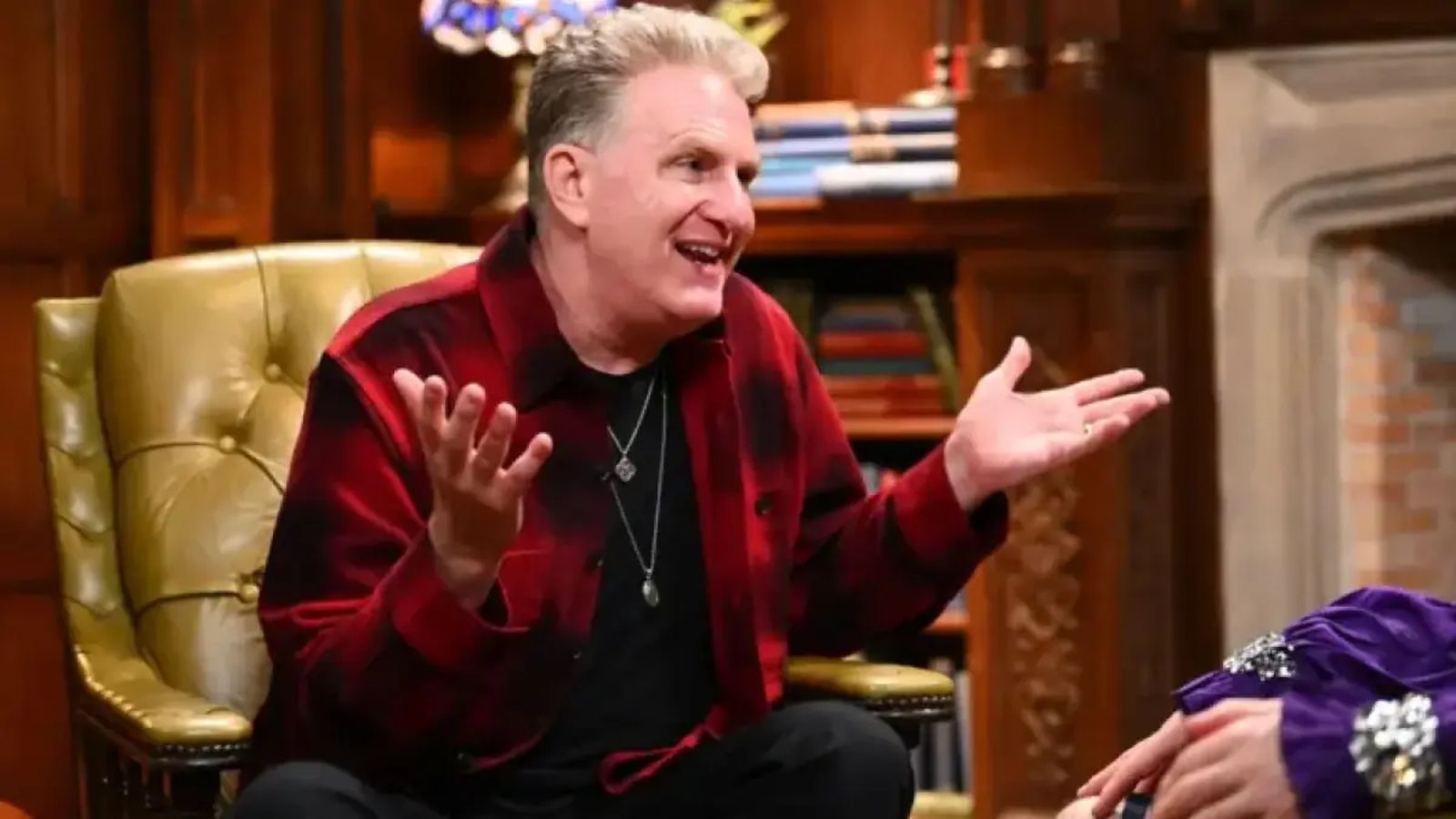
In the high-stakes world of reality competition, where strategy, deception, and interpersonal drama reign supreme, a familiar face has emerged as an unlikely, yet utterly captivating, force. Michael Rapaport, known for his gritty, authentic performances in films like “Zebrahead” and “Higher Learning,” has taken center stage in the fourth season of Peacock’s highly acclaimed series, “The Traitors.” Far from fading into the ensemble, Rapaport has carved out a distinct niche, embodying a character best described as a “lovable antihero” – a figure whose chaotic energy and unrefined charm have become the beating heart of the season, leaving both fellow contestants and viewers perpetually on edge and thoroughly entertained.
The premise of “The Traitors” is elegantly simple yet psychologically complex: a group of contestants, comprising both “Faithfuls” and clandestine “Traitors,” gathers in a grand Scottish castle. Under the watchful eye of host Alan Cumming, they partake in a series of challenges to earn a prize pot, all while the Traitors secretly “murder” Faithfuls each night. During daily roundtables, the Faithfuls must identify and banish the Traitors among them. It’s a game of trust, paranoia, and calculated betrayal, drawing players from diverse backgrounds, including seasoned reality TV veterans from “Survivor,” “Big Brother,” and “Love Island.” This intricate dance of suspicion and alliance forms the perfect crucible for a personality as volatile and engaging as Rapaport’s.
From the outset, Rapaport’s presence has been nothing short of a seismic event. He humorously, yet with a certain conviction, declares himself “the best looking, smartest, dopest, faithful Faithful.” This self-aggrandizing bluster, while often bordering on abrasive, paradoxically endears him to many. His signature style of “trash talk,” rather than alienating, often serves as a form of comic relief, puncturing the intense tension that permeates the game. It’s a performance art in itself, a masterclass in how to be disruptive without necessarily being malicious. This unique blend of bravado and vulnerability is precisely what makes him such a compelling antihero; he’s a character you might groan at one moment, only to find yourself rooting for him the next.
Rapaport’s chaotic role within the game dynamics adds a fascinating layer of complexity. His antics, often loud and opinionated, frequently distract from the very real and present danger posed by actual Traitors. This creates a unique strategic dilemma for the other players: is it more critical to eliminate a disruptive, albeit seemingly harmless, player like Rapaport, or to focus on identifying and banishing an actual Traitor whose quiet machinations could lead to their downfall? This question, as highlighted by Filmogaz, becomes a recurring theme, prompting discussions among contestants about the delicate balance between maintaining group harmony and securing victory. It’s a microcosm of real-world social dynamics, where irritating personalities can sometimes inadvertently shield more insidious threats.
The psychological toll of “The Traitors” is immense, and Rapaport’s presence only amplifies it. His interactions with fellow contestants, such as Eric Nam, reveal how his behavior sends ripples through the entire group, affecting everyone’s gameplay. Nam, for instance, openly expresses how Rapaport’s actions force other players to constantly adjust their strategies and manage their own emotional responses. Yet, despite the frustration he sometimes elicits, Rapaport is not an isolated figure. In pivotal challenges, his allies demonstrate a surprising degree of loyalty, even when sticking with him might seemingly jeopardize their own position in the game. This speaks volumes about the human element at play – the formation of genuine connections, or at least strategic alliances, that transcend the game’s inherent deception. It underscores that even in a cutthroat competition, personal relationships and a sense of camaraderie can influence decisions in unexpected ways.
This season introduces an additional layer of intrigue with a secret Traitor whose identity remains concealed for several episodes. This hidden threat, combined with the visible drama created by Rapaport, ratchets up the suspense. Interestingly, contestants, perhaps fearing public backlash or a misjudgment, hesitate to eliminate the suspected secret player, choosing instead to navigate the known chaos. This cautious approach, in a game where every elimination is a high-stakes gamble, only further emphasizes the unique position Rapaport occupies. He is a known quantity, a predictable storm, which, in a world of hidden daggers, might almost feel like a comfort.
As the season progresses, viewers are left to ponder how long Rapaport can maintain his singular position. Will his boisterous confidence ultimately be his undoing, drawing too much attention, or will his unpredictable nature continue to be a shield, deflecting suspicion from more subtle threats? Each episode airing every Thursday on Peacock, promises a thrilling mix of entertainment and curiosity, as relationships unfold, accusations fly, and strategies evolve. “The Traitors” has cemented its place in contemporary reality TV culture, not just as a game of wits, but as a fascinating study of human nature under pressure, amplified by the captivating enigma that is Michael Rapaport.
Michael Rapaport’s performance on “The Traitors” is more than mere entertainment; it’s a shrewd commentary on the nature of perception and influence in a high-stakes environment. By embodying the role of a ‘lovable antihero,’ Rapaport masterfully manipulates the social dynamics of the game, proving that sometimes, being the loudest and most disarming presence can be a strategy as potent as any hidden agenda. His chaotic charm doesn’t just entertain; it actively shapes the narrative, forcing both players and viewers to constantly question where the real threat lies.