
Quick Read
- US and Israel launched strikes on Iran, killing Supreme Leader Ayatollah Ali Khamenei on March 1, 2026.
- Iran retaliated with missiles and drones targeting multiple Middle Eastern nations and shipping lanes.
- Hezbollah joined the conflict on March 3, attacking Israel from Lebanon, leading to Israeli counter-strikes.
- The conflict has caused a 10% surge in global oil prices and a 25% rise in natural gas prices.
- Thousands of flights have been grounded, and hundreds of casualties have been reported across the region.
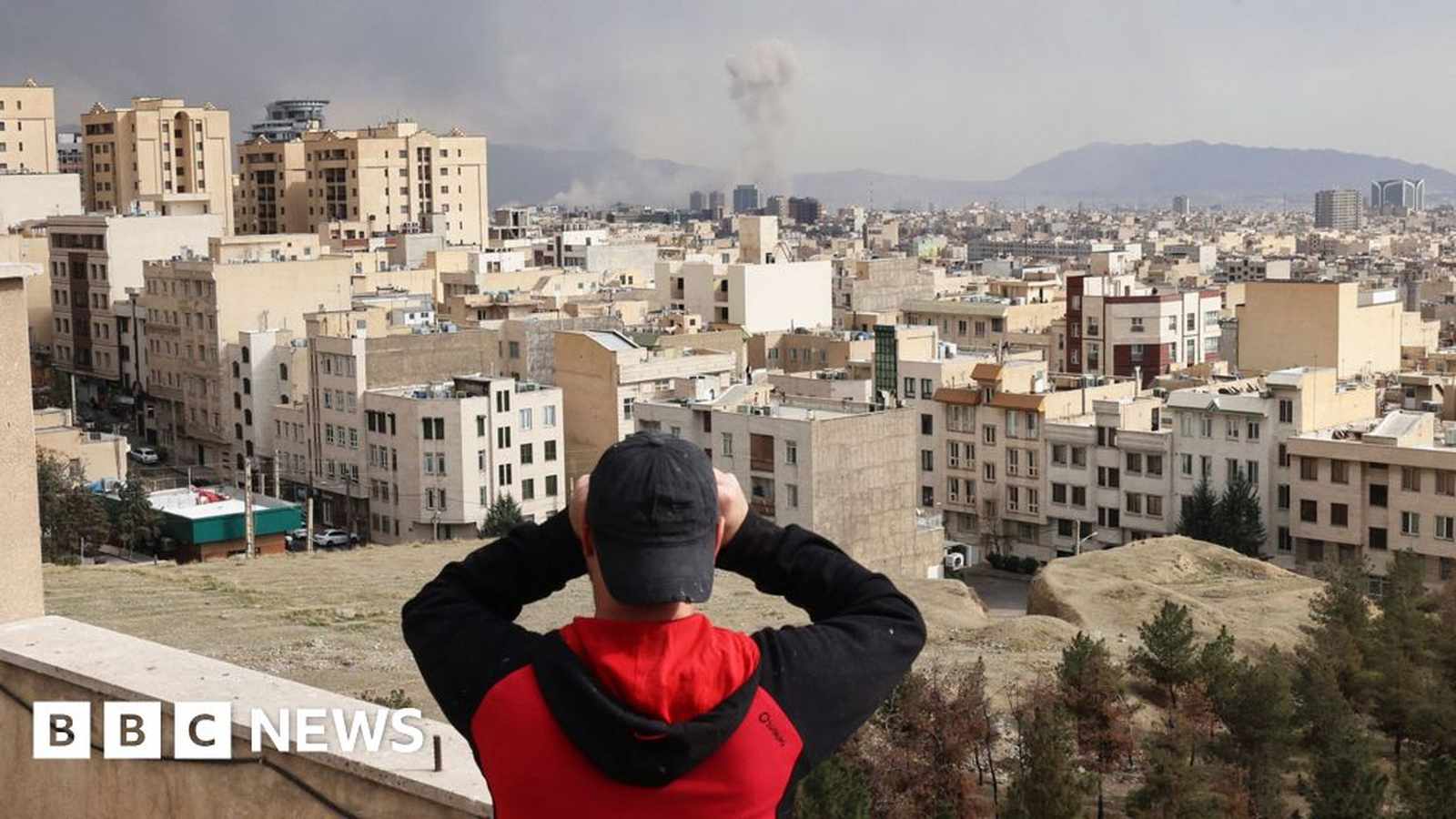
YEREVAN (Azat TV) – The Middle East has been engulfed in widespread conflict following joint strikes launched by the United States and Israel on Saturday, which resulted in the death of Iran’s Supreme Leader, Ayatollah Ali Khamenei. The unprecedented military operation, dubbed ‘Operation Epic Fury’ by the US, targeted Iran’s missile infrastructure, military sites, and senior leadership, prompting immediate and expansive retaliatory attacks from Tehran across the region.
Ayatollah Ali Khamenei, who had led Iran since 1989, was killed when his Tehran compound was flattened during the initial wave of strikes on March 1, 2026. The Israel Defense Forces (IDF) confirmed that dozens of other senior Iranian political figures and leaders within the powerful Islamic Revolution Guard Corps (IRGC) were also killed, including Defence Council secretary Ali Shamkhani, Defence Minister Brig Gen Aziz Nasirzadeh, and IRGC commander Gen Mohammad Pakpour. In response, the IRGC swiftly named Ahmad Vahidi as its new commander in chief.
Escalating Middle East Conflict
Following the initial strikes, Iran launched a barrage of ballistic missiles and drones across the Middle East, targeting Israel, Bahrain, Kuwait, Qatar, the United Arab Emirates, Jordan, Saudi Arabia, Cyprus, and ships passing through the critical Strait of Hormuz. The IRGC claimed responsibility for targeting Israeli government and military sites in Tel Aviv, where nine people were killed when a residential area in Beit Shemesh was hit. The UK Ministry of Defence (MoD) confirmed a drone strike on its Akrotiri base in Cyprus, though no casualties were reported.
On Monday, March 3, the Iran-backed Shia militia group Hezbollah opened a new front in the conflict, launching rockets into Israel from its bases in Lebanon. This prompted immediate retaliatory strikes by the IDF on targets in the Lebanese capital, Beirut, and southern Lebanon, leading to dozens of casualties. Israeli authorities urged residents in 50 border villages to evacuate, anticipating prolonged operations.
US President Donald Trump stated the operation’s aim is to ‘ensure that Iran does not obtain a nuclear weapon’ and warned Iran’s armed forces to surrender or ‘face certain death.’ He also urged the Iranian people to prepare to overthrow their clerical establishment. Israeli Prime Minister Benjamin Netanyahu echoed these sentiments, stating the operation aimed ‘to remove the existential threat posed by the terrorist regime in Iran.’ Iran has condemned the attacks as ‘unprovoked, illegal and illegitimate.’
Global Economic Impact of Iran Strikes
The escalating instability in the Middle East has rapidly impacted the global economy, particularly due to the targeting of the Gulf’s critical energy industry. Iranian drones attacked Saudi Arabia’s Ras Tanura refinery, causing a partial shutdown, as confirmed by the Saudi energy ministry. Qatar’s state-run energy firm announced a halt in liquefied natural gas production due to Iranian attacks, leading to a significant spike in gas prices.
Furthermore, Iran issued warnings to vessels not to traverse the Strait of Hormuz, a vital shipping channel through which approximately 20% of the world’s oil and gas is transported. This has contributed to a 10% surge in global oil prices, sparking fears of increased petrol costs and broader economic repercussions worldwide. Natural gas prices have also seen a dramatic increase of up to 25%.
Humanitarian Toll and Travel Disruptions
The human cost of the conflict has been substantial. As of Monday, the Iranian Red Crescent reported 555 fatalities across 130 locations in Iran. Iranian officials also stated that over 150 people, including children, were killed in a strike on a school near an IRGC base in southern Iran. In Lebanon, dozens have been reported killed or injured in Israeli strikes. The US military confirmed the deaths of three soldiers over the weekend during operations launched from Kuwait, with a fourth death confirmed on Monday, alongside five injured.
The conflict has also led to one of the most serious disruptions to global travel since the COVID-19 pandemic, with thousands of flights grounded to and from the region. Airlines including Wizz Air, British Airways, Qatar Airways, Emirates, Lufthansa, Air India, Virgin Atlantic, and Turkish Airlines have announced widespread cancellations and suspensions of operations to various regional hubs. Several countries, including Iraq, Jordan, and the UAE, have closed or partially closed their airspace as a precautionary measure.
International Response and Future of Iran
The US and its Arab allies issued a joint statement condemning Iran’s attacks on Gulf states, criticizing the ‘targeting of civilians and of countries not engaged in hostilities is reckless and destabilising behaviour.’ Meanwhile, Iran has established a transitional leadership council to temporarily govern the country, comprising President Masoud Pezeshkian, judiciary chief Gholamhossein Mohseni Ejei, and senior cleric Alireza Arafi, pending the formal selection of a new supreme leader by the Assembly of Experts.
US President Donald Trump initially indicated that military operations could continue ‘throughout the week or, as long as necessary,’ later suggesting a timeframe of four to five weeks or less to the New York Times and Daily Mail. Israeli Prime Minister Benjamin Netanyahu affirmed that ‘this campaign will continue as long as it is needed.’ The rapid escalation and widespread nature of the conflict highlight the severe geopolitical implications of the US-Israeli actions and Iran’s robust response, fundamentally reshaping regional dynamics.
The killing of Iran’s Supreme Leader marks a pivotal and unprecedented escalation in Middle Eastern tensions, triggering a broad regional conflict with significant geopolitical and economic ramifications that extend far beyond the immediate combat zones.