
Quick Read
- Milano Cortina 2026 Winter Olympics begin next week, co-hosted by Milan and Cortina d’Ampezzo.
- The Games are the first to be co-hosted by two cities, utilizing existing venues for sustainability.
- Security arrangements include U.S. ICE agents, drawing criticism from Milan Mayor Giuseppe Sala.
- Russian and Belarusian athletes will compete as “Individual Neutral Athletes” under strict IOC conditions.
- Over 110 gold medals will be contested across 16 sports, with preliminary events starting February 4.
MILAN (Azat TV) – Italy is set to host the Winter Olympic Games for the first time in two decades, with the Milano Cortina 2026 Games scheduled to commence next week. The unique event, co-hosted by the fashion capital of Milan and the scenic peaks of Cortina d’Ampezzo, marks a significant return for the nation and an ambitious experiment in Olympic organization. As final preparations unfold, the Games are poised to showcase world-class winter sports across northern Italy, blending historical venues with a strong emphasis on sustainability, even as the innovative split-host model and notable security concerns draw scrutiny.
A Return to Italy and the Split-Host Model
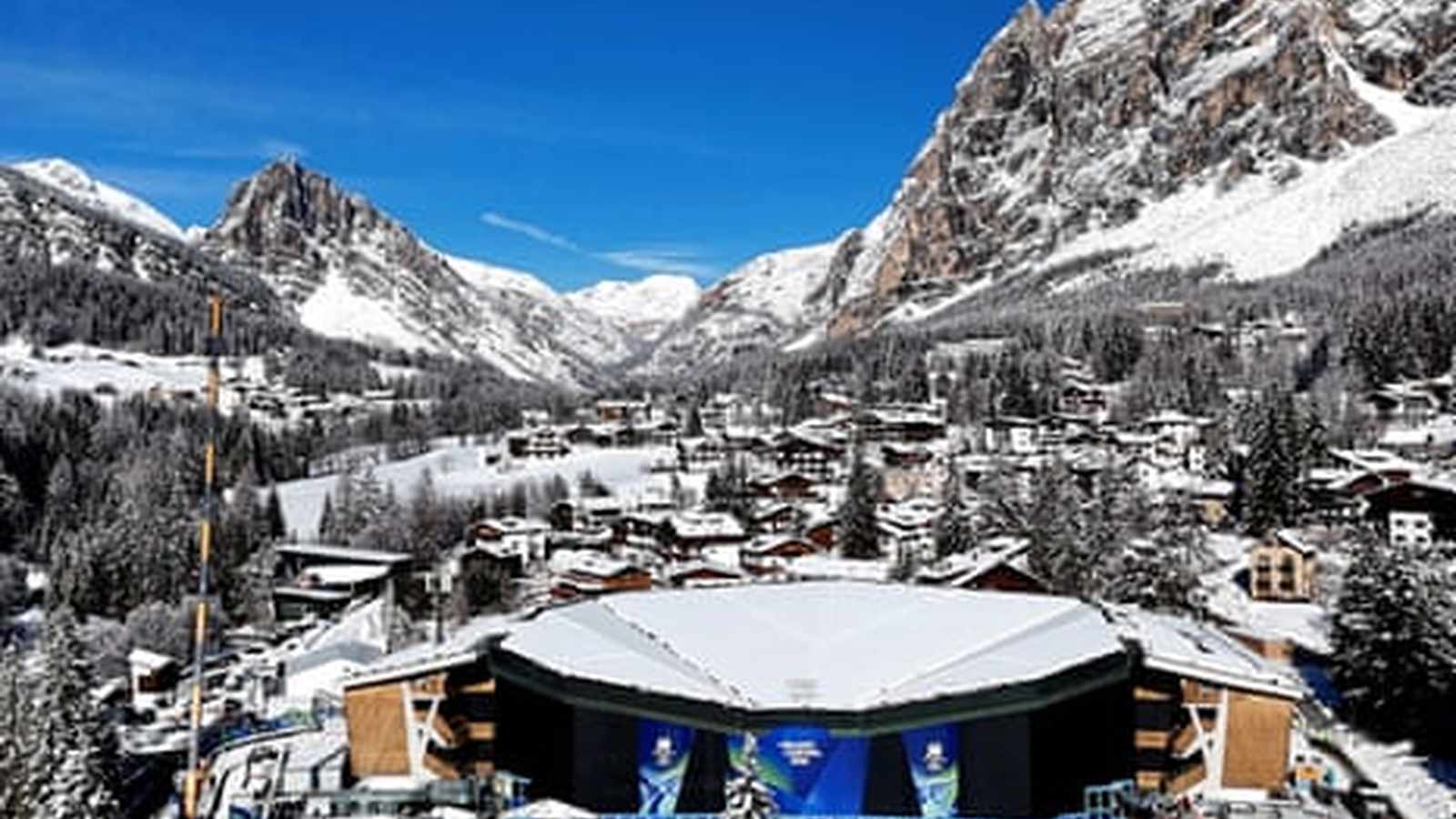
The Milano Cortina 2026 Games, set to open on February 6, will be the first Winter Olympics to be co-hosted by two cities, stretching across diverse landscapes of northern Italy. This model aims to utilize existing venues and reduce permanent construction, aligning with a sustainability-first approach. Snow sports will take place in the breathtaking Dolomites, a UNESCO World Heritage site since 2009, while ice events will be staged in Milan and nearby cities. Organizers have championed this approach as more efficient and less disruptive, promising reduced carbon emissions and ecosystem protection. However, the logistical challenges for athletes, fans, and media navigating between disparate locations, as well as the potential strain on transport infrastructure, are under close observation. Italy is banking on its rich cultural appeal, from Milan’s elegance to the Dolomites’ stark beauty, to define the Games’ visual identity and overall experience. The opening ceremony itself will be a grand affair at San Siro, featuring performances by Mariah Carey and Andrea Bocelli, and uniquely, two Olympic cauldrons – one at Milan’s Arco della Pace and another in Cortina d’Ampezzo’s Piazza Dibona.
Geopolitical Undercurrents and Security Debates
The 2026 Winter Olympics will unfold against a backdrop of global political complexities. The International Olympic Committee (IOC) president, Kirsty Coventry, has affirmed the organization’s commitment to safeguarding the Olympic movement amidst rising international tensions. A significant point of contention has emerged regarding security operations, specifically the deployment of agents from the U.S. Immigration and Customs Enforcement (ICE) to support security efforts in Italy. This move has sparked considerable dissent, with Milan mayor Giuseppe Sala publicly criticizing the agency, referring to it as “a militia that kills” in light of recent fatalities linked to ICE in the United States, as reported by The Guardian. This controversy adds a layer of complexity to the security preparations for the Games.
Furthermore, the participation of Russian and Belarusian athletes has been a subject of intense debate. Following a ruling that overturned previous blanket bans, these athletes will compete as “Individual Neutral Athletes” under strict IOC conditions. The qualification process for these athletes was fraught with resistance from some sports federations and legal challenges. Doping also remains a persistent concern for the IOC, particularly after the controversy surrounding Kamila Valieva at Beijing 2022, underscoring the ongoing efforts to maintain the integrity of competitive sport.
Sporting Excellence and Anticipated Rivalries at Milano Cortina 2026
Over 110 gold medals will be contested across sixteen sports, promising a spectacle of athletic prowess. In alpine skiing, American sensation Mikaela Shiffrin is expected to continue her quest to redefine excellence in technical disciplines, while Team GB’s Dave Ryding will aim for a memorable Olympic performance. Figure skating will feature the American phenomenon Ilia Malinin, whose innovative, boundary-pushing jumps continue to reshape the sport’s landscape. Speed skating will see Italy’s Arianna Fontana, a dominant force in short-track, vying for further glory, with drama often decided by mere hundredths of a second. The physical intensity of ice hockey will be on full display, with Canada entering as perennial favorites, ready to rekindle heated rivalries. Curling, under the guidance of Team GB’s Bruce Mouat, will once again highlight that precision and strategy can be as captivating as raw power.
The Countdown to Competition at Milano Cortina
While the official opening ceremony is scheduled for Friday, February 6, some preliminary sporting action will commence even earlier. On Wednesday, February 4, curling mixed doubles will kick off with Great Britain facing Norway. Thursday, February 5, will feature more curling matches, including reigning gold medalists Italy against Canada, alongside the start of women’s preliminary round ice hockey, with five-time gold medalists Canada playing Finland. Snowboarding (big air) men’s qualification runs are also slated for Thursday. Friday, February 6, before the evening ceremony, will host additional curling sessions, figure skating team events (ice dance rhythm dance, pairs’ short program, women’s short program), and more women’s preliminary ice hockey matches, including France versus Japan and the Czech Republic against Switzerland. These early competitions will set the stage for the full intensity of the Games.
The Milano Cortina 2026 Winter Olympics represents a critical test for a new, more sustainable model of hosting, where the balancing act between logistical innovation, environmental responsibility, and complex geopolitical realities will ultimately define its legacy.