
Quick Read
- A 37-year-old Minneapolis man was fatally shot by federal agents on January 24, 2026, marking the third such incident this month.
- Minneapolis Police Chief Brian O’Hara stated the man was believed to be a lawful US citizen and permit-holding gun owner, contradicting federal claims.
- The Department of Homeland Security asserted agents acted in self-defense after the armed individual “violently resisted” during a targeted operation.
- Minneapolis Mayor Jacob Frey and Minnesota Governor Tim Walz condemned the shooting and demanded President Trump withdraw federal agents from the city.
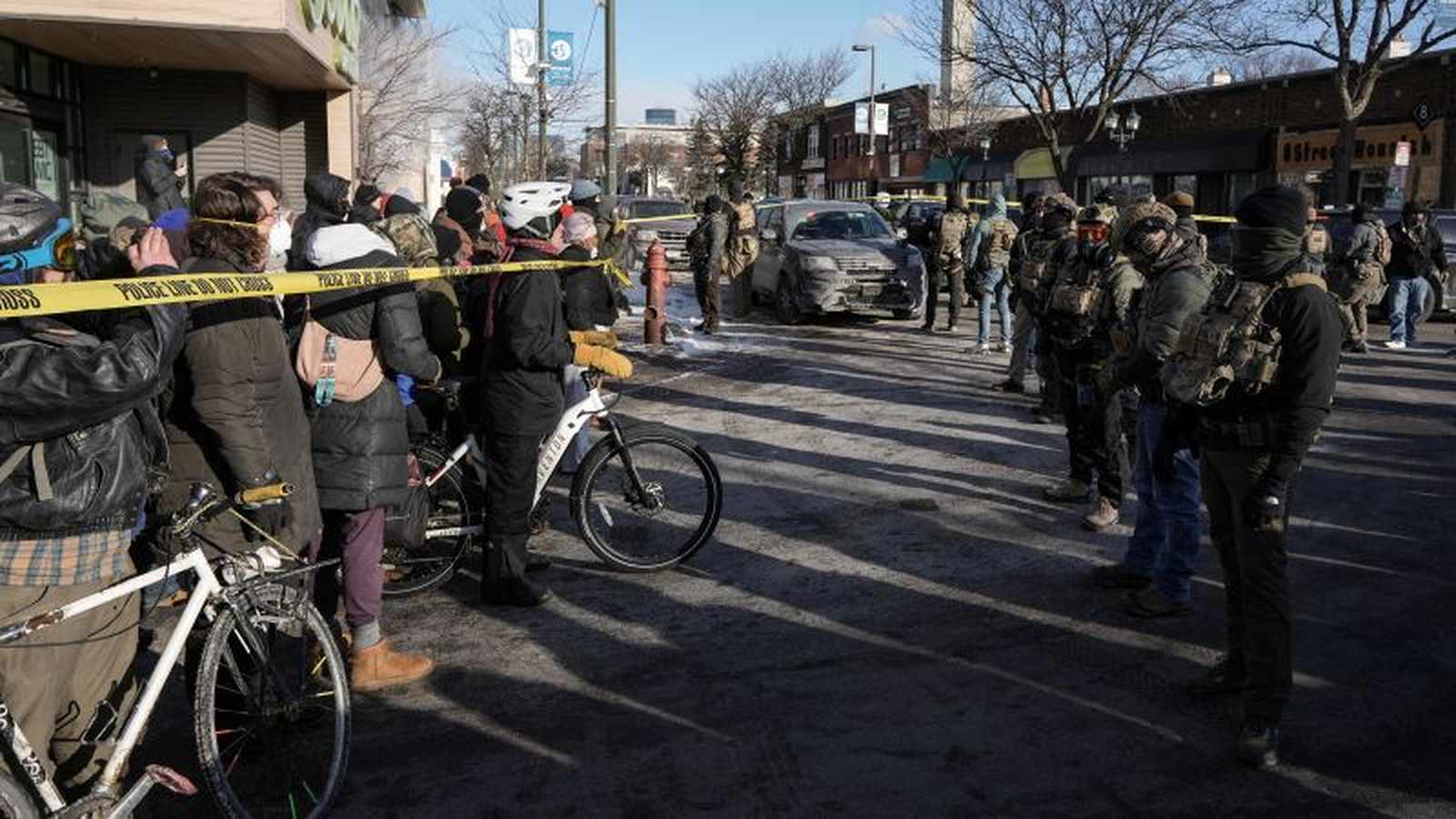
- The incident ignited fresh protests, with law enforcement deploying crowd-control measures amidst ongoing unrest over federal immigration enforcement.
MINNEAPOLIS (Azat TV) – A 37-year-old Minneapolis man was fatally shot by federal agents on Saturday, January 24, 2026, sparking immediate condemnation from local and state officials and intensifying days of mass protests against the Trump administration’s immigration crackdown in the Twin Cities. This incident marks the third shooting involving federal agents in Minneapolis this month, raising profound concerns about federal overreach and escalating tensions between federal and local authorities.
According to Minneapolis Police Chief Brian O’Hara, the man killed was a 37-year-old Minneapolis resident believed to be a U.S. citizen and a lawful gun owner with a permit to carry. Chief O’Hara stated that preliminary information indicated more than one federal agent was involved in the shooting. In stark contrast to the Department of Homeland Security’s (DHS) account, O’Hara referenced publicly circulating videos of the incident, asserting that “the video speaks for itself” and noting that police had received ‘very limited information’ from federal officials about the circumstances leading to the shooting.
The Department of Homeland Security, however, offered a different narrative, stating that federal agents were conducting a targeted operation against an undocumented immigrant ‘wanted for violent assault’ when ‘an individual approached U.S. Border Patrol officers with a 9 mm semi-automatic handgun.’ DHS claimed that officers attempted to disarm the suspect, who ‘violently resisted,’ leading an agent to fire ‘defensive shots’ out of fear for their life and the safety of fellow officers. Medics on the scene reportedly provided aid, but the man was pronounced dead. A law enforcement source speaking to CNN separately added that a struggle ensued, and the man allegedly grabbed his gun and fired a shot, though this information was preliminary and the situation fluid.
Federal and Local Accounts Diverge
The discrepancy between federal and local accounts quickly fueled outrage. Minneapolis Mayor Jacob Frey sharply criticized the federal response, stating he had watched videos showing “more than six masked agents pummeling one of our constituents and shooting him to death.” Mayor Frey denounced the “impunity” of federal agents operating in the city and condemned the militarized response as eroding trust in law enforcement and democracy. He pushed back against claims that local officials or community members were responsible for the unrest, emphasizing that 15,000 people had peacefully protested the day before with no reported injuries or property damage.
Adding to the friction, Chief O’Hara revealed that federal officials attempted to prevent local police from accessing the shooting scene. O’Hara instructed his officers to remain on site, adhering to standard protocol for preserving evidence after a shooting, highlighting the ongoing tensions between federal and local authorities that have characterized the ‘Operation Metro Surge’ in Minneapolis. The police chief also noted that the man’s only past interaction with law enforcement, to their knowledge, involved traffic tickets, further challenging the implication of violent criminal behavior attributed by the DHS statement.
Escalating Tensions and Previous Incidents
The shooting instantly reignited protests that have been ongoing for days in Minneapolis. Streets near the incident became crowded and chaotic, with protesters erecting makeshift barricades using dumpsters and trash cans. Authorities deployed aggressive crowd-control tactics, including tear gas, with dramatic footage from CNN affiliate KARE showing streets shrouded in dark gas and people struggling for air. Business owners in the area reportedly opened their doors to shelter protesters from chemical irritants, underscoring the community’s response to the federal presence.
This marks the third shooting by federal agents in Minneapolis this month. On January 7, an Immigration and Customs Enforcement (ICE) agent fatally shot Renee Good, a 37-year-old mother of three, a case that sparked national protests. A week later, another ICE agent shot a Venezuelan immigrant in the leg during what federal officials described as a “targeted traffic stop,” claiming the man resisted arrest. These incidents, coupled with the latest fatality, have significantly escalated public anger and calls for federal accountability.
Calls for Federal Withdrawal
Minnesota Governor Tim Walz demanded immediate action from President Donald Trump, stating he had spoken with the White House and described the incident as ‘sickening.’ Governor Walz called for an end to the ‘aggressive immigration enforcement effort,’ urging the President to ‘pull the thousands of violent, untrained officers out of Minnesota. Now.’
Mayor Frey echoed this sentiment, directly addressing President Trump and calling for him to ‘act like a leader,’ prioritizing Minneapolis and America to ‘achieve peace’ and ‘end this operation.’ Rachel Sayre, director of Minneapolis’ emergency management department, stated that the surge in federal agents was having ‘profound repercussions’ on the city, underscoring the deep impact of ‘Operation Metro Surge.’ Chief O’Hara, while urging protesters to remain calm, acknowledged the ‘incredibly volatile’ situation was ‘not sustainable.’
The repeated use of force by federal agents and the pronounced informational and operational conflict between federal and local authorities underscore a critical breakdown in inter-governmental trust and public confidence. The discrepancy in official narratives and the perceived lack of transparency from federal agencies risk further alienating local communities and exacerbating civil unrest, rather than achieving the stated goals of public safety or immigration enforcement.