
Quick Read
- Molly Caudery suffered an ankle injury during warm-up at the World Athletics Championships in Tokyo.
- She was a top contender, ranked fourth globally, and the reigning world indoor champion.
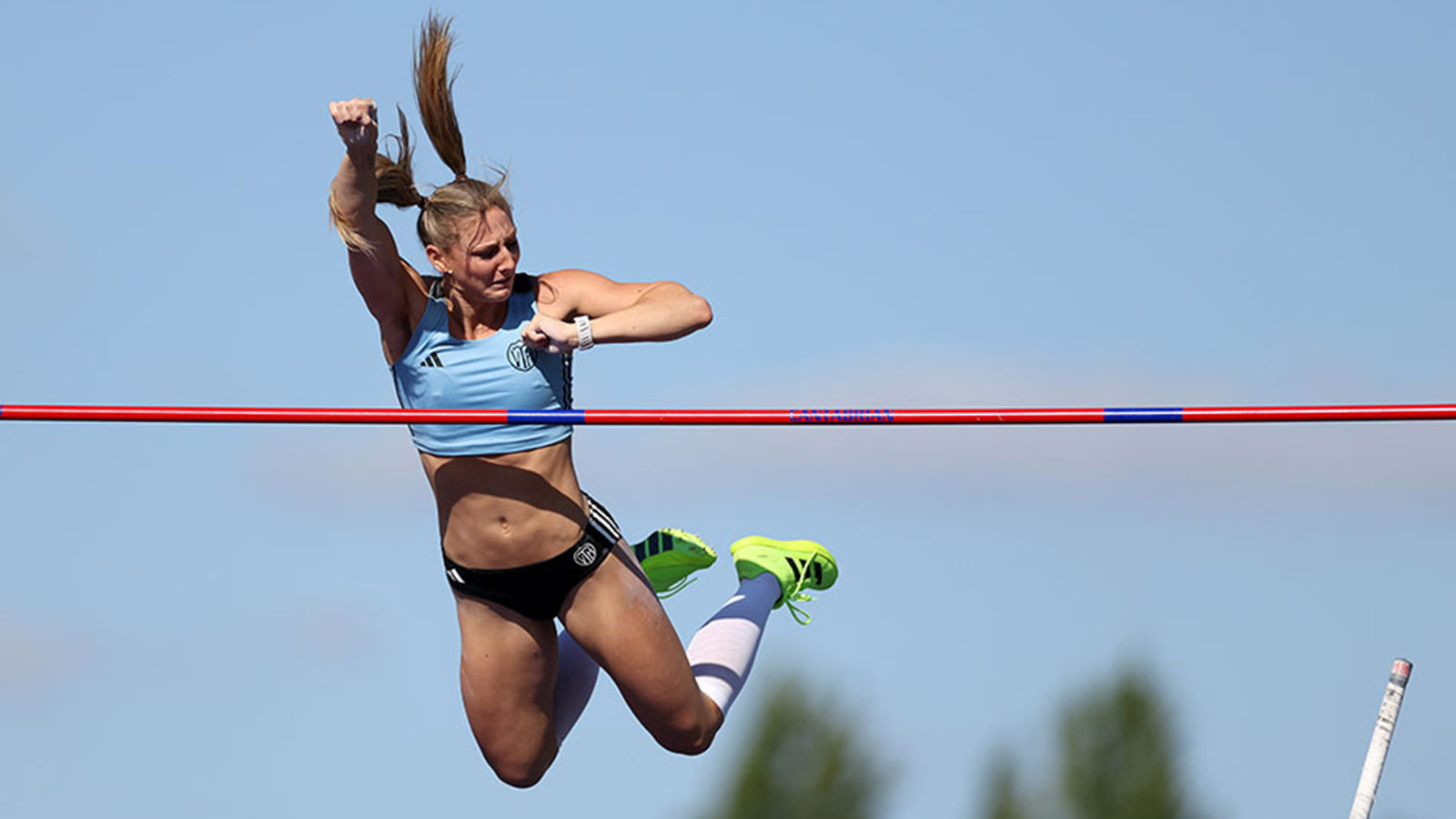
The World Athletics Championships in Tokyo promised a stage for redemption and glory, but for Molly Caudery, one of Great Britain’s brightest pole vault talents, it became a scene of heartbreak. The 25-year-old, who came into the competition ranked fourth in the world and fresh off a personal best of 4.85m, suffered a freak ankle injury during her warm-up, abruptly ending her bid for a world title.
A Promising Season Cut Short
Caudery’s injury occurred when she planted her left foot awkwardly on the landing mat during a routine run-through. What should have been a standard practice turned into a nightmare. She rolled her ankle, collapsing in pain, and was taken off the field in a wheelchair, her face buried in her hands. “Heartbroken… again,” she later wrote on social media, capturing the emotional toll of yet another major disappointment.
This wasn’t the first time Caudery faced heartbreak on the global stage. At the Paris 2024 Olympics, she failed to clear her opening height in qualifying, an experience that left her determined to make amends in Tokyo. But fate had other plans. British Para-athlete Stef Reid described the incident as a “freak accident,” emphasizing how unpredictable and cruel the sport can be. “She has done nothing wrong. To see it end like that, in tears, is devastating,” Reid said during her commentary on BBC.
High Stakes, High Pressure
The stakes were particularly high for Caudery this year. As the reigning 2024 world indoor champion, she was not just a contender but a genuine gold medal hopeful. Her recent performances, including her triumph at the British Championships, underscored her potential. Yet, in athletics, the line between success and disaster can be razor-thin. Former javelin star Steve Backley reflected on the cruel irony of the injury: “It’s something she will have done thousands of times in training… but these things happen without warning.”
Injuries like this are a harsh reminder of the physical and mental demands placed on elite athletes. The pole vault, with its blend of technical precision and physical endurance, leaves little room for error. The landing mat, designed to cushion impacts, became the very surface that betrayed her dreams.
Extreme Conditions Take Their Toll
While Caudery’s injury was a freak occurrence, the World Championships in Tokyo have been marked by challenging conditions that tested athletes across disciplines. Temperatures soared to 30°C with humidity levels around 70%, creating a grueling environment. These conditions claimed another British medal hopeful, Emile Cairess, who was forced to withdraw from the men’s marathon with just three miles to go.
Cairess, who finished fourth in the Paris 2024 Olympic marathon, admitted he was overwhelmed by the heat and humidity. “I tried my best. I just got too hot, simple as that really,” he said. Despite diligent efforts to stay cool using ice and sponges at hydration stations, the oppressive conditions proved insurmountable. “I’ve not known conditions like it,” he added, reflecting on the unique challenges of competing in Tokyo.
The marathon’s dramatic finish saw Tanzania’s Alphonce Simbu clinch gold in a photo finish, edging out Germany’s Amanal Petros by just 0.03 seconds. It was a bittersweet moment, showcasing the resilience of athletes even as others faltered under the punishing conditions.
A Tough Start for Team Great Britain
Caudery’s injury and Cairess’s withdrawal were part of a broader narrative of misfortune for Team Great Britain at these championships. Earlier, the mixed 4x400m relay team fell short of their medal hopes, and Sarah Tait exited the women’s 3,000m steeplechase after a fall at a water jump. Tait, like Caudery, left the track in a wheelchair, her dreams dashed in an instant.
Despite these setbacks, there were glimmers of hope. Elise Thorner advanced to the steeplechase final with an impressive personal best, while other British athletes, including Katarina Johnson-Thompson in the heptathlon and Keely Hodgkinson in the 800m, remain in contention for medals. Yet, the early losses underscore the unpredictable nature of high-stakes competition, where even the most prepared athletes can find their journeys cut short.
Molly Caudery’s story is a poignant reminder of the fragility of athletic dreams. In a sport where precision and preparation reign supreme, even the smallest misstep can rewrite the script. Her journey, marked by both triumph and heartbreak, reflects the resilience required to compete at the highest level. As she begins her recovery, one can only hope her story will include a future chapter of redemption.