
Quick Read
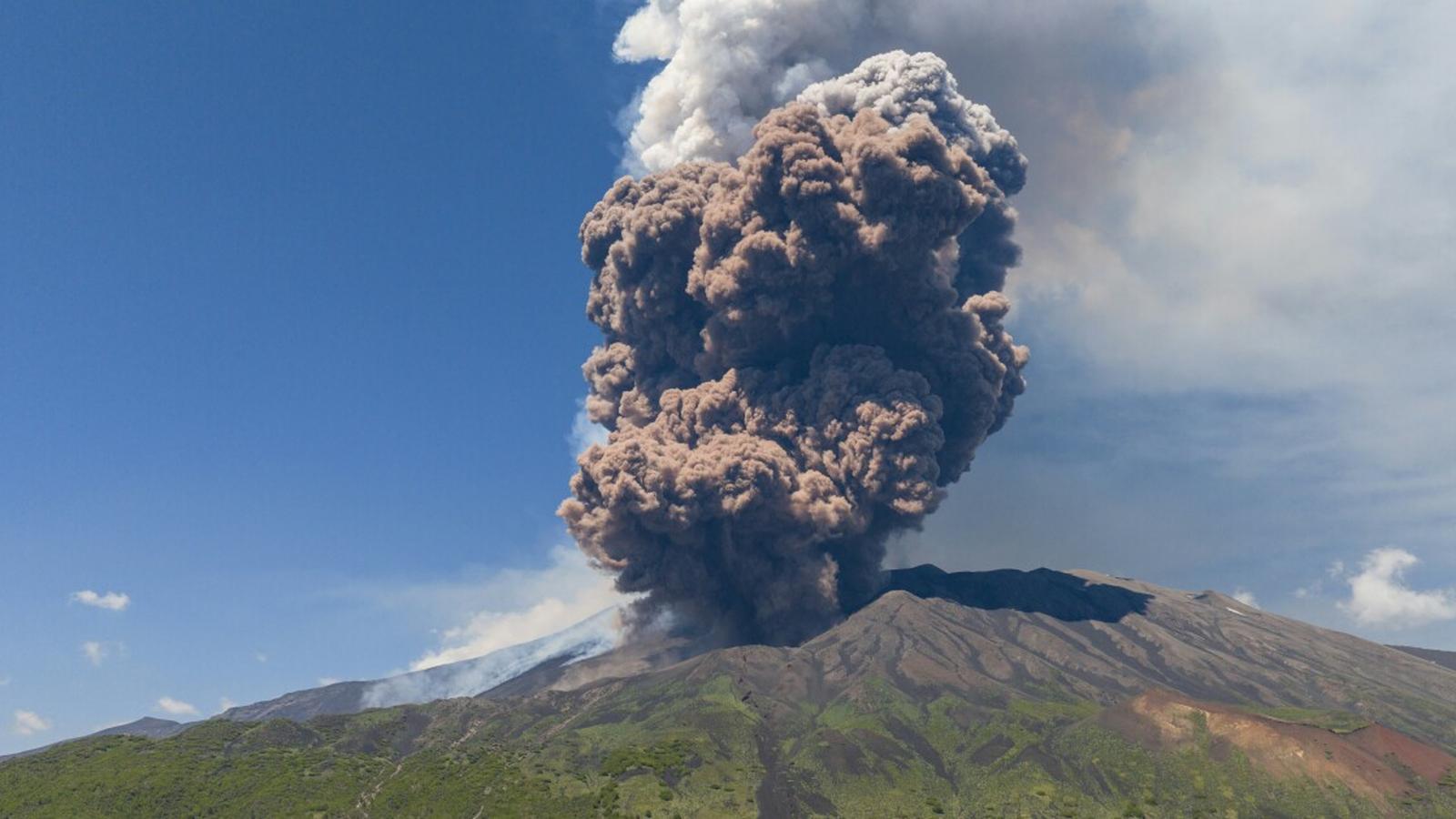
- Mount Etna, Europe’s most active volcano, erupted on Monday morning, creating a stunning ash cloud.
- The volcanic cloud reached an estimated height of 21,325 feet, moving west-southwest, according to INGV.
- Tourist access to the volcano was halted, but no injuries or significant disruptions were reported.
- Aviation alerts were briefly raised but eased as activity declined later in the day.
- Etna has a long history of eruptions, with the latest event marking its 14th eruptive phase this year.
On Monday morning, the skies above Sicily were dramatically altered as Mount Etna, Europe’s tallest and most active volcano, erupted in a spectacular display of natural power. The eruption, which sent a massive ash cloud soaring to an estimated height of 21,325 feet, briefly triggered red alerts for aviation crews in the region, according to the National Institute of Geophysics and Volcanology (INGV).
Images and videos from the scene quickly spread across social media, capturing the awe-inspiring sight of boiling lava and cascading ash pouring from Etna’s southeast crater. While the eruption temporarily disrupted tourist visits to the volcano, no immediate injuries or major damage were reported. Officials, however, maintained a cautious watch as volcanic activity began to subside later in the day.
The eruption and its immediate effects
The eruption began in the early hours of Monday, with the INGV recording a series of explosions of increasing intensity. A dramatic plume of ash, visible for miles, formed above the crater, while a pyroclastic flow—a fast-moving mix of ash, gas, and volcanic rock—raced down Etna’s slopes. This phenomenon, often associated with significant eruptions, raised concerns but fortunately remained confined within the volcano’s natural containment area.
Stefano Branca, an INGV official in Catania, confirmed that the danger zone was limited to the summit and surrounding areas, which were promptly closed to tourists as a precaution. According to Sicily’s president, Renato Schifani, the lava flows did not extend beyond the Valley of the Lion, the point at which guided tours usually stop, ensuring the safety of nearby residents and infrastructure.
Aviation operations at Vincenzo Bellini Catania Airport, located south of Mount Etna, experienced no interruptions, though a temporary red alert was issued as a safety measure. By Monday afternoon, INGV reported that ash emissions had ceased, allowing the alert level to be lowered.
Historical significance of Mount Etna
Mount Etna, standing at approximately 3,357 meters (11,014 feet), is not just a geological marvel but a cultural and historical icon. Its frequent eruptions, documented as far back as 1500 B.C., have shaped the lives of the communities living in its shadow. Etna is classified as a stratovolcano, characterized by steep, conical slopes formed from layers of hardened lava and ash. This distinguishes it from shield volcanoes, such as Hawaii’s Mauna Loa, which have gentler inclines.
Despite its volatile nature, Etna’s eruptions are often relatively contained, typically classified as Strombolian eruptions. These involve small but repetitive explosions of lava, cinder, and gas, which rarely pose significant risks to surrounding areas. In fact, the volcano’s lava flows are known to be viscous and slow-moving, often allowing authorities to take measures to protect nearby communities.
Etna’s eruptions have also produced breathtaking displays over the years. In 2011, the volcano lit up the night sky with a vivid lava show, while a 2018 eruption was followed by a minor earthquake, reminding locals of the powerful forces at work beneath their feet.
The science behind the eruption
According to INGV’s analysis, the latest eruption likely resulted from the partial collapse of the southeast crater, one of the most active areas of the volcano. This collapse triggered the release of hot lava flows and the formation of the towering ash plume that dominated Sicily’s skyline on Monday. Thermal imaging cameras captured the intensity of the eruption, while geologists closely monitored the movement of the pyroclastic flow.
The event marked the 14th eruptive phase of Mount Etna this year, underscoring its status as one of the world’s most active volcanoes. While eruptions of this magnitude are not uncommon, the scale and visibility of Monday’s event drew significant attention, both locally and globally.
Experts from the U.S. Geological Survey note that stratovolcanoes like Etna are particularly prone to explosive eruptions due to the composition of their magma, which tends to be more viscous and gas-rich compared to the magma found in shield volcanoes.
The human impact and public response
For the people of Sicily, Mount Etna is both a source of pride and a reminder of nature’s unpredictability. The volcano is a major tourist attraction, drawing visitors from around the world to witness its fiery displays. However, its frequent eruptions also necessitate a high level of preparedness and resilience among local communities.
On Monday, officials acted swiftly to ensure public safety, halting tourist access to the summit and closely monitoring the ash cloud’s movement. The response highlighted the region’s experience in dealing with volcanic activity, as well as the importance of ongoing scientific research and monitoring by organizations like INGV.
Social media played a significant role in documenting the eruption, with videos and images capturing the raw power of the event. For many, these visuals served as a stark reminder of the dynamic and ever-changing nature of the Earth’s surface.
While the eruption caused minimal disruption, it reignited discussions about the long-term risks associated with living near an active volcano. For residents of towns and villages on Etna’s slopes, the mountain’s beauty and danger are inextricably linked, shaping their way of life and their relationship with the natural world.
Mount Etna’s latest eruption serves as a powerful reminder of the delicate balance between human activity and natural forces. As scientists continue to study the volcano’s behavior, the people of Sicily remain vigilant, embracing both the challenges and the awe-inspiring beauty of living in the shadow of Europe’s most active volcano.