
Quick Read
- Tesla and SpaceX are jointly building an advanced chip manufacturing plant called “Terafab” in Austin, Texas.
- Analysts view Terafab as a potential precursor to a merger between Tesla and SpaceX, with some predicting it could happen by 2027.
- The plant will produce specialized chips for Tesla’s AI systems and robots, as well as for SpaceX’s space-based data centers.
AUSTIN, Texas (Azat TV) – Elon Musk has unveiled plans for an advanced chip manufacturing plant, dubbed “Terafab,” set to be jointly built by Tesla and SpaceX in Austin, Texas. This ambitious project, described by Wedbush Securities as a potential first step towards a merger between the two companies, is predicted by some analysts to culminate in a combination as early as 2027.
Terafab’s Dual Purpose and Strategic Importance
The Terafab facility is envisioned as a vertically integrated semiconductor powerhouse, designed to meet the escalating demand for advanced chips essential to both Tesla’s electric vehicles, Optimus humanoid robots, and SpaceX’s space-based AI data centers. Analyst Daniel Ives of Wedbush Securities highlighted the project’s dual-track operation: one factory will focus on powering Tesla’s AI strategy, including its autonomous driving systems and robotics, while the other will be geared towards AI data centers in space. This move addresses a critical bottleneck, as current suppliers like Micron, TSMC, and Samsung are reportedly unable to keep pace with the projected future demand, which Musk estimates could require generating 1 terawatt of capacity annually.
A Foundation for Future Integration
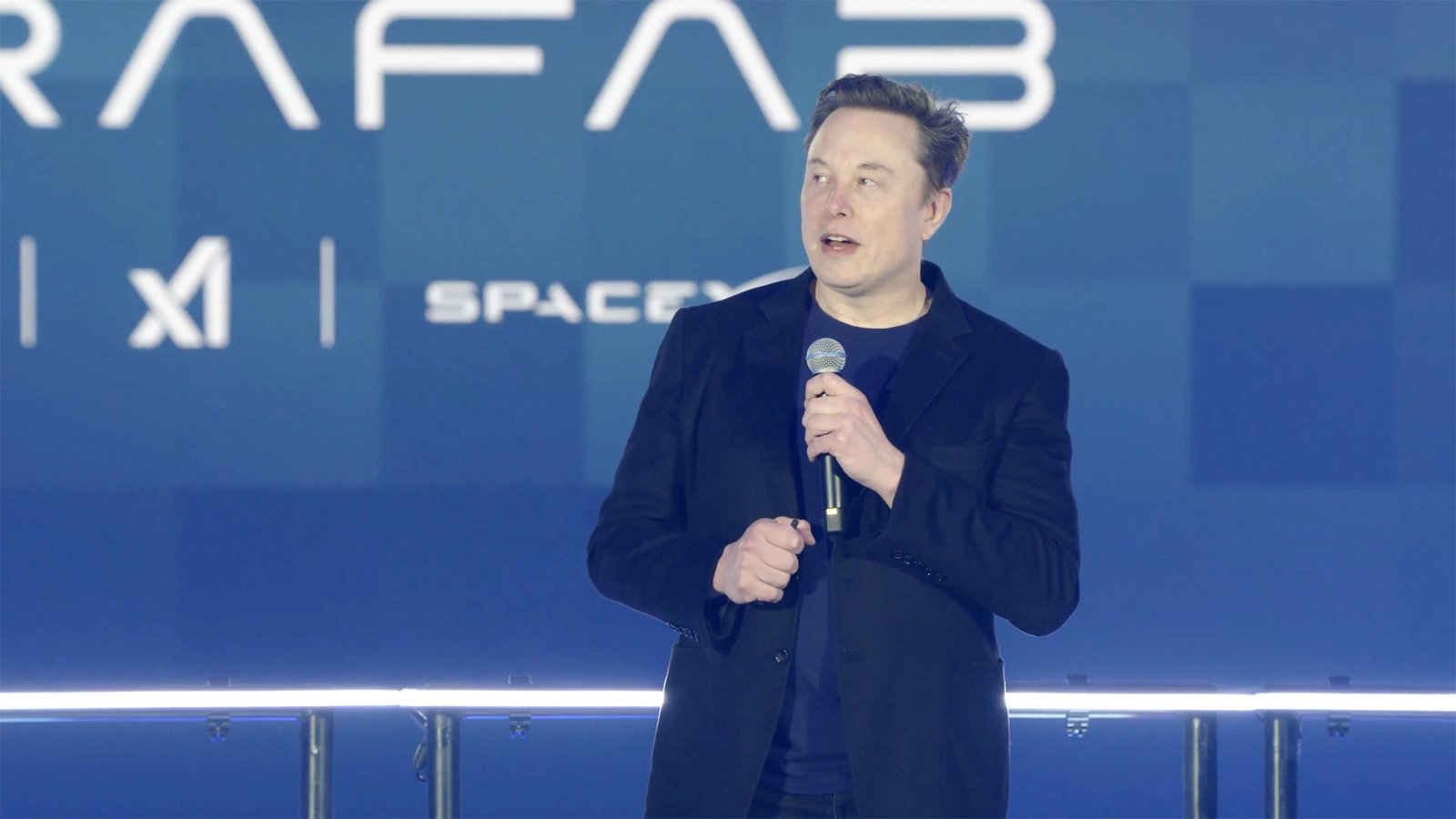
The announcement of Terafab, made by Musk at Austin’s Seaholm Power Plant with Texas Governor Greg Abbott in attendance, signifies a consolidation of chip design, fabrication, and testing under one roof. This scale of vertical integration is unprecedented in the semiconductor industry. At full capacity, Tesla claims Terafab could match approximately 70% of TSMC’s current global production. The facility is slated to produce two main chip families: the AI5 for terrestrial applications like Tesla’s Full Self-Driving system and Cybercab robotaxis, promising a significant performance leap over existing chips; and the D3, a radiation-hardened chip designed for SpaceX’s orbital AI satellite constellation. This strategic development is viewed by Wedbush as laying the groundwork for a more integrated future between Musk’s ventures, with the potential for a full merger.
Analyst Predictions and Market Implications
Wedbush Securities analyst Daniel Ives has been a vocal proponent of the idea that Tesla and SpaceX will eventually merge. Following SpaceX’s all-stock acquisition of xAI in February, Ives reiterated his “Outperform” rating on Tesla shares with a $600 price target, implying substantial upside. He explicitly stated that Terafab represents the initial phase of a strategy that could lead to a Tesla-SpaceX merger around 2027. The ambitious scope of Terafab, with initial costs estimated between $20 billion and $25 billion, underscores Musk’s commitment to securing proprietary chip supply, a move he deems essential for the growth of programs like Optimus, which is projected to require a massive number of chips. The timing of this announcement also coincides with potential IPO plans for SpaceX later this spring, adding another layer of financial intrigue to Musk’s evolving corporate empire.
The development of Terafab, a state-of-the-art chip manufacturing plant, by Tesla and SpaceX, signals a significant strategic alignment between Elon Musk’s key technology companies. This initiative not only addresses immediate needs for advanced AI and space-grade chips but also appears to be a calculated step towards a potential future merger, reflecting Musk’s long-term vision for synergistic growth across his ventures.