
Quick Read
- Nana Konadu Agyeman-Rawlings, Ghana’s former First Lady, died at 76 in Accra’s Ridge Hospital after a short illness.
- She served as First Lady from 1981 to 2001, married to ex-president Jerry John Rawlings.
- Konadu was founder of the influential 31st December Women’s Movement, promoting women’s rights and social reform.
- She ran for president in 2016, becoming the first woman in Ghana to do so.
- Her activism helped reshape gender policies and inspired generations of Ghanaian women.
Nana Konadu’s Final Days: A Nation Mourns a Pioneering Leader
On October 23, 2025, Ghana lost one of its most influential public figures. Nana Konadu Agyeman-Rawlings, the country’s former First Lady and a relentless advocate for women’s rights, died at Ridge Hospital in Accra at the age of 76 after a short illness. The Presidency swiftly confirmed the news, expressing “deepest condolences to her immediate family” and acknowledging the profound impact of her life’s work (BBC, Business Insider Africa).
Her passing reverberated across Ghana, touching not only political circles but also millions who had been inspired by her advocacy and the tangible changes she helped implement for women and girls nationwide. For many, Nana Konadu was more than a public figure; she was a symbol of progress, resilience, and hope.
From Royal Roots to National Influence
Nana Konadu Agyeman-Rawlings was born in Cape Coast, in Ghana’s Central Region, but her lineage traced directly to the Ashanti royal family of Kumasi. The third of seven children, she was raised with a strong sense of heritage and responsibility. Her education at some of Ghana’s most prestigious schools, including Achimota, set the stage for a life that would bridge tradition and modernity.
It was during her time at Achimota that she met Jerry John Rawlings, the man who would later become Ghana’s head of state and her lifelong partner. Their marriage produced four children, among them Dr. Zanetor Agyeman-Rawlings, now a respected lawmaker.
Championing Women: The 31st December Women’s Movement
Konadu’s legacy is inseparable from her role as founder of the 31st December Women’s Movement (DWM), which she established in 1982. At a time when Ghana was navigating political upheaval and economic uncertainty, she saw the urgent need to empower women, particularly in rural communities. The DWM was more than an organization; it was a movement that encouraged women to become agents of change, fostering entrepreneurship, education, and political participation (Business Insider Africa).
Through the DWM, Nana Konadu spearheaded campaigns against child marriage and female genital mutilation, advocating for reforms that would later shape national policy. She understood the challenges facing women in crisis—poverty, limited access to education, and cultural practices that stifled ambition. Her response was practical and visionary: small business development, skills training, and seed funding for rural women to start enterprises like cassava processing and batik making.
In a 2012 interview with West Africa Magazine, she explained, “For my political life, passion took over—I wanted to understand the problems women in rural areas experienced, and I threw myself into my work.” Her drive was not abstract; it was rooted in empathy and a hands-on approach to change.
A Life in Politics: Courage and Controversy
Nana Konadu’s political journey was both remarkable and fraught with challenges. She served as First Lady from June 1979 to September 1979, and again from December 1981 to January 2001, during her husband’s tumultuous leadership—first as a military ruler, then as a democratically elected president (GhanaWeb).
Her tenure as First Lady was marked by her tireless advocacy for social reform and women’s rights. But she was not content to remain in the background. After Jerry Rawlings’ presidency ended, Nana Konadu founded the National Democratic Party (NDP), following her departure from the National Democratic Congress (NDC), the party her husband had established. She cited irreconcilable differences with the NDC and sought to chart her own political path.
In 2016, she made history as the first woman to contest Ghana’s presidential election, running as the NDP candidate. Though her campaign garnered only 0.05% of the vote, her candidacy shattered glass ceilings and inspired future generations of women to pursue leadership roles. She continued her activism, even after her husband’s passing in 2020, reaffirming her commitment to public service despite personal loss.
Public Life, Private Strength
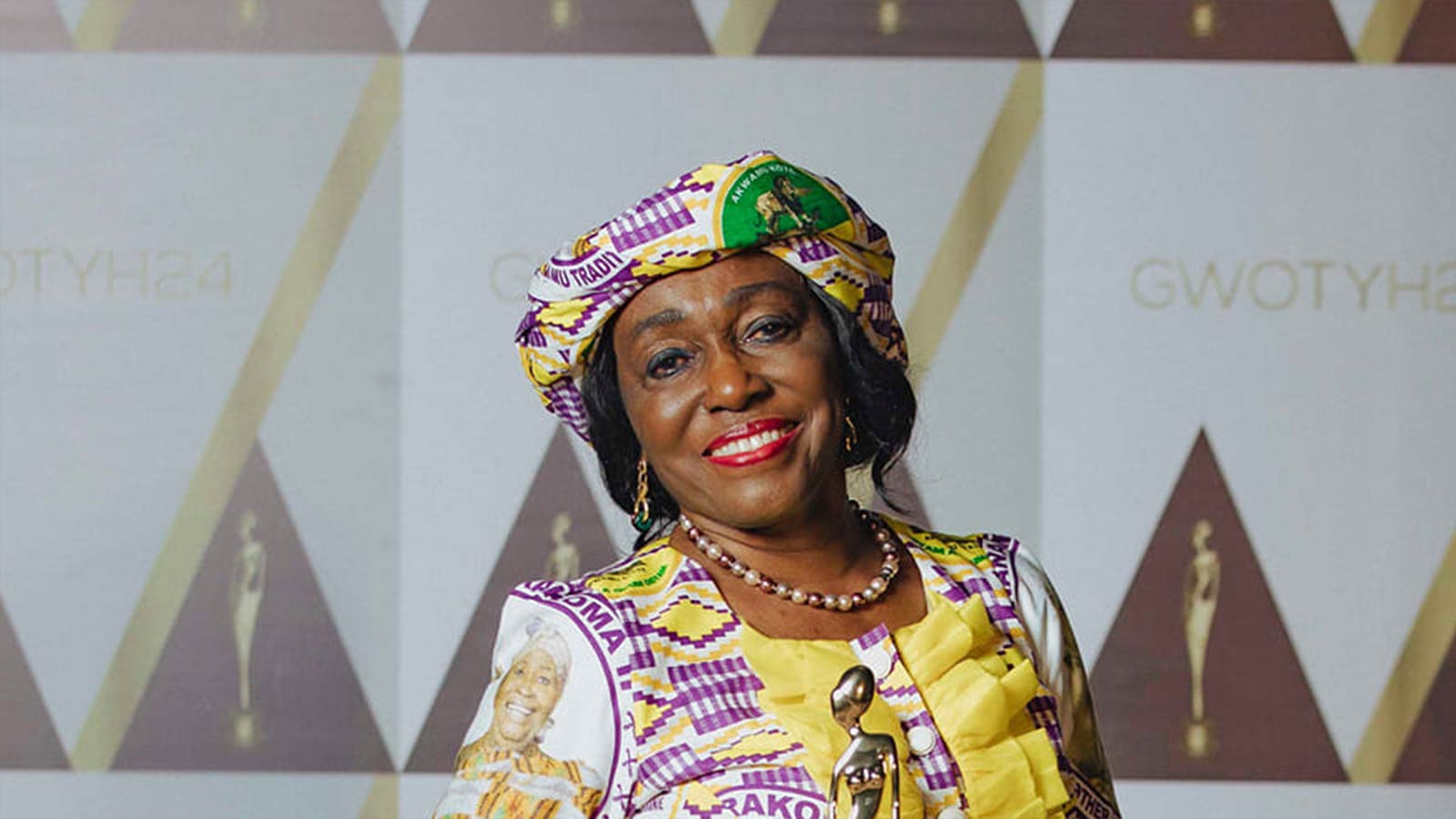
Beyond her political and advocacy work, Nana Konadu Agyeman-Rawlings was known for her distinctive style and cultural pride. Her choice of African print fabrics and elegant headgear became her signature, symbolizing both tradition and a progressive outlook. She attended state events, funerals, and commemorations, always embodying dignity and grace.
Her last public appearance was at the funeral rites for the Asantehemaa, Nana Konadu Yiadom III, in Kumasi, accompanied by her children. She also participated in memorials for government officials and soldiers lost in a tragic helicopter crash, underscoring her enduring commitment to national unity and remembrance (GhanaWeb).
Legacy: A Lasting Impact on Ghana
Nana Konadu’s influence extends far beyond her years as First Lady. The policies she championed, the organizations she built, and the lives she touched have become woven into the fabric of Ghanaian society. Her work helped shift the narrative on women’s roles, opening doors in entrepreneurship, education, and politics that had long been closed.
The outpouring of grief and respect following her death is testament to her enduring legacy. For many Ghanaians, she is remembered not just as the spouse of a famous leader, but as a leader in her own right—a woman who saw possibility where others saw limitation, and who acted with conviction to make those possibilities real.
In reflecting on Nana Konadu Agyeman-Rawlings’ life, it is clear her greatest achievement was empowering others to find their own voices. She transformed personal passion into national progress, challenging systems that held women back and forging new paths toward equality. Her story is a reminder that true leadership begins with courage and ends with lasting change.