
Quick Read
- NASA officially started the final countdown for the Artemis II mission on Monday, targeting a launch for April 1, 2026.
- The crewed flight will test life-support and navigation systems in deep space to validate readiness for future lunar surface landings.
- The mission is a critical milestone in the international space race, with success deemed essential for the continuation of the Artemis program.
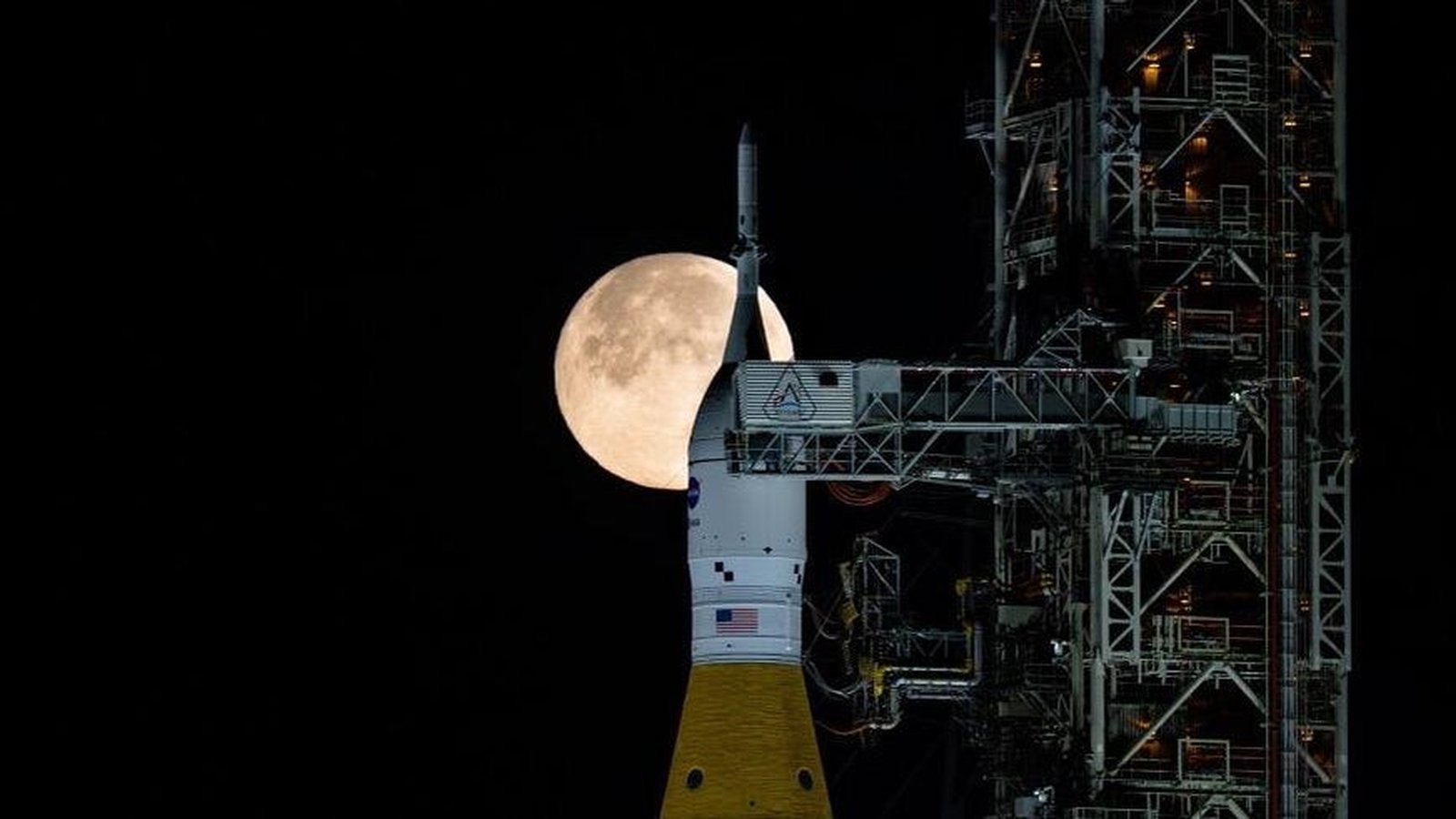
CAPE CANAVERAL (Azat TV) – NASA engineers officially initiated the final countdown on Monday for the Artemis II mission, the first crewed spacecraft poised to depart for the Moon in 53 years. The 32-story Space Launch System rocket is scheduled to ignite at 6:24 p.m. EDT on Wednesday, April 1, 2026, carrying a four-member international crew into the deep-space environment for a 10-day test flight.
Technical Readiness of the Orion Capsule
The mission follows intensive hangar repairs necessitated by a clogged helium pressurization line that grounded the flight in February. Following successful testing, the rocket was returned to the launch pad, where it now awaits the final go-ahead. According to CBS News, mission managers have confirmed that all critical systems, including the Orion capsule’s life-support suite, are performing as expected. This flight serves as a essential rehearsal for future lunar landings, with the crew slated to perform a high-velocity flyby of the Moon before returning to Earth for a Pacific Ocean splashdown.
Stakes for the Future of Lunar Exploration
The success of Artemis II is widely viewed as a mandatory threshold for the continuation of the broader Artemis program. As the most powerful operational booster in the world, the Space Launch System must demonstrate reliability to clear the path for subsequent missions, including the planned 2028 lunar south pole landings. NASA leadership has framed this as a step-by-step approach to establishing a permanent human presence in space, explicitly positioning the mission as a pivotal moment in the current international race to return to the lunar surface.
A Diverse Crew for a New Era
The crew—Commander Reid Wiseman, pilot Victor Glover, and mission specialists Christina Koch and Jeremy Hansen—represents a demographic shift from the Apollo era. As reported by the BBC, the team includes the first woman, the first person of color, and the first non-U.S. citizen to embark on a lunar trajectory. The astronauts have emphasized that while the mission is a rigorous engineering test, it is also intended to inspire a new generation of explorers. The Orion capsule will also carry a digital archive containing the names of over 5.6 million people, symbolizing the global public’s participation in this return to deep space.
The successful validation of deep-space life-support systems during this flight is the primary technical hurdle that will dictate the timeline for all future crewed Mars-bound exploration initiatives.