


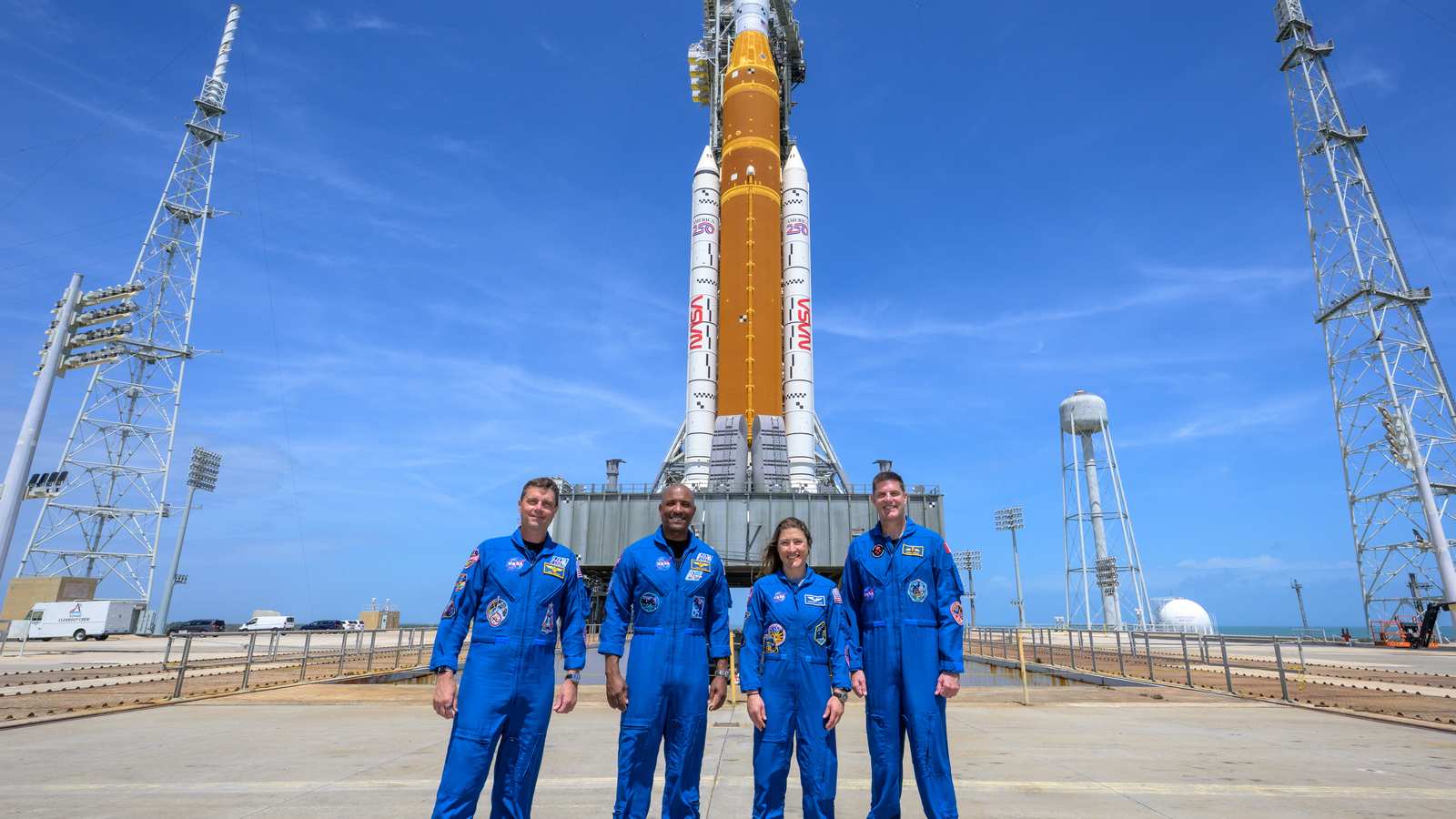
CAPE CANAVERAL (Azat TV) – NASA is in the final stage of preparation for the Artemis II mission, the agency’s first crewed voyage to the moon since 1972. As of March 31, 2026, the Space Launch System (SLS) rocket and the Orion spacecraft are fully powered and positioned at Launch Complex 39B at the Kennedy Space Center, with an official liftoff window opening on April 1 at 6:24 p.m. EDT.
Transitioning to Crewed Lunar Flight Readiness
This mission represents a critical pivot from the testing phases of the Artemis program to active human exploration. Unlike the uncrewed Artemis I flight, this 10-day journey will carry four astronauts around the moon, serving as the essential validation of life support, navigation, and communication systems necessary for future surface landings. NASA officials confirmed that the countdown began on March 30, following a series of successful final system checks. The agency reports that technical readiness is high, with only minor ground equipment adjustments addressed in the final days of the pre-launch sequence.
Technical Precision and Launch Stakes
The stakes for this mission extend beyond the immediate flight, serving as a primary indicator of U.S. leadership in deep-space exploration. According to Space.com, meteorologists have forecasted an 80% probability of favorable weather conditions for the initial launch window. While a solar flare on March 29 triggered a temporary radio blackout, mission controllers continue to monitor space weather closely to ensure the safety of the crew and the integrity of the flight hardware. The mission is designed not merely for a flyby, but as a long-term investment in the infrastructure required for sustained lunar presence and eventual human missions to Mars.
Mission Logistics and Astronaut Safety
The four astronauts have completed their final quarantine protocols at the Kennedy Space Center. Their preparation has included rigorous training on emergency escape procedures and a final review of the mission’s 10-day flight plan. NASA’s flight controllers are managing the mission with a focus on the Orion capsule’s performance, which will be tested under real-world conditions during the lunar transit. Should technical or environmental factors prevent an April 1 departure, backup launch windows remain available through April 6, providing the team with a robust buffer to ensure success.
The transition to the Artemis II launch phase marks a historic shift in international space policy, as the success of this mission will effectively validate the hardware required for the next decade of lunar exploration, signaling a definitive move away from orbital testing toward deep-space operations.