
Quick Read
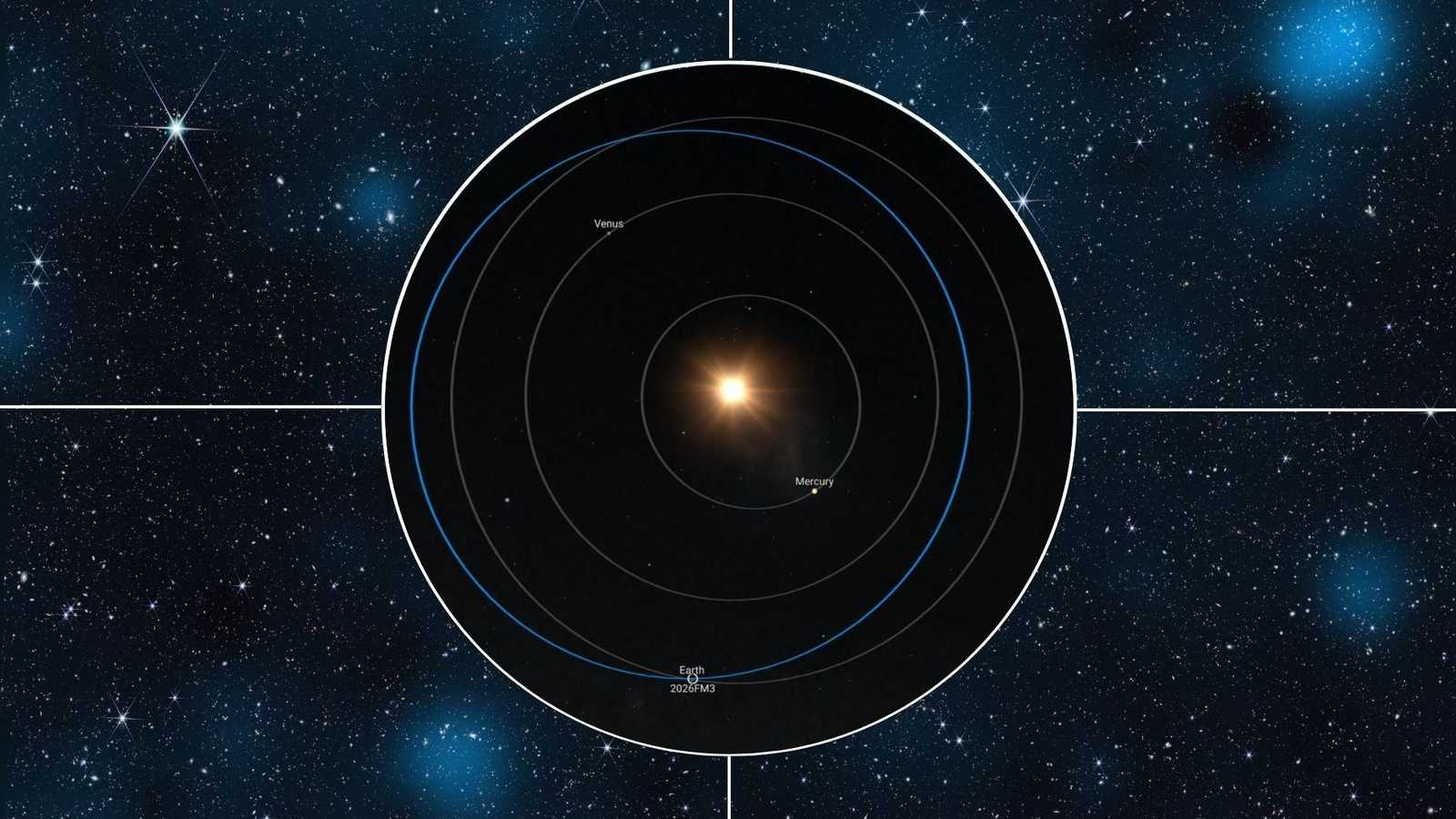
- Asteroid 2026 FM3 safely passed Earth on March 25 at a distance of 148,000 miles.
- NASA and Blue Origin are developing the ‘NEO Hunter’ mission to test advanced asteroid-deflection technologies.
- The initiative aims to address the risk posed by thousands of currently undetected near-Earth objects using the ‘Blue Ring’ spacecraft platform.
Following the recent close flyby of the asteroid 2026 FM3, NASA and Blue Origin have announced a collaborative effort to develop the “NEO Hunter” mission concept, a new initiative aimed at testing advanced asteroid-deflection techniques. The announcement arrives as space agencies grapple with the reality that thousands of near-Earth objects remain undetected, necessitating more robust monitoring and mitigation strategies.
Monitoring 2026 FM3 and Near-Earth Threats
On March 25, 2026, the car-sized asteroid 2026 FM3 passed Earth at a distance of approximately 148,000 miles. NASA’s Jet Propulsion Laboratory confirmed that the object, measuring roughly 15 feet in diameter, traveled at speeds exceeding 12,000 miles per hour. While the asteroid posed no threat, passing at roughly 62% of the distance to the Moon, its detection served as a timely reminder of the frequency of such encounters. 2026 FM3 is part of a broader class of small, transient objects that frequently traverse Earth’s orbital neighborhood.
The NEO Hunter Mission Concept
In response to the growing need for proactive planetary defense, NASA is working with Blue Origin to utilize the company’s “Blue Ring” spacecraft platform. This versatile infrastructure, which debuted on the New Glenn rocket in 2025, is designed to host and refuel specialized satellites. The NEO Hunter concept envisions a two-pronged approach: deploying small reconnaissance satellites to analyze the mass and composition of potential threats, followed by active deflection measures. Proposed methods include ion beam deflection and kinetic disruption, the latter of which draws on lessons from the 2022 Double Asteroid Redirection Test (DART) mission.
Learning from Past Deflection Experiments
While the DART mission successfully demonstrated that an asteroid’s trajectory could be altered, subsequent studies indicated that such impacts can eject significant debris, creating secondary risks. The NEO Hunter initiative aims to refine these techniques to minimize unintended consequences while addressing the estimated 15,000 potentially hazardous asteroids currently orbiting near Earth. As researchers also continue to uncover the chemical building blocks of life within pristine asteroid samples—such as the recent discovery of all five DNA and RNA nucleobases in Ryugu samples—the dual focus on asteroid exploration and planetary security remains a top scientific priority.
The collaboration between NASA and private industry signals a shift toward a more scalable, multi-layered approach to planetary defense, moving beyond singular, mission-specific tests toward a permanent orbital infrastructure capable of rapid, data-driven responses to near-Earth threats.